Have you ever bought fresh crabs only to find their meat melted away into liquid or smelling fishy after a short time in the fridge? 🦀
When a crab dies, powerful digestive enzymes in its guts trigger a rapid process called autolysis, causing the meat to dissolve quickly. Furthermore, crabs are high-risk seafood prone to rapid bacterial multiplication (such as Vibrio species), making proper storage essential to preserve flesh density and taste.
In this guide, introduces a scientifically proven 3-step crab storage guide based on guidelines from agriculture and food safety authorities to keep your crab meat sweet, firm, and safe. 🛡️
Food Safety & Scientific Evidence
This content is based on RDA & USDA & MFDS.
 FreshSelf
Zero waste! Your smart storage assistant
FreshSelf
Zero waste! Your smart storage assistant






1. Scientifically Proven Storage Guide
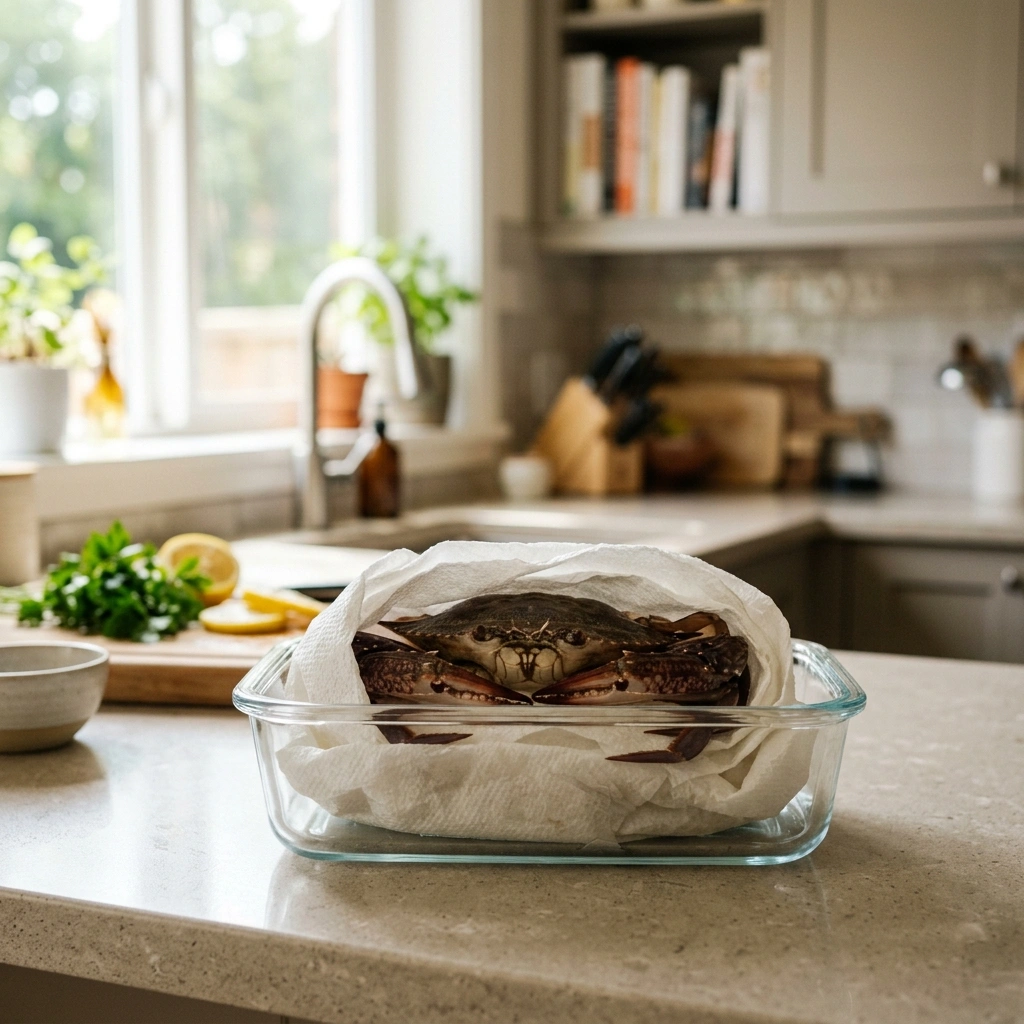
Wrap live crabs with a damp cloth for short-term refrigeration — Short-term Survival Storage 🦀
If you cannot cook live crabs immediately, keep them moist and cold. 💡 Storage Tip: Wrap unwashed live crabs in a damp towel or damp newspaper and place them in a cool container in the refrigerator (1–4°C / 34–39°F). They can stay alive for up to 1 day.
Steaming before storage is safest — Steamed Cold/Freezer Storage (2 Days / 2–3 Months) ♨️
The best way to preserve crab meat texture and flavor is to steam them right after buying. 💡 Storage Tip: Scrub live crabs clean and steam them upside down (belly facing up). Cool down, double-seal in airtight bags/containers, and refrigerate (2 days) or freeze below -18°C (2–3 months).
Clean and freeze in portions — Raw Freezer Storage (1 Month) 🧊
To freeze crabs raw, prevent internal gut degradation and freezer burn. 💡 Storage Tip: Scrub thoroughly, remove gills and stomach if desired (or keep whole if frozen rapidly), portion into Ziploc bags, remove air, and freeze below -18°C. Best used for soups and stews within 1 month.
2. Essential Storage Rules and Cautions
Submerging live crabs in tap water causes osmotic shock, killing them rapidly and initiating autolysis. Scrub the shells clean with a brush right before cooking.
Once dead, gut enzymes penetrate into the muscle tissue, liquefying the meat and generating ammonia and bacteria. Dead raw crabs must be steamed immediately or cleaned and frozen.
📌 Frequently Asked Questions (FAQ)
Why did the crab meat turn mushy or disappear into liquid after storage? ▼
This is caused by autolysis—digestive enzymes breaking down muscle tissue after the crab dies. To prevent mushy meat, steam live crabs immediately after purchasing or clean and freeze them right away.
Is it safe to cook and eat crabs that died during storage? ▼
If the crab died recently while kept cold and smells fresh, steam and cook it thoroughly right away. However, if it emits an ammonia or foul odor, discard it immediately due to bacterial risks.