Have you ever stored dragon fruit (Pitaya) in your refrigerator only to find its peel covered in black spots and its flesh turned soft and watery? 🌵
Unlike passion fruit or bananas, dragon fruit is a non-climacteric fruit, meaning its sugar content will not increase after harvest; it simply wilts over time. The optimal storage temperature to maintain its red antioxidant pigment, betacyanin, and high moisture content is 7–10°C (45–50°F). Exposure to temperatures below 5°C (41°F) leads to physiological chilling injury, causing internal breakdown, watery flesh, and dark surface spots.
In this guide, we share a scientifically proven 3-step dragon fruit storage guide based on safety guidelines from the USDA, FDA, and MFDS to safely preserve its crisp texture and antioxidant nutrients. 🛡️
Food Safety & Scientific Evidence
This content is based on USDA & FDA & MFDS.
 FreshSelf
Zero waste! Your smart storage assistant
FreshSelf
Zero waste! Your smart storage assistant









1. Scientifically Proven Storage Guide
Store at cool room temperature for short-term consumption — Room Temp Storage (2–3 Days) 📦
Since dragon fruit does not ripen after harvest, consuming it fresh soon after purchase is ideal. 💡 Storage Tip: Keep in a well-ventilated, cool room (15–20°C / 59–68°F) away from direct sunlight to minimize water loss for 2 to 3 days.
Seal and store in the crisper drawer at 7–10°C — Chilled Storage (7–14 Days) ❄️
To preserve dragon fruit for over a week, storing at an appropriate moderate cold temperature without chilling injury is required. 💡 Storage Tip: Wrap individually in plastic film or paper towels, place in an airtight container, and store in the crisper drawer (7–10°C / 45–50°F) to preserve betacyanin and crispness for 1 to 2 weeks.
Peel, cube, and freeze for long-term storage — Frozen Cube Storage (180 Days) 🧊
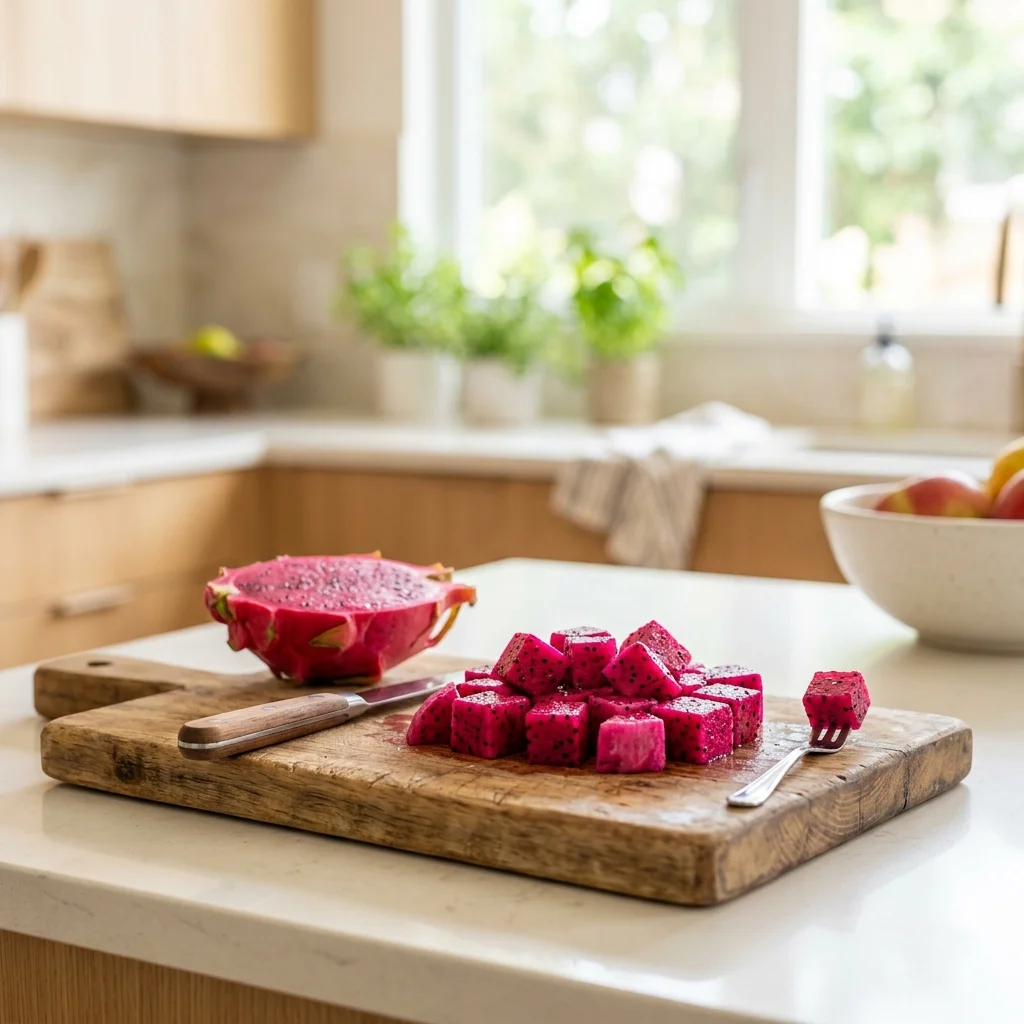
For long-term use in smoothies or desserts, freezing the peeled flesh is the best method. 💡 Storage Tip: Peel the skin, cut the flesh into bite-sized cubes, and store in airtight containers or freezer bags below -18°C (0°F) for up to 6 months without nutrient loss.
2. Essential Storage Rules and Cautions
Keeping dragon fruit in cold zones below 5°C causes severe physiological chilling injury. Cellular structures breakdown, resulting in soft, mushy flesh and dark surface spots that accelerate decay.
As a non-climacteric fruit, dragon fruit does not ripen or become sweeter at room temperature—it simply loses water and wilts. Consume within 2 to 3 days at room temperature or transfer to moderate refrigeration.
📌 Frequently Asked Questions (FAQ)
Will dragon fruit get sweeter if I leave it out for a few days? ▼
No! Dragon fruit is a non-climacteric fruit. Once harvested from the vine, it ceases sugar accumulation and will not ripen further. Leaving it out at room temperature only causes moisture loss and wilting, so it is best enjoyed fresh soon after buying.
My dragon fruit developed black spots and soft flesh. Is it still okay to eat? ▼
It is not recommended to eat. Black spots and mushy flesh indicate chilling injury caused by prolonged exposure to temperatures below 5°C, or breakdown due to age. The texture, flavor, and microbial safety have degraded, so discarding it is advised.