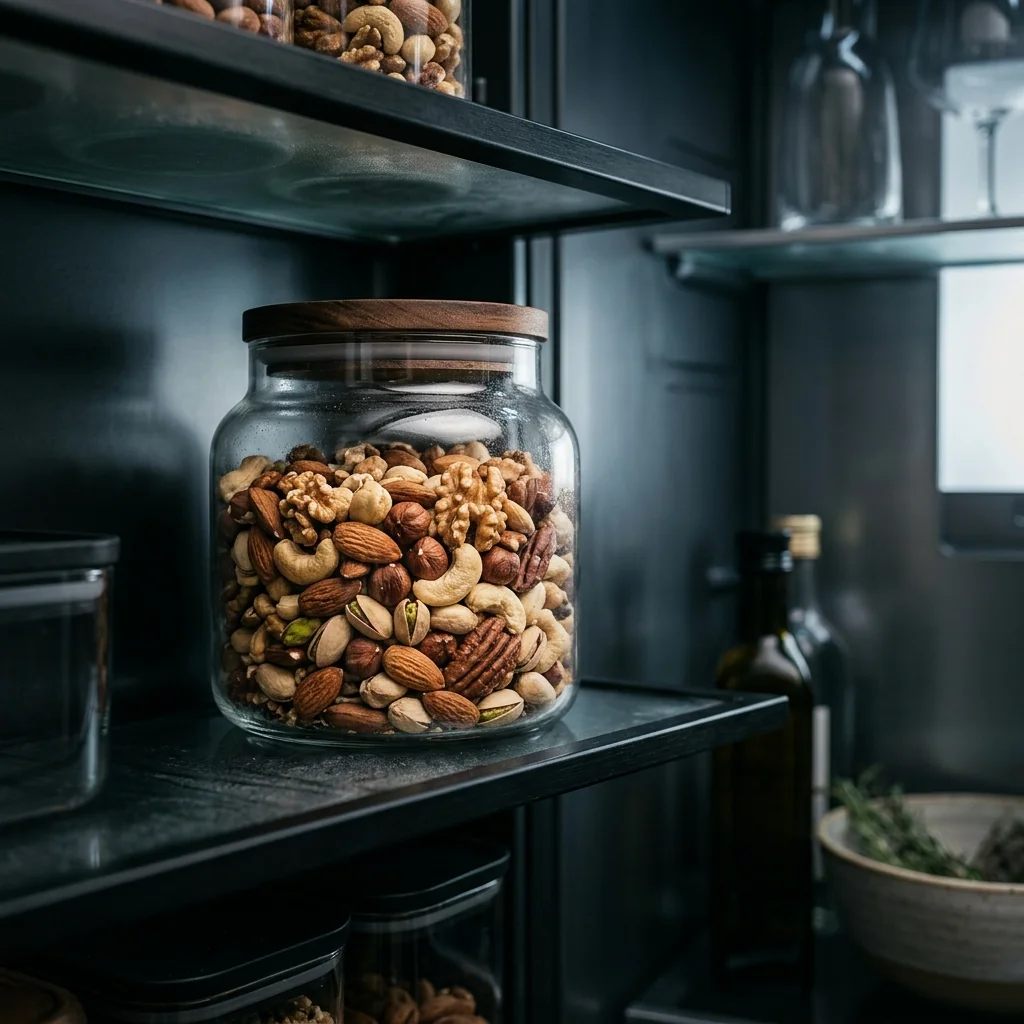
Do you leave healthy daily nuts like almonds, walnuts, and pecans out on the dining table in clear glass jars? 🥜
Nuts consist of 50–70% healthy unsaturated fatty acids, making them extremely susceptible to rapid lipid oxidation (rancidity) when exposed to heat, light, and oxygen. Under warm, humid room-temperature conditions, Aspergillus mold can grow and produce ‘aflatoxin’, a potent Class 1 carcinogen.
In this guide, shares a scientifically proven 3-step storage guide based on guidelines from the FDA, USDA, and MFDS to completely block mold toxins and preserve the rich flavor and crisp crunch of your nuts for over 6 months. 🛡️
Food Safety & Scientific Evidence
This content is based on MFDS & USDA & FDA.
 FreshSelf
Zero waste! Your smart storage assistant
FreshSelf
Zero waste! Your smart storage assistant









1. Scientifically Proven Storage Guide
Seal tightly and store in the fridge or freezer once opened — Cold Storage (90 Days Refrigerated, 180 Days Frozen) ❄️
Leaving nuts at warm room temperatures causes unsaturated fats to oxidize quickly, releasing offensive odors and risking aflatoxin contamination. 💡 Storage Tip: Seal opened nuts in airtight containers and store in the fridge (0–4°C) for up to 3 months, or in the freezer (-18°C) for over 6 months.
Portion into opaque airtight containers or aluminum Ziploc bags — Block Light & Oxygen 📦
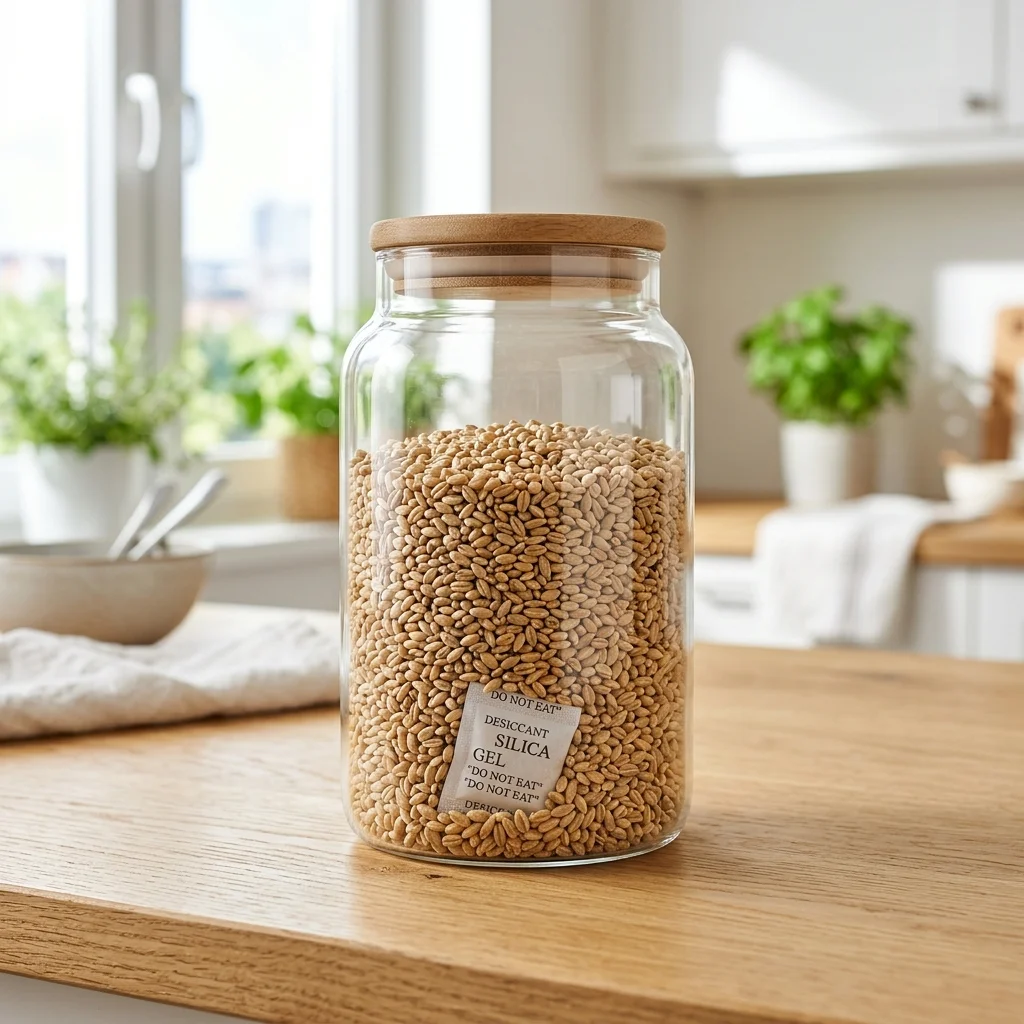
Ultraviolet light and oxygen are primary drivers of lipid rancidity in nuts. 💡 Storage Tip: Instead of clear glass jars, portion nuts into light-blocking opaque containers or aluminum foil Ziploc bags. Adding a food-grade silica gel pack absorbs lingering moisture and oxygen.
Maintain a dry, moisture-free environment — Unopened Room Temp Storage (15 Days) ☀️
Nuts absorb ambient moisture rapidly, making them lose their crisp bite and flavor. 💡 Storage Tip: Even before opening, keep nuts in a cool, dark, dry pantry away from humidity. Ensure packaging seals remain intact.
2. Essential Storage Rules and Cautions
A stale oil odor or limp texture indicates advanced lipid oxidation and potential aflatoxin mold growth. Aflatoxins are heat-resistant toxins that cannot be destroyed by washing or roasting, so discard spoiled nuts immediately.
Crushing or damaging the outer skin of walnuts or almonds increases surface area exposure to oxygen, accelerating oxidation dozens of times over. Avoid squeezing or crushing nut packaging.
📌 Frequently Asked Questions (FAQ)
Can I wash or roast nuts that smell slightly rancid to make them safe to eat? ▼
Absolutely not. A rancid odor indicates that unsaturated fats have oxidized, forming 'Aflatoxin', a potent toxin produced by Aspergillus mold. Aflatoxin is classified as a Group 1 human carcinogen (known to cause liver cancer) and is extremely heat-stable—it cannot be destroyed by washing or roasting above 260°C. Discard rancid nuts immediately.
Why shouldn't nuts be kept in a clear jar on the counter at room temperature? ▼
Unsaturated fats in nuts are highly unstable and break down quickly when exposed to ambient heat (15–25°C), room light, and oxygen. Transparent containers allow light to trigger photo-oxidation within days. Sealing nuts in light-blocking containers inside a cold fridge or freezer is essential for food safety.