Have you ever peeled a large batch of garlic to save time while cooking, only to find it turning soft, slimy, and covered in white mold a few days later? 🧄
The moment garlic is peeled, its protective outer skin is lost, making it extremely sensitive to humidity. Microscopic condensation and trapped moisture inside storage containers create an ideal breeding ground for mold spores and bacteria, making humidity control the ultimate key to freshness.
In this guide, shares a scientifically proven 3-step storage guide based on research from the USDA and RDA to preserve flavor, nutrients, and allicin content across whole, peeled, and minced garlic for longer. 🛡️
Food Safety & Scientific Evidence
This content is based on RDA & MFDS & USDA.
 FreshSelf
Zero waste! Your smart storage assistant
FreshSelf
Zero waste! Your smart storage assistant








1. Scientifically Proven Storage Guide
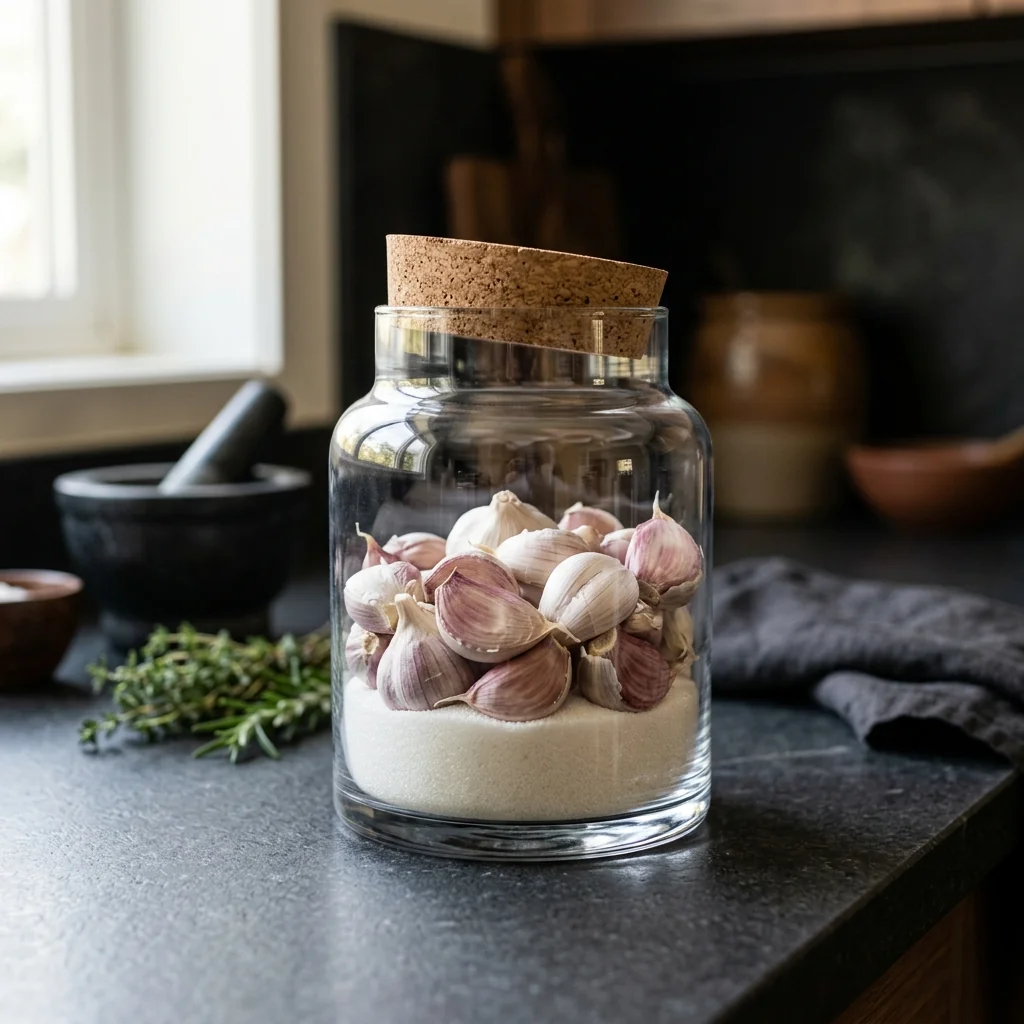
Spread sugar and paper towels at the bottom for peeled garlic — Cold Storage (14–21 Days) 🪙
Peeled garlic rots and molds rapidly when exposed to surface moisture. 💡 Storage Tip: Spread a 1 cm layer of sugar evenly at the bottom of an airtight container, cover it with 2–3 layers of paper towels, and place peeled garlic cloves on top. Sugar acts as a natural desiccant that draws in moisture, keeping the garlic dry and fresh.
Hang unpeeled whole garlic heads in a mesh bag — Room Temp Storage (30–60 Days) 🌬️
Refrigerating unpeeled whole garlic heads breaks their dormancy due to cold humidity, triggering root growth, sprouting, and rapid decay. 💡 Storage Tip: Store whole garlic heads in an onion mesh bag or breathable net and hang them in a cool, dark, well-ventilated area (10–15°C / 50–59°F) away from direct sunlight.
Freeze minced garlic in silicone cube trays — Frozen Storage (180 Days) ❄️
Mincing garlic breaks cellular structures and activates allicin, but air contact rapidly oxidizes it, turning it brown and diminishing flavor. 💡 Storage Tip: Flatten minced garlic in a Ziploc bag scored with grid lines or freeze in silicone ice cube trays below -18°C. Pop out a single cube whenever needed for quick, nutrient-rich cooking.
2. Essential Storage Rules and Cautions
Garlic cloves with bruises or sprouting roots suffer cell tissue damage, significantly increasing their release of ethylene gas and moisture. This causes surrounding healthy peeled cloves to soften and decay; slice away damaged parts and use them right away.
If blue or black mold appears on garlic, simply washing the surface is not safe. Mold spores and mycotoxins penetrate deep into the soft fleshy tissue invisibly, which can cause severe stomach upset and digestive issues. Discard moldy garlic immediately.
📌 Frequently Asked Questions (FAQ)
Why is sugar placed at the bottom of the container when storing peeled garlic in the fridge? ▼
Sugar has strong hygroscopic properties, meaning it actively attracts and absorbs moisture from the surrounding air. Covering sugar with paper towels at the bottom of an airtight container allows it to absorb condensation and moisture exuded by the garlic, effectively preventing softened texture and mold growth.
Why shouldn't unpeeled whole garlic heads be stored in the refrigerator? ▼
Unpeeled garlic heads placed in cold, humid refrigerator environments (0–4°C) experience a break in dormancy, encouraging them to sprout and grow roots. Refrigerator moisture also softens the cloves and promotes mold, so whole garlic heads should always be hung in a cool, well-ventilated, shady room.