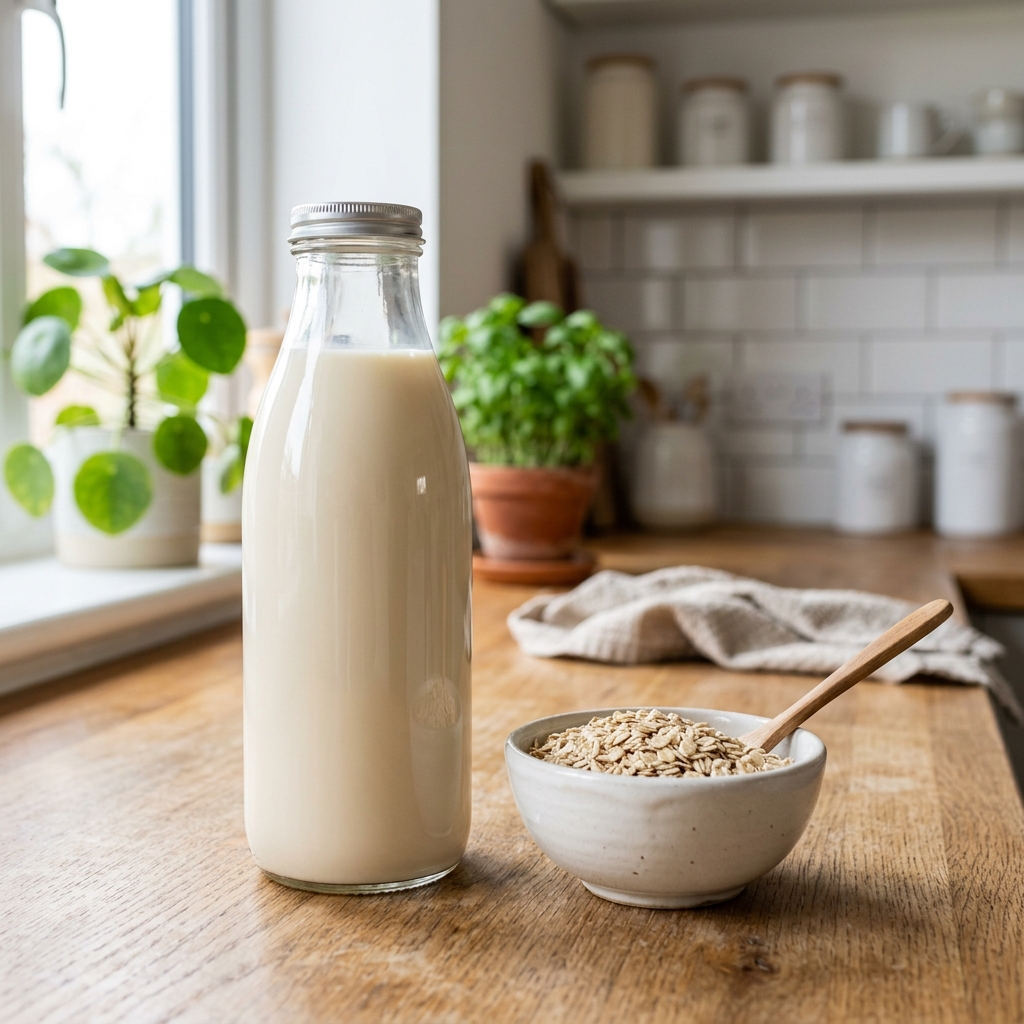
Oat milk has become a widely popular plant-based milk alternative known for its nutty and smooth flavor! 🥛🌾
Oats are rich in ‘beta-glucan,’ a soluble dietary fiber, along with natural starches, making oat milk a highly nutritious plant-based beverage. However, storage rules for oat milk differ drastically before and after opening. Unopened aseptic UHT packages can be kept at room temperature. Once opened, however, exposure to air introduces spoilage microorganisms and bacteria like Pseudomonas, which can multiply rapidly.
In this guide, based on scientifically verified guidelines from the USDA, FDA, and MFDS, we present a 3-step optimal storage strategy to preserve the nutrient content and fresh flavor of oat milk. 🛡️
Food Safety & Scientific Evidence
This content is based on USDA & FDA & MFDS.
 FreshSelf
Zero waste! Your smart storage assistant
FreshSelf
Zero waste! Your smart storage assistant









1. Scientifically Proven Storage Guide
Store unopened packages at cool room temperature (15–25°C) — Unopened Storage (Until Expiration Date) 📦
Unopened UHT-treated aseptic oat milk containers can safely be stored at room temperature. 💡 Storage Tip: Keep in a cool, dry place like a pantry away from direct sunlight and heat. Maintaining temperatures below 25°C (77°F) prevents starch degradation.
Refrigerate immediately at 0–4°C after opening — Opened Cold Storage (7–10 Days) ❄️
Once opened, exposure to microbial contamination makes cold temperature control essential. 💡 Storage Tip: Store opened oat milk deep inside the main refrigerator body at 0–4°C (32–39°F). Avoid door shelves due to frequent temperature fluctuations. Consume within 7 to 10 days per USDA guidelines.
Shake vigorously for 5–10 seconds before drinking — Prevent Beta-Glucan & Starch Separation 🥛
When left undisturbed, high-molecular-weight beta-glucan fiber and starch particles naturally settle at the bottom. 💡 Storage Tip: This physical sedimentation is completely normal for natural plant beverages. Shaking the container well for 5–10 seconds before pouring redisperses the particles for a smooth, creamy flavor.
2. Essential Storage Rules and Cautions
Unlike sealed shelf-stable packs, opened oat milk is rich in proteins and starches, creating an ideal breeding ground for airborne bacteria like Pseudomonas spp. Leaving it at room temperature can cause spoilage within 2 hours; always refrigerate immediately after use.
Freezing oat milk breaks its water-and-fat emulsion while destroying the gelled structure of beta-glucan and starches. Upon thawing, the liquid separates into watery and grainy phases, resulting in a slimy, unpleasant texture.
📌 Frequently Asked Questions (FAQ)
Oat milk separated into layers and left sediment at the bottom. Has it spoiled? ▼
No, it hasn't spoiled! This natural separation is caused by the settling of oat starches and beta-glucan fiber. As long as it smells and tastes normal, simply shake well before drinking. However, if you see curdled lumps that won't blend, smell a sour odor, or notice a bloated package, discard it immediately.
It's been 10 days since I opened my oat milk, but it smells fine. Is it still safe to drink? ▼
It is not recommended! Opened oat milk can harbor a high count of spoilage bacteria like Pseudomonas without obvious smell or visual changes. According to USDA and FDA safety standards, opened plant milks older than 7–10 days should be discarded to prevent foodborne illness.