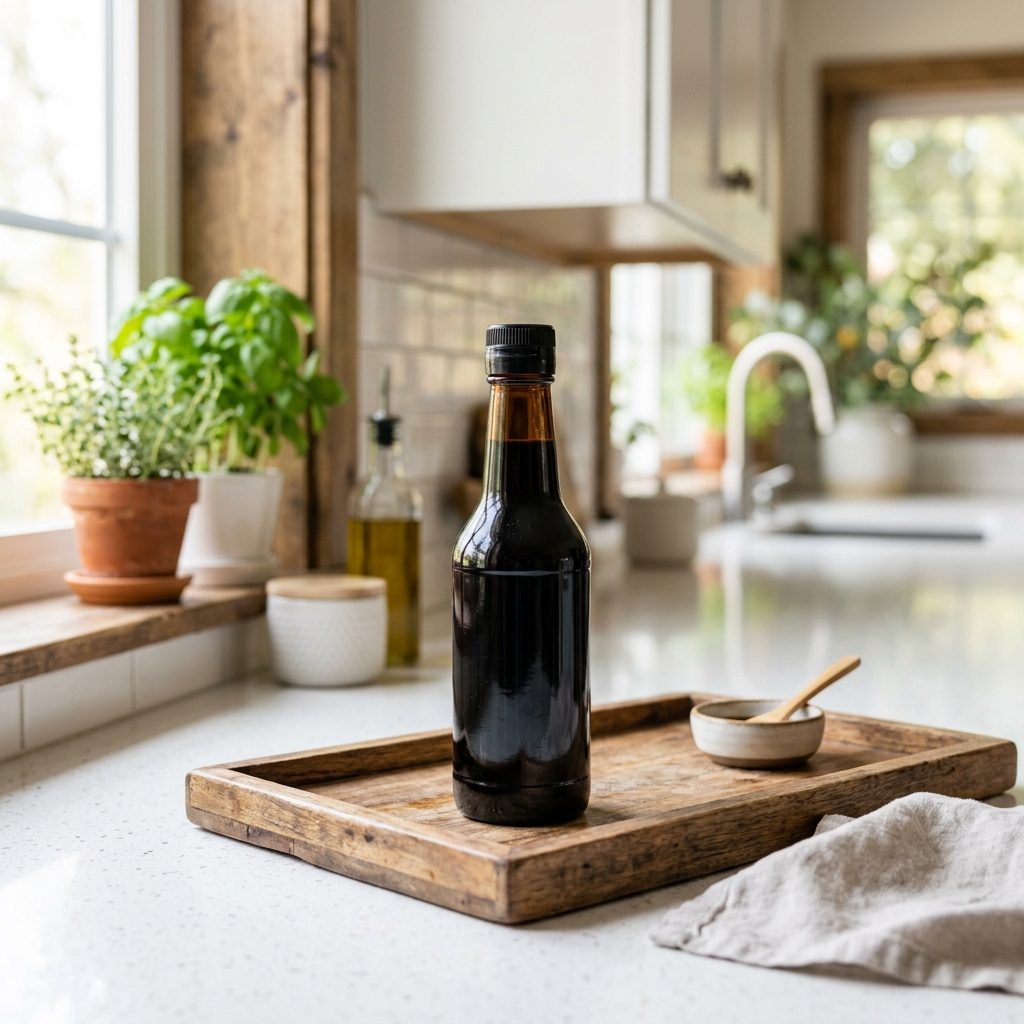
Do you keep your soy sauce right next to your gas stove while cooking? 🫙
While soy sauce is known for its long shelf life due to its high salt content, opening the bottle exposes it to air (oxygen), light, and heat. This triggers oxidation, darkening its color and causing its rich amino acid aroma to fade. Proper storage significantly impacts its delicate flavor and umami.
In this guide, shares a scientifically proven 3-step soy sauce storage guide based on guidelines from food safety agencies and brewing experts to keep your soy sauce fresh and flavorful after opening. 🛡️
Food Safety & Scientific Evidence
This content is based on MFDS & Japan Soy Sauce Association (JSA) & USDA.
 FreshSelf
Zero waste! Your smart storage assistant
FreshSelf
Zero waste! Your smart storage assistant








1. Scientifically Proven Storage Guide
Refrigerate (0–5°C) immediately after opening — Refrigerated Storage (180–360 Days) ❄️
Unopened soy sauce can be kept in a cool pantry, but opening it accelerates oxidation. 💡 Storage Tip: Store opened soy sauce in the refrigerator (0–5°C / 32–41°F). Cold temperatures drastically slow oxidation, preserving its distinct aroma and clean umami flavor for 6 months to over 1 year.
Seal tightly immediately after use to block air (oxygen) — Airtight Sealing 🧴
Hundreds of volatile aroma compounds that define soy sauce flavor evaporate easily when exposed to air. 💡 Storage Tip: Wipe any excess soy sauce around the nozzle after use and close the cap tightly to minimize oxygen intake.
Store in dark containers away from direct light — Light Protection 🕶️
Ultraviolet light and strong lighting degrade organic acids and amino acids in soy sauce, hastening oxidation. 💡 Storage Tip: Choose products in dark glass or light-blocking bottles and store them in light-free environments like the inside of a refrigerator.
2. Essential Storage Rules and Cautions
High temperatures near gas stoves or ovens accelerate soy sauce oxidation and browning reactions. Heat alters amino acids and sugars, leading to a bitter taste and rapid loss of delicate aromas, so keep it far away from heat sources.
Although high salt concentration ( ~ 15–18%) prevents microbial growth, exposure to oxygen at room temperature darkens its color and destroys volatile aromatic compounds that create umami. Refrigeration is essential to preserve its original quality.
📌 Frequently Asked Questions (FAQ)
There is a white film floating on top of my soy sauce. Is it still safe to use? ▼
A white film on soy sauce is usually 'film yeast' (a salt-tolerant yeast). While not toxic, it degrades flavor and indicates quality decline. It is recommended to skim it off and boil the sauce before use, or discard it for optimal safety and taste.
My old soy sauce has turned much darker than when I bought it. Has it gone bad? ▼
Darkening of soy sauce is a natural browning (oxidation) process caused by exposure to oxygen. While consuming it is not harmful, darker soy sauce loses its subtle aroma and develops a flatter taste. It is best to consume opened soy sauce within 6 months to 1 year for peak quality.