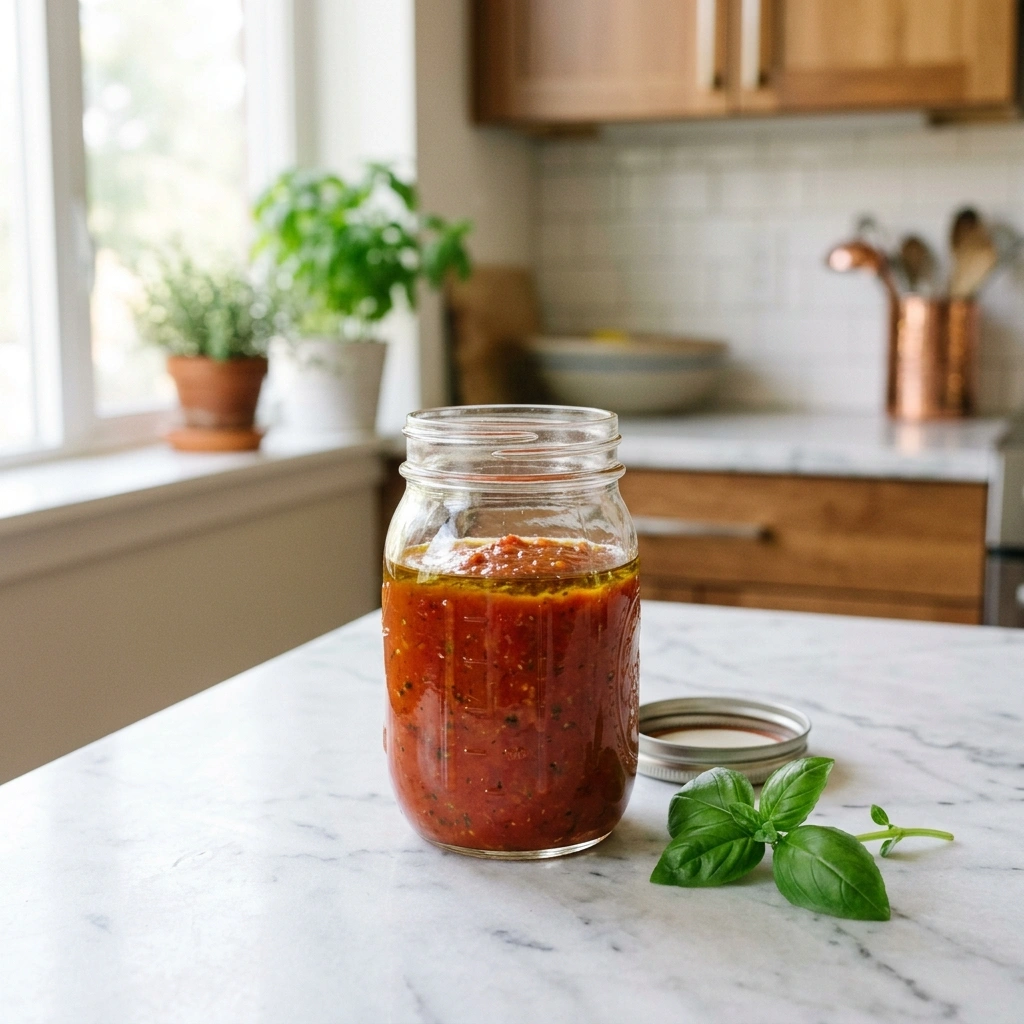
Have you ever left leftover tomato pasta sauce in the fridge only to find white mold growing on it a few days later? 🍅
Tomato sauce is high in moisture and natural sugars, making it extremely vulnerable to bacteria and mold once opened. Introducing a utensil with saliva or food particles can cause it to spoil in just a day, making proper storage essential.
In this guide, introduces a scientifically proven 3-step storage guide based on safety guidelines from the USDA, FDA, and MFDS to keep your opened pasta sauce safe and fresh. 🛡️
Food Safety & Scientific Evidence
This content is based on USDA & FDA & MFDS.
 FreshSelf
Zero waste! Your smart storage assistant
FreshSelf
Zero waste! Your smart storage assistant









1. Scientifically Proven Storage Guide
Transfer to an airtight container to minimize air contact — Prevent Secondary Contamination 📦
Leaving sauce in its original opened can or jar allows air to enter through the lid and increases contamination risks. 💡 Storage Tip: Transfer the remaining sauce into a clean, dry airtight container (glass or food-grade plastic) and seal tightly. Reducing air exposure preserves freshness longer.
Refrigerate deep inside at 0–4°C — Cold Storage (3–5 Days) ❄️
Opened pasta sauce cannot be stored at room temperature and must be refrigerated. 💡 Storage Tip: Store it on a deep inner shelf where the temperature remains stable, rather than the door. According to USDA guidelines, consume opened pasta sauce within 3 to 5 days for safety.
Portion into single servings and freeze — Freezer Storage (2 Months) 🧊
If you cannot finish it within 3–5 days or have a large batch, freezing is the best option. 💡 Storage Tip: Portion the sauce into single-serving airtight containers, Ziploc bags, or silicone ice cube trays and freeze below -18°C. It can be safely stored for up to 2 months while maintaining flavor.
2. Essential Storage Rules and Cautions
Placing a used spoon or a utensil with food residues back into the sauce jar introduces bacteria and moisture, causing mold growth within a day or two even in the fridge. Always use a clean, completely dry spoon when serving.
While tomato sauce is acidic, bacteria multiply rapidly at room temperature once opened. Sauce left out during a meal should not be put back into the jar; seal it immediately and refrigerate.
📌 Frequently Asked Questions (FAQ)
How many days can opened pasta sauce be stored in the refrigerator? ▼
According to USDA guidelines, opened commercial tomato pasta sauce should be consumed within 3 to 5 days when stored in the refrigerator (0–4°C). For longer storage, it must be frozen.
Is it safe to scoop off a little mold on the surface and eat the rest? ▼
Absolutely not! Mold roots and toxins often spread deep throughout the sauce even if you only see spots on top. If mold is detected, discard the entire jar for safety.