Have you ever bought fresh ginger only to find it covered in mold or dried up like a piece of wood after a few days? 🫚
Ginger is rich in moisture and fiber, but it is extremely sensitive to humidity, which quickly causes mold. Conversely, prolonged exposure to dry air evaporates its internal moisture, leaving it tough and fibrous. Moreover, moldy ginger develops dangerous mycotoxins, requiring careful storage practices.
In this guide, introduces a scientifically proven 3-step ginger storage guide recommended by agriculture and food safety experts to preserve peak freshness and flavor. 🛡️
Food Safety & Scientific Evidence
This content is based on RDA & USDA & MFDS.
 FreshSelf
Zero waste! Your smart storage assistant
FreshSelf
Zero waste! Your smart storage assistant









1. Scientifically Proven Storage Guide
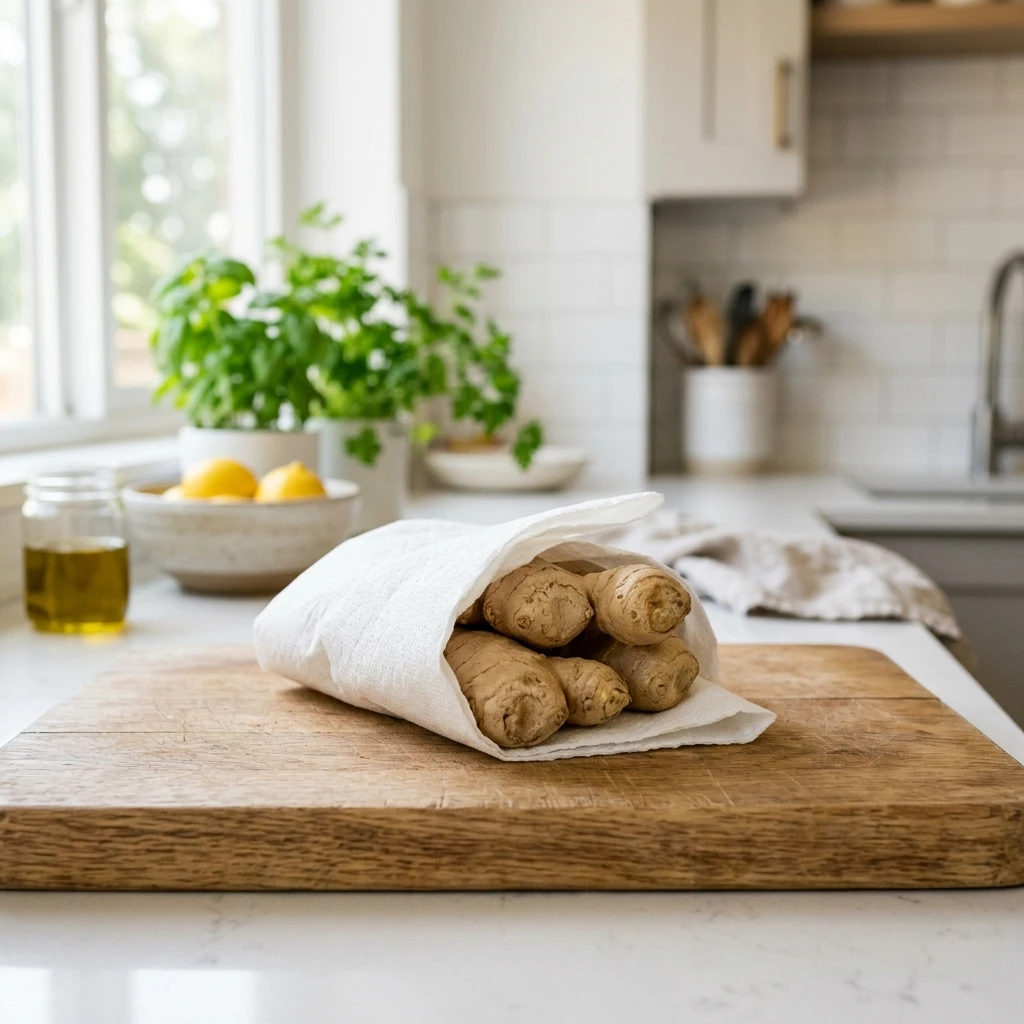
Brush off soil and wrap in paper towels — Moisture Control (1–2 Weeks) 📦
Managing moisture while preventing dehydration is key. 💡 Storage Tip: Lightly brush off loose soil from unwashed ginger, wrap each piece tightly in paper towels or newspaper, and store at cool room temperature (10–15°C) or in the refrigerator crisper drawer.
Slice or mince ginger for intended culinary uses — Prep Optimization 🔪
Pre-portioning ginger for cooking prevents moisture loss and extends usability compared to keeping whole roots. 💡 Storage Tip: Peel and either slice into rounds for soups/teas or mince fine for marinades and seasonings.
Flatten in Ziploc bags and freeze — Frozen Storage (6 Months–1 Year) ❄️
Sealing prepped ginger from air locks in its aromatic gingerol compounds. 💡 Storage Tip: Place minced ginger into a Ziploc bag, flatten it thin, and use the back of a knife to score grid lines before freezing (-18°C). Break off individual cubes whenever needed.
2. Essential Storage Rules and Cautions
Dry soil on unwashed ginger acts as a natural protective barrier. Washing ginger allows moisture to penetrate skin crevices, creating an ideal environment for mold and bacterial growth. Simply brush off excess soil and wash right before cooking.
When ginger rots or molds, harmful toxins such as safrole spread throughout the root. Even if you cut away the moldy portion, invisible mycotoxins penetrate deep into the fibrous tissue. Always discard the entire root if mold appears.
📌 Frequently Asked Questions (FAQ)
Can I just cut off the moldy part of ginger and use the rest? ▼
No, absolutely not. Mold on ginger produces mycotoxins (such as safrole) that can cause liver toxicity. Because ginger is porous and fibrous, toxins spread deep throughout the root even if not visibly apparent. Always throw away the entire ginger piece if mold is present.
Is there another way to keep peeled ginger fresh in the refrigerator? ▼
Place peeled ginger in an airtight glass container submerged in cooking sake, vodka, or water, and store in the fridge. Alcohol preserves ginger for 1–2 months without discoloration. If using water, change it every 2 to 3 days.