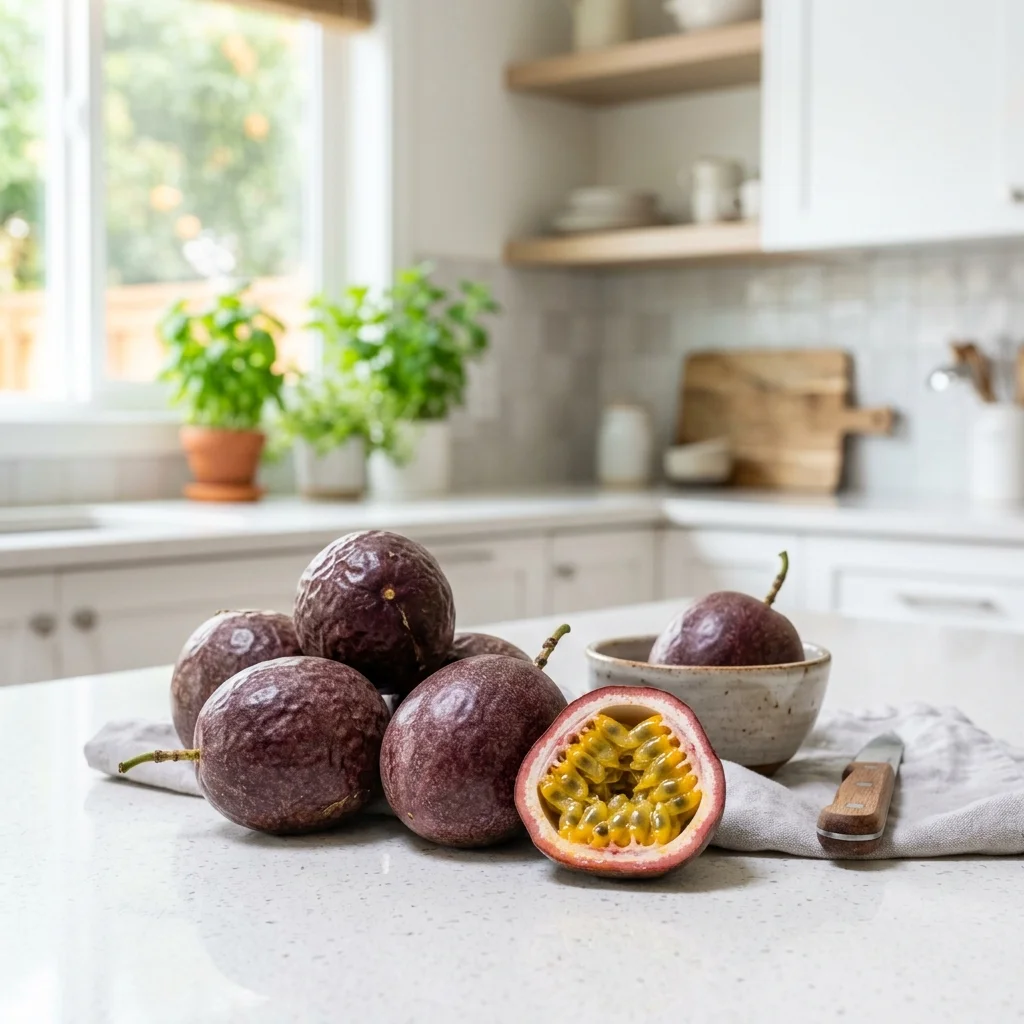
When leaving passion fruit out at room temperature for drinks or desserts, have you ever worried that its skin becoming wrinkled means it has gone bad? 🥭
Passion fruit is a classic climacteric fruit that releases ethylene gas post-harvest, undergoing rapid ripening. During ripening, moisture loss (desiccation) causes the outer skin to wrinkle, which is a normal biochemical metabolic process where internal acidity drops and sugars concentrate. Once fully ripened, refrigerating at 5–7°C to delay over-ripening and decay is the key to freshness management.
In this guide, we share a scientifically proven 3-step passion fruit storage guide based on guidelines from the USDA, FDA, and MFDS to safely preserve its sweet-and-tart flavor and peak sweetness. 🛡️
Food Safety & Scientific Evidence
This content is based on USDA & FDA & MFDS.
 FreshSelf
Zero waste! Your smart storage assistant
FreshSelf
Zero waste! Your smart storage assistant









1. Scientifically Proven Storage Guide
Ripen at room temperature until wrinkled — Room Temp Ripening (3–5 Days) 🥑
Firm, smooth, unripe passion fruit must be kept at 20–25°C to ripen normally. 💡 Storage Tip: Keep in a cool room away from direct sunlight; moisture loss from the peel will create heavy wrinkles, lowering acidity and maximizing sweetness.
Wrap and refrigerate once fully ripe — Cold Refrigeration (7–14 Days) ❄️
Passion fruit is fully ripe when the entire skin is deeply wrinkled and emits a rich, sweet aroma. 💡 Storage Tip: Wrap ripe fruits individually in plastic wrap or place in an airtight container in the crisper drawer (5–7°C / 41–45°F). Inhibits ethylene action to keep fresh for 1 to 2 weeks.
Scoop out pulp and seal tightly for freezing — Frozen Pulp Storage (180 Days) 🧊
If you want to store passion fruit long-term for beverages or desserts, freezing only the pulp is the best method. 💡 Storage Tip: Cut in half, scoop out the seeds and pulp, and store in ice trays, airtight containers, or freezer bags below -18°C (0°F). Enjoy sweet and tangy flavor for up to 6 months.
2. Essential Storage Rules and Cautions
Placing firm, smooth, unripe passion fruit below 5°C causes chilling injury, permanently halting the ripening process and preventing sugar accumulation. Always ripen at room temperature until wrinkles appear.
Leaving fully ripened passion fruit with wrinkled skin at room temperature for too long causes excessive ethylene reaction, leading to pulp fermentation or mold. Refrigerate or freeze immediately upon full ripening.
📌 Frequently Asked Questions (FAQ)
My passion fruit skin is deeply wrinkled. Has it spoiled? ▼
Not at all! Passion fruit is a climacteric fruit, and as it ripens, moisture loss (desiccation) causes its outer peel to wrinkle. This indicates full maturation where acidity is reduced and sugar levels peak, making it the most delicious time to eat.
Should I freeze passion fruit whole with the skin, or only the pulp? ▼
Scooping out and freezing only the pulp is strongly recommended! Freezing whole fruits takes up excessive freezer space, and upon thawing, skin cells collapse, causing messy juice leakage and difficult prep. Storing extracted pulp in containers or freezer bags is far superior for flavor and hygiene.