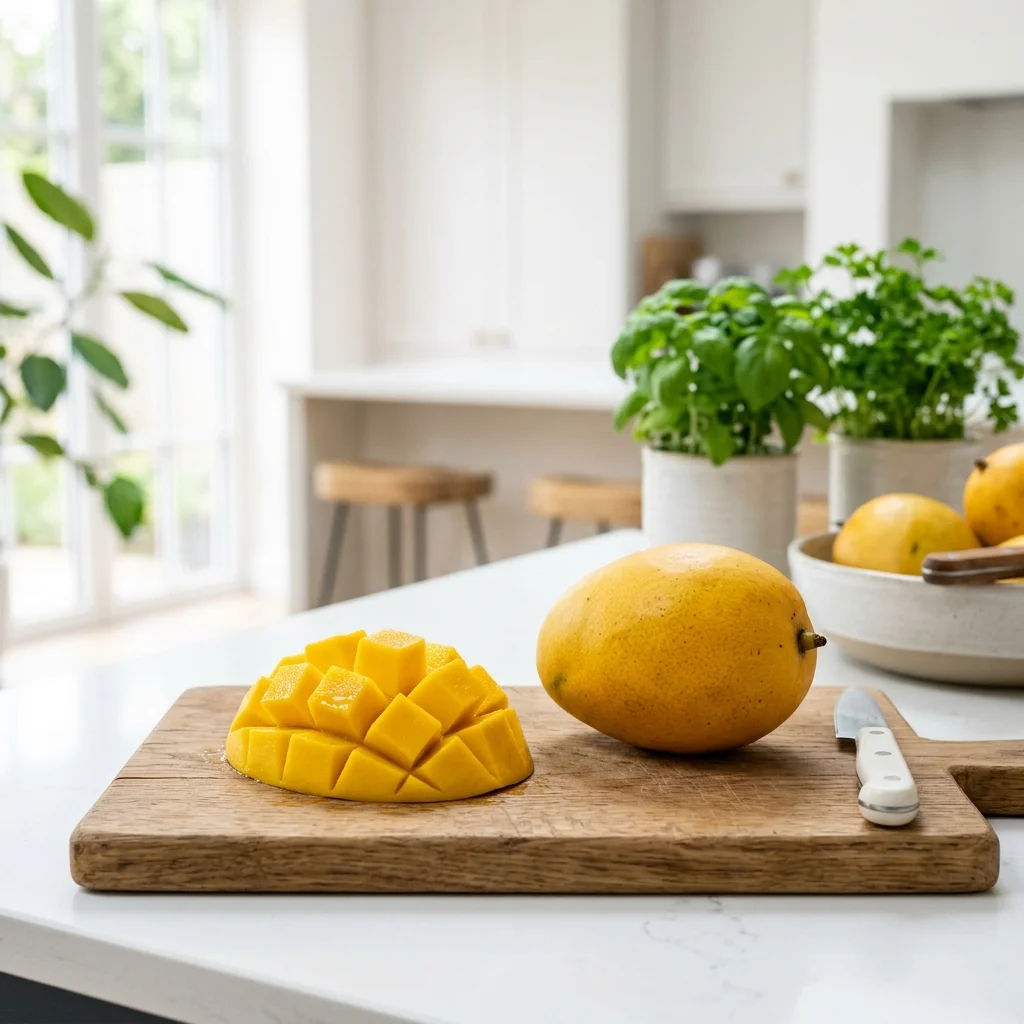
Have you ever bought a sweet, creamy mango, put it in the fridge while it was still unripe, and ended up with a blackened skin and tough, flavorless flesh? 🥭
Mangoes are classic climacteric fruits, meaning they continue to ripen and emit ethylene gas even after being harvested. Because they are tropical fruits, exposing them to cold temperatures before they are fully ripe halts the ripening process permanently, causing chilling injury that turns the skin grayish-brown and destroys the flavor forever.
In this guide, introduces a scientifically proven 3-step storage guide recommended by agriculture and food safety experts to maximize your mango’s sweetness and maintain its freshness. 🛡️
Food Safety & Scientific Evidence
This content is based on USDA & MFDS & RDA.
 FreshSelf
Zero waste! Your smart storage assistant
FreshSelf
Zero waste! Your smart storage assistant









1. Scientifically Proven Storage Guide
[Before Ripening] Store at cool room temperature (20–25°C) — Natural Ripening (3–7 Days) 🌡️
Mangoes slowly develop their sweetness at room temperature. 💡 Storage Tip: Keep them in a well-ventilated spot away from direct sunlight until the skin develops a sheen, the stem area smells sweet, and the fruit yields slightly to a gentle squeeze, like a ripe peach.
[After Ripening] Wrap in paper towels and refrigerate in a bag — Delay Over-ripening (5–7 Days) ❄️
Once a mango is perfectly ripe, it must be refrigerated to slow down the over-ripening process. 💡 Storage Tip: To prevent moisture loss and protect the skin from direct cold drafts, wrap the mango in a paper towel or newspaper, seal it in a Ziploc bag, and store it in the crisper drawer (7–10°C / 45–50°F).
[Long-term Storage] Peel, dice, and freeze — Frozen Storage (Up to 6 Months) 🧊
To store fully ripe mangoes for a long period, separating and freezing the flesh is the best method. 💡 Storage Tip: Peel the mango, cut the flesh into bite-sized cubes, lay them flat in a Ziploc bag or airtight container, and store in the freezer (-18°C or below).
2. Essential Storage Rules and Cautions
If a mango is placed in cold temperatures below 10°C (50°F) before it fully ripens, the ripening process stops permanently. It will suffer chilling injury, resulting in a mottled, blackened skin and rubbery flesh. Always ripen at room temperature first.
Placing a mango in a loosely closed paper bag alongside a banana or apple (which naturally emit high levels of ethylene gas) will safely accelerate the ripening process by two to three times.
📌 Frequently Asked Questions (FAQ)
My mango has developed black spots on the skin. Has it gone bad? ▼
Like bananas, mangoes develop 'sugar spots' (black speckles) as a natural indicator that they have reached peak sweetness and are perfectly ripe. However, if the spots are accompanied by a sour smell, oozing liquid, or extreme mushiness, the fruit is spoiling and should be discarded.
How should I store cut mango? ▼
Once cut, mango flesh oxidizes quickly upon contact with air and is susceptible to bacterial growth. Store it immediately in an airtight container in the refrigerator and consume within 1 to 2 days. A light sprinkle of lemon juice can help prevent browning.