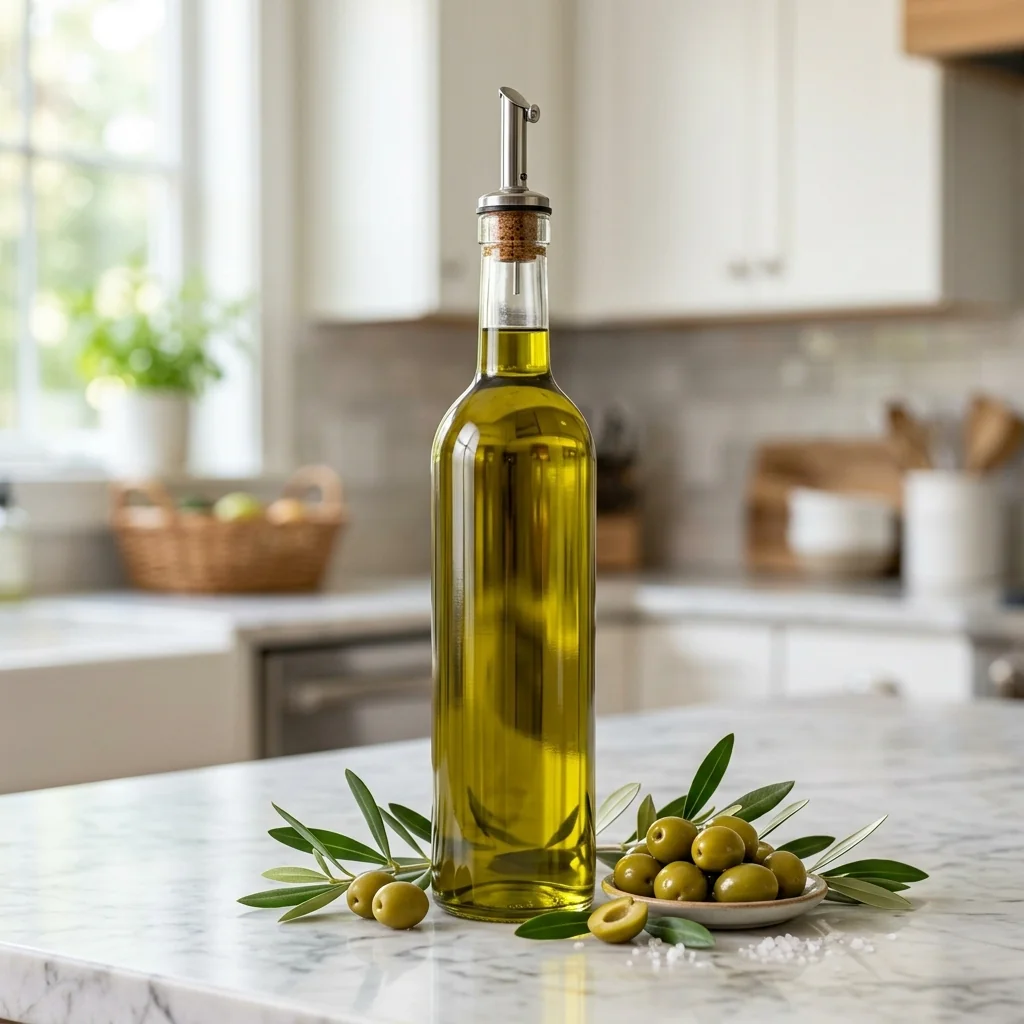
Have you ever stored premium extra virgin olive oil in the refrigerator to extend its shelf life? 🫒
Vegetable oils like olive oil suffer lipid oxidation (rancidity) through exposure to four main factors: light (UV), oxygen, heat, and temperature fluctuations. Refrigerating olive oil causes its high monounsaturated oleic acid content to solidify into white crystals below 8–10°C (46–50°F). Repeated freezing and thawing breaks down delicate fruity polyphenols and antioxidant compounds.
In this guide, shares a scientifically proven 3-step storage guide based on international guidelines from the International Olive Council (IOC) and USDA to preserve olive oil flavor and nutritional value for over a year. 🛡️
Food Safety & Scientific Evidence
This content is based on IOC & USDA & MFDS.
 FreshSelf
Zero waste! Your smart storage assistant
FreshSelf
Zero waste! Your smart storage assistant









1. Scientifically Proven Storage Guide
Never store in the refrigerator — Prevent Solidification & Flavor Loss ❌❄️
Placing olive oil in the fridge causes fatty acids to solidify into a butter-like white paste. 💡 Storage Tip: Repeated melting and freezing destroys the oil's delicate aromas and natural polyphenols. The ideal temperature for olive oil is cool room temperature at 14–18°C (57–64°F).
Use dark amber or green glass bottles and avoid sunlight — Room Temp Storage (365 Days) 🫙
UV rays and indoor lights excite chlorophyll in olive oil, triggering rapid photo-oxidation. 💡 Storage Tip: If your oil came in a clear plastic bottle, wrap it in aluminum foil or transfer it to a dark green/amber glass bottle to shield it from light.
Store in a cool cupboard away from stoves and ovens — Protect from Heat 🌬️
Keeping oil bottles right next to the stovetop or oven for convenience exposes them to radiant heat. 💡 Storage Tip: Heat exposure doubles the rate of lipid oxidation. Always store olive oil bottles inside a cool, dark kitchen cabinet or pantry away from all heat sources.
2. Essential Storage Rules and Cautions
Continuous contact with atmospheric oxygen generates peroxides, causing rapid rancidity and acidity buildup in olive oil. Always tighten the cap fully after each pour to completely block oxygen ingress.
While olive oil and sesame oil stay stable at room temperature thanks to natural antioxidants, perilla oil is rich in omega-3 alpha-linolenic acid, which oxidizes rapidly. Perilla oil MUST be kept refrigerated below 4°C, whereas olive oil should be kept at room temp.
📌 Frequently Asked Questions (FAQ)
My olive oil solidified into a cloudy white paste in the fridge. Is it spoiled? ▼
No, it is not spoiled. Extra virgin olive oil is rich in monounsaturated oleic acid, which naturally solidifies and crystallizes when temperatures drop below 8–10°C (46–50°F). Allowing the bottle to rest at room temperature (14–18°C) for a day or two will return it to a clear liquid state with zero damage to its quality or health benefits.
Must olive oil always be kept in dark glass bottles? ▼
Yes, absolutely. Olive oil contains natural chlorophyll that acts as a photosensitizer under light (UV rays and room lighting), triggering photo-oxidation that turns the oil rancid within weeks in clear containers. Dark green or amber glass bottles block over 90% of light rays, preserving freshness when kept in a dark pantry.