Have you ever bought fresh kale for smoothies or salads, only to find its leaves turned yellow and wilted within just a few days? 🥬
Kale is a globally recognized superfood, but as a leafy green, it is extremely sensitive to ethylene gas. Storing it near ethylene-emitting fruits like apples or bananas accelerates chlorophyllase enzyme activity, leading to leaf yellowing (chlorosis). Furthermore, moisture loss from transpiration reduces turgor pressure, causing the leaves to wilt rapidly.
In this guide, we introduce a scientifically proven 3-step kale storage guide recommended by agriculture and food safety experts to maximize freshness. 🛡️
Food Safety & Scientific Evidence
This content is based on USDA & FDA & MFDS.
 FreshSelf
Zero waste! Your smart storage assistant
FreshSelf
Zero waste! Your smart storage assistant









1. Scientifically Proven Storage Guide
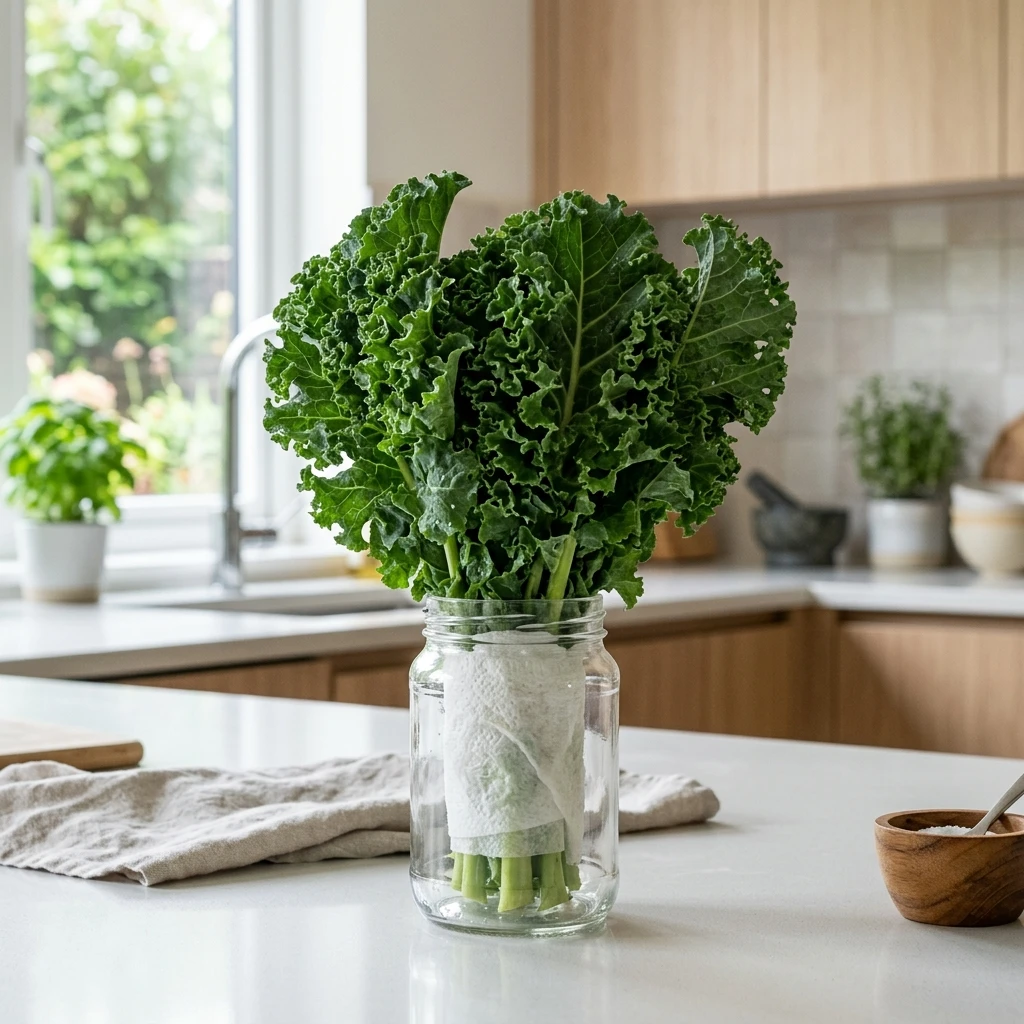
Wrap stem ends with moist paper towels — Moisture Retention 🧻
Transpiration causes moisture loss, lowering turgor pressure and making leaves limp. 💡 Storage Tip: Wrap the cut ends of unwashed kale stems with a damp paper towel to supply continuous hydration.
Store sealed at 0–4°C in the fridge crisper — Cold Storage (7–10 Days) ❄️
Blocking ethylene gas and maintaining 90–95% relative humidity is essential. 💡 Storage Tip: Place the stem-wrapped kale inside an airtight container or Ziploc bag to block ethylene gas, and store upright in the crisper drawer (0–4°C / 32–39°F) for 7–10 days.
Chop and freeze in airtight Ziploc bags — Freezer Storage (10–12 Months) 🧊
If you want long-term storage for smoothies or juices, freezing is ideal. 💡 Storage Tip: Wash thoroughly, dry completely, chop into bite-sized pieces, and seal in freezer Ziploc bags (-18°C / 0°F). Great for green juices for up to 10–12 months.
2. Essential Storage Rules and Cautions
Kale is highly sensitive to ethylene gas. Storing it near fruits like apples, bananas, or tomatoes activates chlorophyllase enzymes, accelerating leaf yellowing.
Excess moisture on the leaf surface creates an ideal environment for mold and bacteria, causing leaves to become slimy. Keep kale unwashed before storing, or use a salad spinner to remove all moisture if washed.
📌 Frequently Asked Questions (FAQ)
My kale leaves have turned yellow. Is it still safe to eat? ▼
Yellowing occurs when the chlorophyllase enzyme breaks down chlorophyll due to ethylene exposure or aging. While not inherently toxic, nutritional value and crispness decline significantly. Trim away yellowed sections and consume the green parts. Discard immediately if slimy or emitting off-odors.
Why should kale be stored upright rather than lying flat? ▼
Leafy greens retain gravitropism, spending energy trying to grow upward when laid flat, which accelerates nutrient and moisture loss. Storing stems vertically preserves turgor pressure and freshness much longer.