Have you ever left an open can of tuna in the fridge with just the lid pulled back? 🐟
While unopened canned tuna can be safely stored at room temperature for years, opening it exposes the contents to air, accelerating metallic oxidation and bacterial contamination. Keeping it in the open metal can traps volatile gases like furan and imparts an off-metallic taste, spoiling its flavor.
In this guide, introduces a scientifically proven 3-step canned tuna storage guide based on safety guidelines from the USDA, FDA, and MFDS to keep your tuna safe and delicious. 🛡️
Food Safety & Scientific Evidence
This content is based on USDA & FDA & MFDS.
 FreshSelf
Zero waste! Your smart storage assistant
FreshSelf
Zero waste! Your smart storage assistant









1. Scientifically Proven Storage Guide
Store unopened cans in a cool, dry pantry — Room Temperature (2–5 Years) 📦
Unopened canned tuna is heat-sterilized and shelf-stable for years. 💡 Storage Tip: Keep cans in a cool, dry pantry (15–20°C / 59–68°F) away from direct sunlight and stove heat. After opening the lid, let the tuna sit for 5 minutes to allow any residual furan gas to dissipate naturally into the air.
Transfer leftovers immediately to an airtight container — Cold Storage (3–4 Days) ❄️
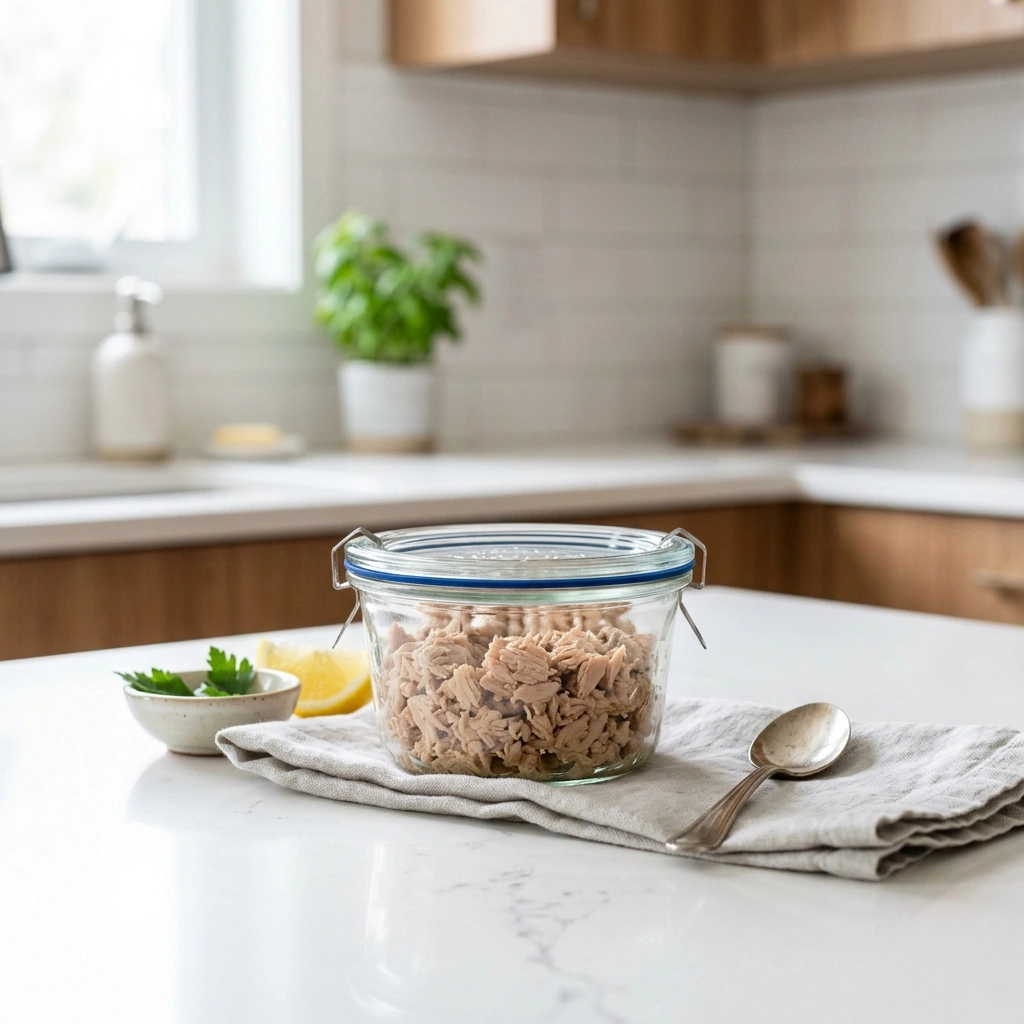
Never leave opened tuna in its metal can. 💡 Storage Tip: Transfer the remaining tuna and its oil/liquid into a clean glass container or airtight food container, seal tightly, and refrigerate (0–4°C / 32–39°F). Consume within 3 to 4 days for optimal safety.
Portion and freeze with a little oil — Freezer Storage (3 Months) 🧊
If you cannot finish it within 4 days, freezing is the safest method. 💡 Storage Tip: Divide into single-serving airtight containers or Ziploc bags. Adding a small drizzle of tuna oil or olive oil prevents dryness and freezer burn, keeping it fresh for up to 3 months below -18°C.
2. Essential Storage Rules and Cautions
Refrigerating an open metal can exposes the inner lining to oxygen, causing corrosion and potentially leaching metallic elements into the food. Always transfer leftover tuna immediately to a glass or airtight container.
Cans that are swollen, heavily rusted, or deeply dented prior to opening may indicate the growth of dangerous anaerobic bacteria such as Clostridium botulinum. Discard damaged or leaking cans immediately.
📌 Frequently Asked Questions (FAQ)
Why is it recommended to wait 5 minutes after opening canned tuna before eating? ▼
This allows trace amounts of 'furan', a volatile organic compound produced during the commercial heat-sterilization process, to evaporate naturally into the air once exposed to oxygen.
How long can opened canned tuna be kept in the refrigerator? ▼
According to USDA and food safety guidelines, leftover tuna transferred from its can into an airtight container can be safely kept in the refrigerator (0–4°C) for 3 to 4 days.