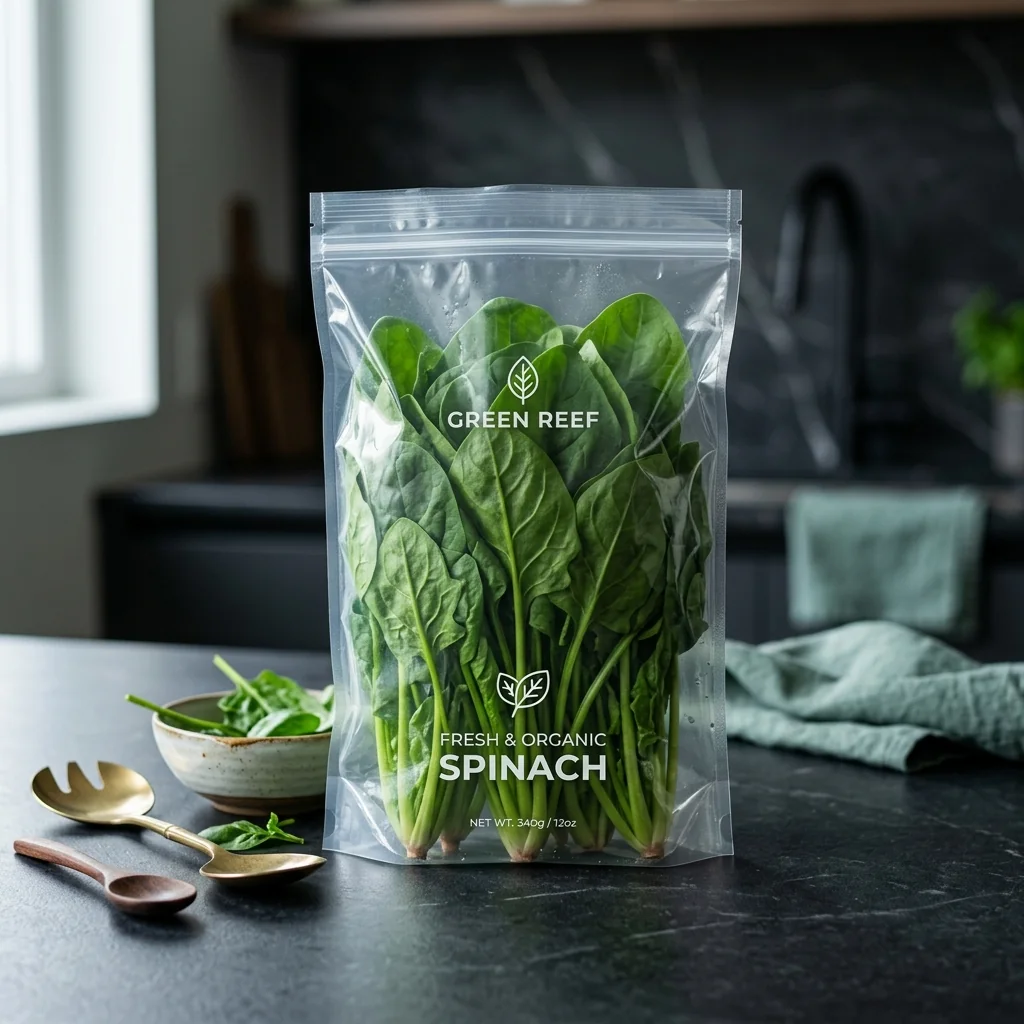
Have you ever bought a fresh bunch of spinach and left it lying flat in a plastic bag inside the fridge, only to find the leaves slimy, yellowed, and rotted two days later? 🌿
Spinach leaves are extremely delicate and have high respiration and transpiration rates after harvest. When laid flat horizontally, spinach undergoes ‘negative geotropism’—expending stored sugars and Vitamin C in a struggle to bend upward against gravity. Furthermore, exposure to ethylene gas rapidly breaks down its chlorophyll, turning leaves yellow.
In this guide, shares a scientifically proven 3-step storage guide based on guidelines from the EFSA and RDA to control respiration, block ethylene, and keep your spinach crisp and green for over 7 days. 🛡️
Food Safety & Scientific Evidence
This content is based on RDA & EFSA & FSA.
 FreshSelf
Zero waste! Your smart storage assistant
FreshSelf
Zero waste! Your smart storage assistant









1. Scientifically Proven Storage Guide
Wrap dry, unwashed spinach in newspaper or paper towels — Moisture Control 📦
Spinach leaves decay rapidly upon direct contact with free water. 💡 Storage Tip: Keep the soil intact and wrap the dry spinach loosely in paper towels or newspaper. The paper acts as a moisture buffer, absorbing condensation and keeping the leaves dry.
Store vertically upright with roots facing down — Cold Storage (7 Days) 🌿
Laying spinach flat causes it to expend energy bending upward against gravity, destroying nutrients. 💡 Storage Tip: Stand the paper-wrapped spinach vertically in a tall container or bottle with the roots facing down in the crisper drawer (0–4°C / 32–39°F). Matching its natural growth orientation preserves crispness.
Isolate completely from ethylene-emitting fruits — Prevent Chlorophyll Breakdown 🛡️
Spinach is highly sensitive to external ethylene gas. 💡 Storage Tip: Storing spinach near apples, pears, or tomatoes causes rapid chlorophyll degradation, making the leaves turn yellow and mushy. Keep spinach in a separate, isolated compartment.
2. Essential Storage Rules and Cautions
Enclosing wet spinach in airtight bags traps surface water, causing cell wall collapse, bacterial soft rot, and a slimy liquid within 24 to 48 hours. Ensure spinach is completely dry before wrapping.
Yellowing or crushed spinach leaves emit high levels of decay gases and rot pathogens, accelerating spoilage in surrounding healthy leaves. Always pick through and remove damaged leaves before storing.
📌 Frequently Asked Questions (FAQ)
Why shouldn't I wash fresh spinach before storing it in the refrigerator? ▼
Spinach leaves are extremely delicate. Trapping free water on unwashed or washed leaves clogs their stomata and breaks down epidermal cell walls. Under airtight conditions, this causes anaerobic decay and bacterial soft rot, turning leaves black and slimy within two days. Store unwashed with dry soil and wash right before cooking.
What is the proper way to blanch and freeze spinach for long-term storage? ▼
Blanch raw spinach in boiling salted water for 30 seconds, then immediately plunge into ice water to stop cooking. Gently squeeze out 80% of the water (leave slight moisture to prevent freezer burn), portion into meal-sized bundles, and store in a Ziploc freezer bag below -18°C (-0.4°F) for up to 6 months.