Have you ever stored fresh leeks in the refrigerator only to find them dried out, wilted, and lacking flavor over time? 🧅
Leeks are rich in allicin precursors and unique volatile sulfur aroma compounds. Trimming or washing them prior to storage causes rapid evaporation of flavor compounds and accelerates the degradation of ascorbic acid (Vitamin C).
In this guide, based on official guidelines from the USDA and the UC Davis Postharvest Technology Center, we share a 3-step scientific storage method to maintain the deep flavor and nutritional quality of leeks. 🛡️
Food Safety & Scientific Evidence
This content is based on USDA & MFDS & UC Davis Postharvest Center.
 FreshSelf
Zero waste! Your smart storage assistant
FreshSelf
Zero waste! Your smart storage assistant








1. Scientifically Proven Storage Guide
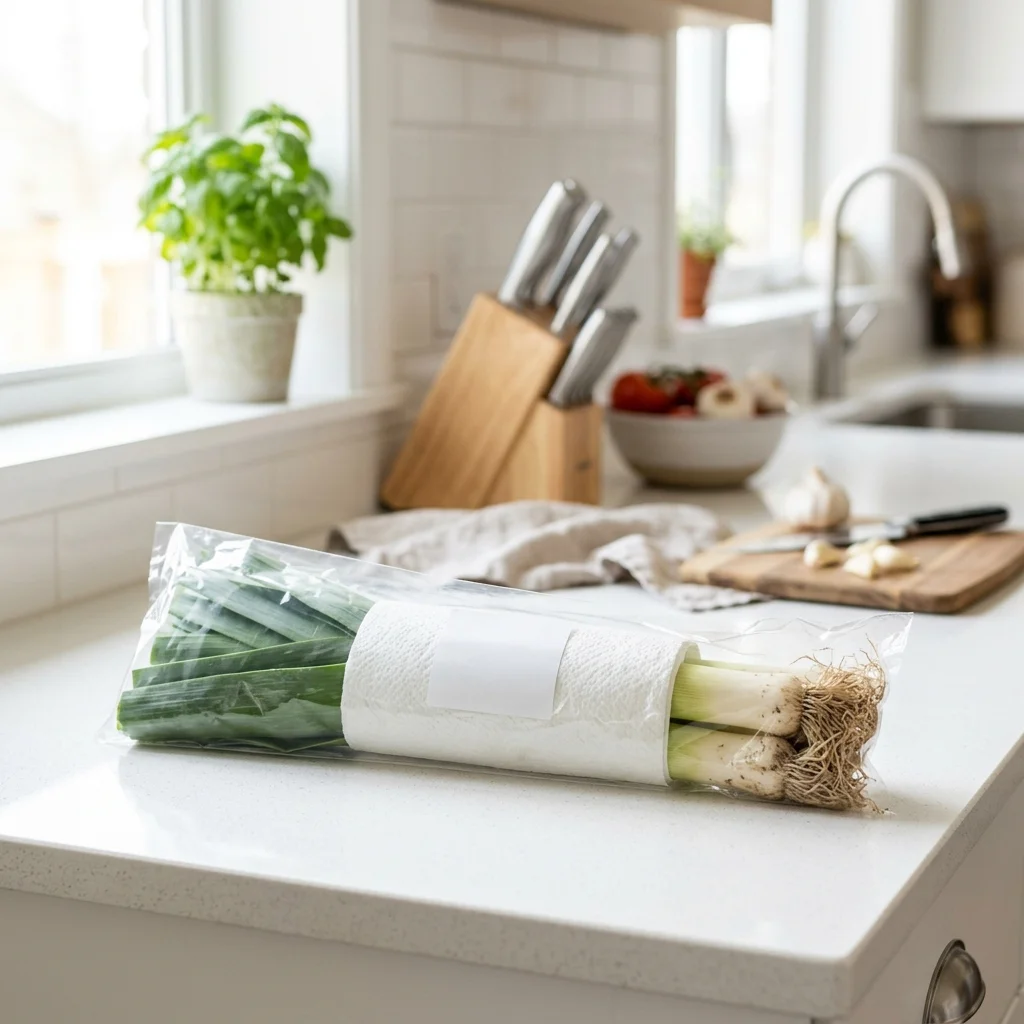
Wrap unwashed leeks in paper towels or newspaper and refrigerate — Low-Temp Cold Storage (14–21 Days) 🧅
Leeks retain peak quality at 0–2°C (32–36°F) and high relative humidity ( ~ 95%). 💡 Storage Tip: Keep unwashed, untrimmed leeks wrapped in newspaper or paper towels inside a plastic bag in the crisper drawer to minimize sulfur and ascorbic acid loss for 2 to 3 weeks.
Keep roots and outer leaves intact as a natural barrier — Natural Moisture Protection 🛡️
The tough outer leaves and roots serve as natural shields against internal moisture evaporation. 💡 Storage Tip: Leave outer leaves and root bases attached until immediately before cooking to prevent rapid moisture loss.
Finely slice and dry-saute in a pan before freezing — Sauteed Freezing (90 Days) 🧊
For long-term storage exceeding 3 weeks, slicing and lightly sauteing without oil is ideal. 💡 Storage Tip: Thinly slice leeks, lightly sweat them in a dry pan to reduce moisture, cool completely, and seal in an airtight container at -18°C (0°F) or below.
2. Essential Storage Rules and Cautions
Washing or trimming leeks before storage allows volatile sulfur compounds and allicin precursors to escape rapidly through cut surfaces while inviting bacterial and fungal growth, accelerating moisture loss and decay.
Freezing raw leeks breaks down cell structures during thawing, resulting in a soggy texture and off-flavors caused by active enzymes. Lightly sweating/sauteing them locks in flavor.
📌 Frequently Asked Questions (FAQ)
Why shouldn't I wash or trim leeks before refrigerating? ▼
Exposing cut surfaces allows volatile sulfur compounds and allicin precursors to evaporate quickly into the air. Water contact also fosters bacterial decay, making it essential to wash and trim leeks right before cooking.
Why should leeks be lightly sauteed before freezing? ▼
Freezing raw leeks causes cell collapse upon thawing, leading to a mushy texture and flavor degradation. Lightly sauteing without oil inactivates enzymes and concentrates natural sugars, preserving sweet, savory flavors for up to 3 months.