Have you ever put an opened can of tuna straight into the fridge, only to find it smelling metallic, fishy, or turning dark yellow? 🐟
Tuna is rich in protein and healthy omega-3 fatty acids (DHA, EPA), but once exposed to air, lipid oxidation occurs rapidly and fishy odors intensify. In particular, leaving opened canned tuna in its original tin creates a high risk of metal leaching and microbial contamination.
In this guide, introduces a scientifically proven 3-step tuna storage guide recommended by the USDA and food safety authorities to preserve flavor and hygiene. 🛡️
Food Safety & Scientific Evidence
This content is based on USDA & MFDS.
 FreshSelf
Zero waste! Your smart storage assistant
FreshSelf
Zero waste! Your smart storage assistant









1. Scientifically Proven Storage Guide
Transfer to a glass or plastic airtight container immediately — Block Metal Leaching & Oxygen 📦
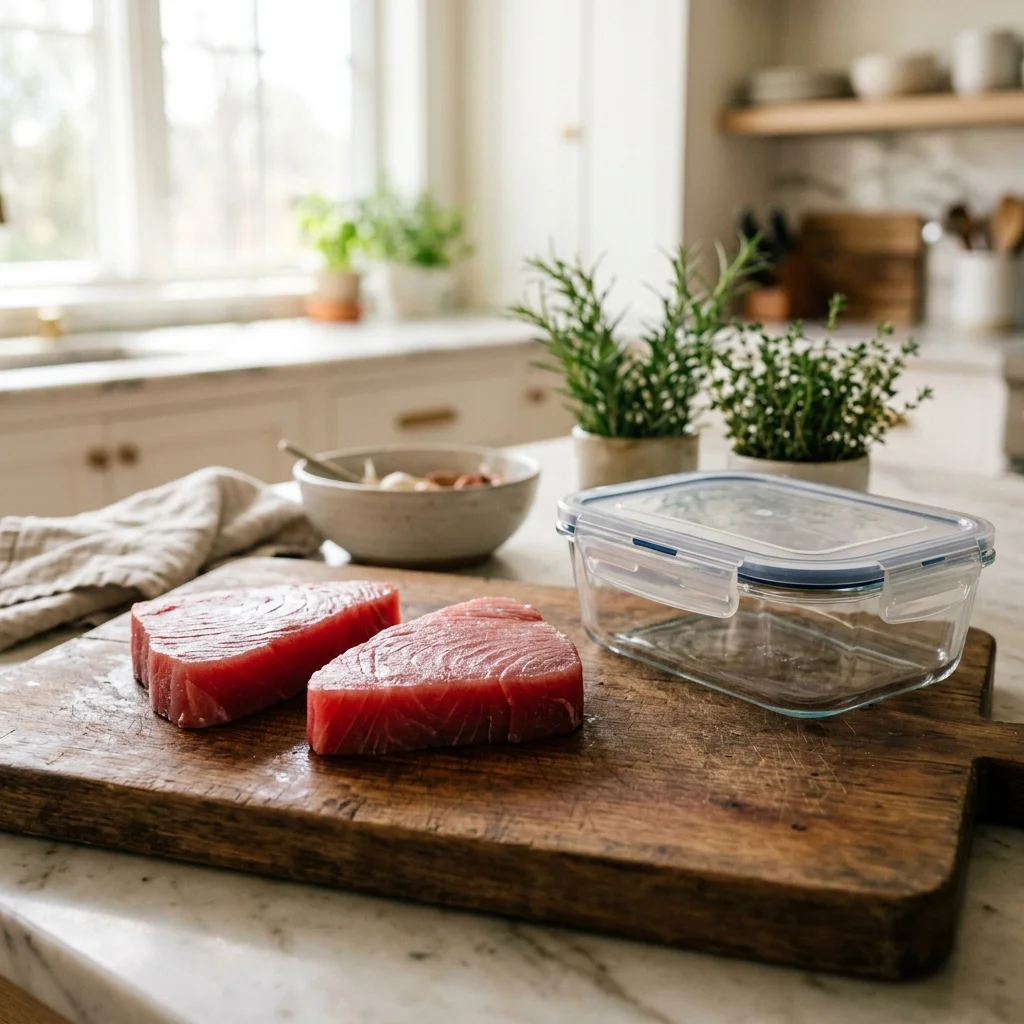
Preventing inner can oxidation and minimizing exposure to air is essential. 💡 Storage Tip: After opening, transfer leftover tuna and its oil/brine into a clean glass container or BPA-free plastic container, seal tightly, and store.
Refrigerate at 0–4°C — Cold Storage (3–4 Days) ❄️
Transferring tuna into an airtight container and refrigerating quickly inhibits bacterial growth. 💡 Storage Tip: Store on a deep shelf inside the refrigerator where temperature remains steady at 0–4°C (32–39°F). Consume within 3–4 days for optimal safety.
Portion and seal tightly to freeze — Frozen Storage (30–90 Days) 🧊
For long-term storage, portion tuna into single-use amounts and freeze. 💡 Storage Tip: Wrap single servings tightly in plastic wrap or place in small airtight containers, then store in the freezer below -18°C (-0.4°F). Thaw directly for cooking soups, stews, or stir-fries.
2. Essential Storage Rules and Cautions
Once opened, contact with air causes the inner tin lining of the can to oxidize, potentially leaching metal into the food and accelerating spoilage. Always transfer leftover canned tuna to a glass or plastic airtight container immediately.
Residual drip (blood and moisture) on fresh or raw tuna is a primary cause of bacterial growth and strong fishy odors. Gently wipe away all surface moisture with paper towels before storing.
📌 Frequently Asked Questions (FAQ)
Should I drain the oil/brine before storing opened canned tuna? ▼
The oil (or water/brine) inside canned tuna helps prevent the flesh from drying out and oxidizing. Storing tuna with its liquid in an airtight container keeps it moist. You can drain the oil right before cooking according to your preference.
How long can fresh/raw tuna be kept in the refrigerator? ▼
Fresh or raw tuna spoils and discolors quickly. Pat it dry with paper towels, wrap tightly in plastic wrap, and store in the coldest part of the fridge (0–2°C / 32–35°F) for no more than 1–2 days. For longer storage, deep freezing is required.