Gochujang (Korean chili paste) brings a deep savory flavor and spicy richness to bibimbap, tteokbokki, and marinades. But have you ever opened a large tub, stored it in the cupboard, and later found a white film on top or the paste hardened? 🌶️
Although Gochujang is a traditionally fermented food with high salt content, opening the container exposes it to oxygen and airborne microorganisms, leading to white film yeast, mold growth, and moisture loss. In this guide, introduces a scientifically proven 3-step storage guide based on guidelines from food safety authorities to keep your Gochujang fresh until the very last spoonful. 🛡️
Food Safety & Scientific Evidence
This content is based on MFDS & KFRI & USDA.
 FreshSelf
Zero waste! Your smart storage assistant
FreshSelf
Zero waste! Your smart storage assistant




1. Scientifically Proven Storage Guide
Seal tightly and refrigerate at 0–5°C after opening — Cold Storage (6–12 Months) ❄️
While unopened Gochujang can be kept at room temperature, oxygen contact after opening starts deterioration. 💡 Storage Tip: Clean the rim of the container before closing, seal the lid tightly, and store in the fridge at 0–5°C (32–41°F). Cold temperatures prevent excessive fermentation, darkening, and mold growth.
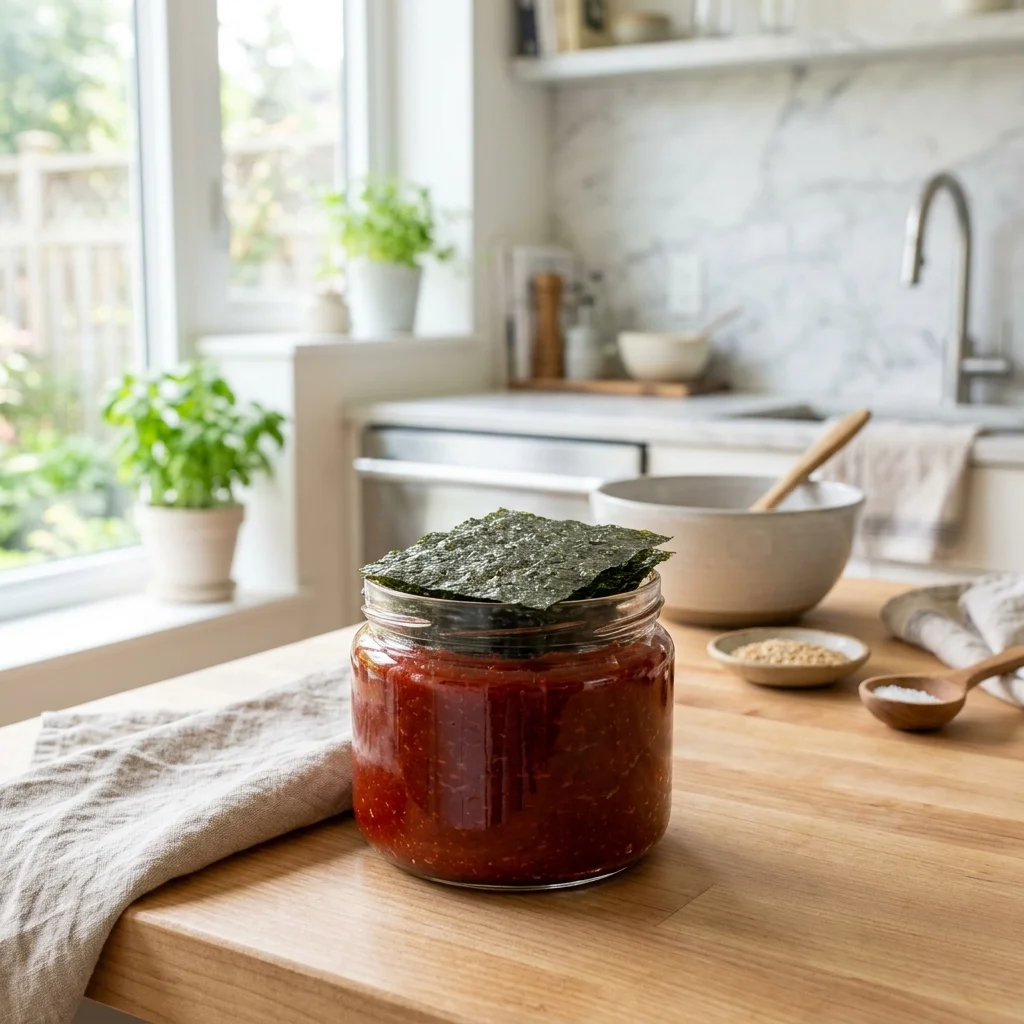
Cover surface with dry unseasoned seaweed (gim) or sugar — Anti-Mold Barrier ⬛
Blocking direct air contact with the surface prevents white film yeast from developing. 💡 Storage Tip: Flatten the Gochujang surface, then cover it completely with a sheet of dry unseasoned seaweed (gim) trimmed to size, or sprinkle a thin layer of sugar. The physical barrier and osmotic pressure effectively block mold.
Distinguish between expiration date and usable shelf life — Date Management 📅
Unopened and opened shelf lives differ significantly. 💡 Storage Tip: The stamped expiration date applies to unopened containers stored properly. Unopened Gochujang can remain safe for up to 2 years past the expiration date, but once opened, it should be consumed within 6 to 12 months under refrigeration.
2. Essential Storage Rules and Cautions
Exposure to air at room temperature allows aerobic film yeast (wild yeast) to form a white layer on the surface. After opening, Gochujang must be kept in cold refrigeration (0–5°C) to suppress microbial growth.
Introducing water, saliva, or food residue increases moisture activity and causes liquid separation inside the tub. This triggers rapid mold and bacterial growth, so always use a clean, completely dry spoon.
📌 Frequently Asked Questions (FAQ)
A white film appeared on top of my Gochujang. Should I discard it? ▼
A thin white layer on the surface is usually non-toxic film yeast (wild yeast). If it is purely a white film without green or black mold, scoop off the top layer generously with a clean spoon. The remaining paste below is safe to consume if its aroma and color are normal.
My Gochujang turned dark brown/black and smells sour. Is it still safe to eat? ▼
Darkening to dark brown or black is a natural Maillard browning reaction and is safe. However, a strong sour smell or taste indicates over-fermentation or quality degradation. For optimal taste in cooking, replacing it is recommended.