Have you ever used rich, creamy coconut milk for a dish and left the remainder in the opened tin can inside the fridge, only to find it turning bad, acquiring a metallic taste, or growing mold? 🥥
Coconut milk contains high levels of plant-based fats, making it prone to lipid oxidation and rapid bacterial multiplication at room temperature. Leaving opened cans directly in the refrigerator causes tin liners to react with oxygen, leaching metallic flavors into the liquid. Proper container transfer and temperature control are vital.
In this guide, shares a scientifically proven 3-step coconut milk storage guide based on guidelines from the FDA and USDA to prevent separation and maintain peak safety and freshness. 🛡️
Food Safety & Scientific Evidence
This content is based on FDA & USDA & MFDS & RDA.
 FreshSelf
Zero waste! Your smart storage assistant
FreshSelf
Zero waste! Your smart storage assistant









1. Scientifically Proven Storage Guide
Transfer to an airtight glass/plastic container immediately — Block Metal Oxidation 🫙
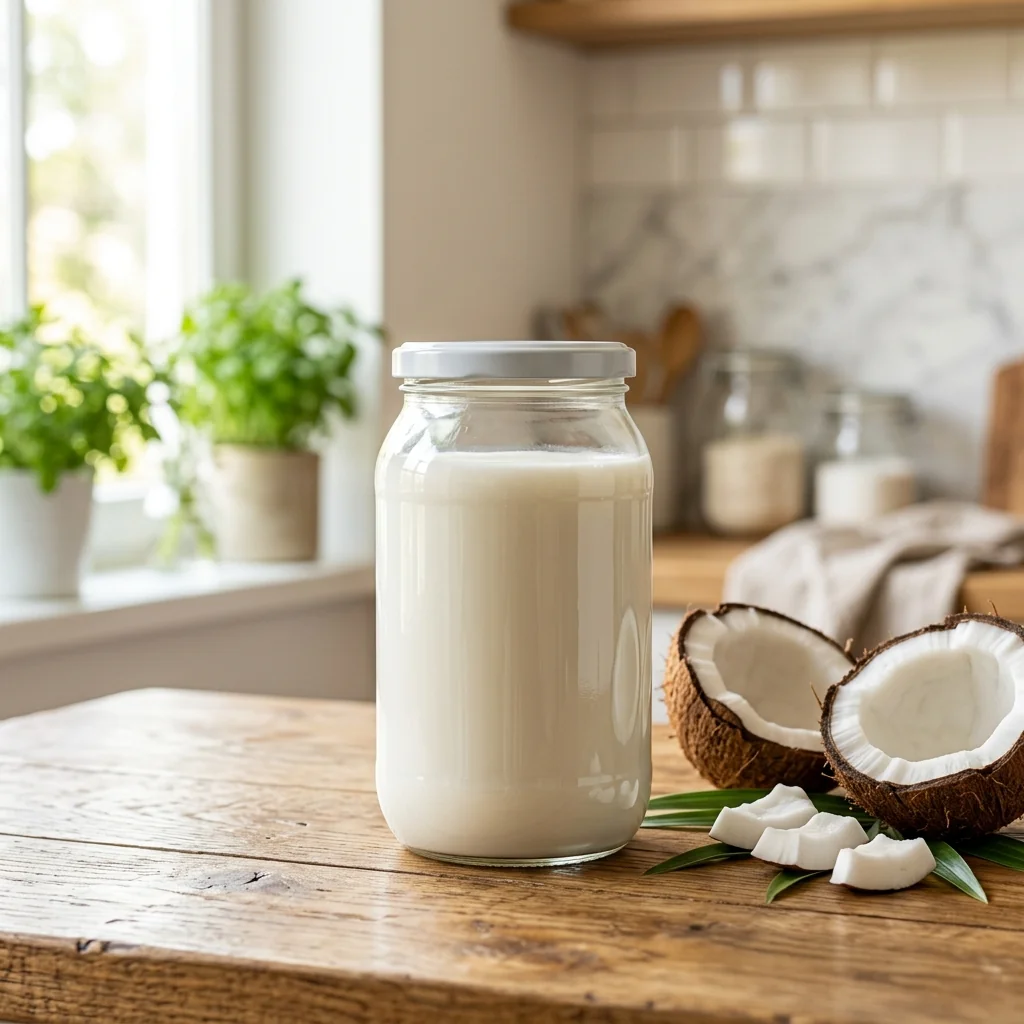
Once a metal can is opened, exposure to air initiates inner metal oxidation. 💡 Storage Tip: Pour unused coconut milk into a clean glass jar or BPA-free airtight container right away and seal tightly. This prevents metallic contamination and protects against fridge odor absorption.
Refrigerate below 4°C — Short-Term Storage (4–6 Days) ❄️
Opened coconut milk is rich in moisture, proteins, and fats, creating a fertile ground for microbes. 💡 Storage Tip: Place the airtight container in the main fridge compartment or crisper at 0–4°C. Consume within 4–6 days of opening.
Portion in ice cube trays and freeze — Long-Term Storage (2–3 Months) 🧊
Freezing in ice cube trays is the most efficient method for storing leftover coconut milk. 💡 Storage Tip: Pour coconut milk into ice cube trays, freeze solid, then transfer the frozen cubes into a freezer Ziploc bag below -18°C. Store for up to 2–3 months. Whisk or heat gently upon thawing to re-emulsify separated fat layers.
2. Essential Storage Rules and Cautions
Exposing opened cans to air inside the fridge oxidizes the metal liner, leaching tin into the liquid and imparting a harsh metallic flavor or causing spoilage. Always transfer remaining coconut milk to an airtight glass or food-grade plastic container immediately after opening.
A hardened white layer of fat forming at the top of chilled coconut milk is a natural separation of coconut oil solids. However, leaving open coconut milk at room temperature allows explosive bacterial growth within hours. Refrigerate immediately upon opening, and discard if you detect a sour smell or mold.
📌 Frequently Asked Questions (FAQ)
My refrigerated coconut milk separated into a thick top layer and watery bottom. Should I throw it out? ▼
No, do not throw it out! This is a completely natural separation where natural saturated fat (coconut oil) solidifies at low temperatures and floats to the top. Simply shake the container or warm and whisk the coconut milk before cooking to restore a smooth emulsion.
Where should unopened canned or tetra-pak coconut milk be stored? ▼
Unopened cans or sterile tetra-paks should be stored in a cool, dry, dark pantry at room temperature (10–21°C / 50–70°F). They remain fresh until the printed expiration date.