Beloved globally as a nutrient-dense cruciferous vegetable and a low-carb substitute in Western and Indian cuisine! However, have you ever stored cauliflower only to find it turning yellow or developing black spots? 🥦
Cauliflower has a very high post-harvest respiration rate, causing its powerful anti-cancer compound Glucosinolate and Vitamin C to rapidly decompose. Additionally, exposure to natural Ethylene gas emitted by fruits accelerates yellowing (chlorophyll breakdown) and tissue degradation.
In this guide, we introduce a scientifically proven 3-step cauliflower storage guide based on guidelines from agricultural and food safety authorities to slow respiration and protect key nutrients. 🛡️
Food Safety & Scientific Evidence
This content is based on RDA & USDA & MFDS.
 FreshSelf
Zero waste! Your smart storage assistant
FreshSelf
Zero waste! Your smart storage assistant








1. Scientifically Proven Storage Guide
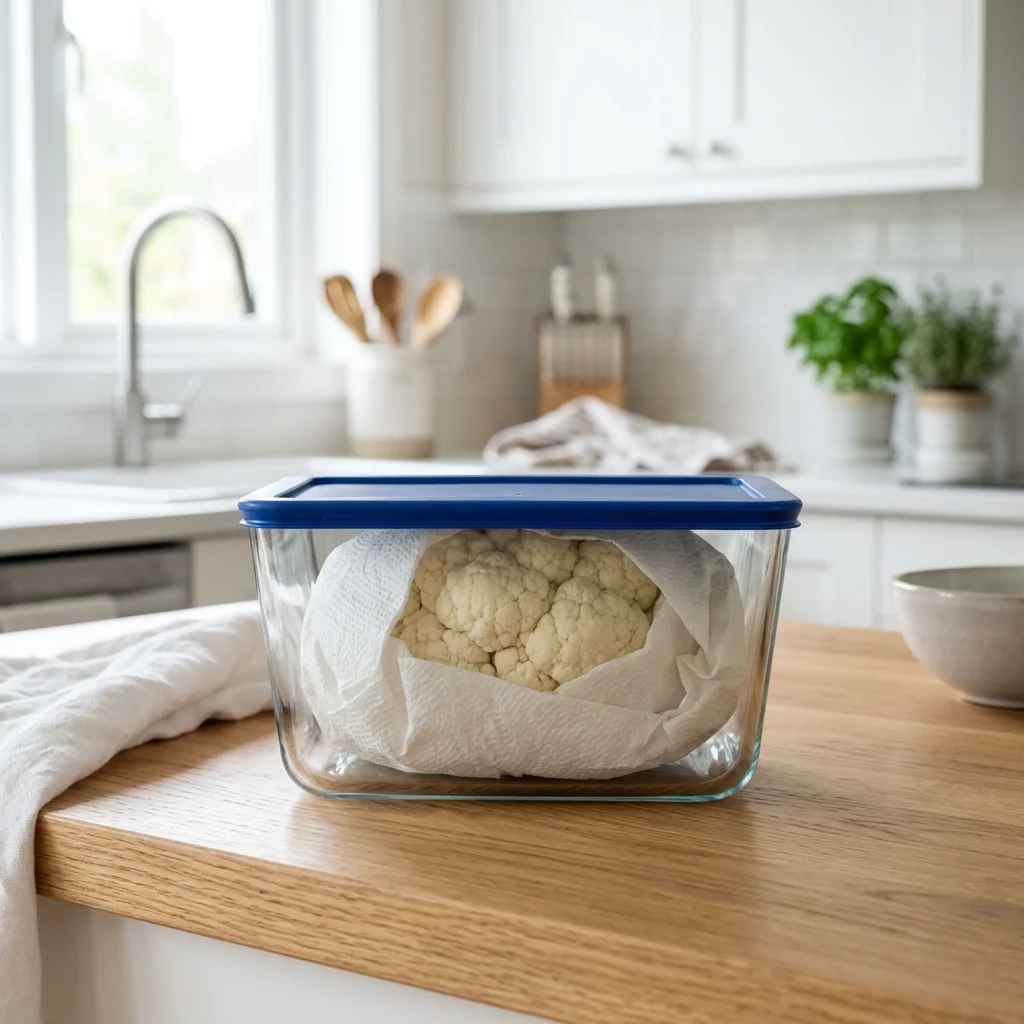
Wrap unwashed head in paper towels — Moisture Control & Browning Protection 📦
Brush off any dirt without washing and wrap the head in paper towels. 💡 Storage Tip: Leaving outer leaves attached helps retain moisture. Paper towels absorb excess humidity and prevent drying out, providing a barrier against yellowing.
Refrigerate at 0–2°C and 90–95% RH — Cold Storage (1–2 Weeks) ❄️
The optimal temperature to minimize respiration rate and nutrient breakdown is 0–2°C (32–36°F) with 90–95% relative humidity. 💡 Storage Tip: Place the wrapped head in a loose plastic bag or container in the crisper drawer to keep it fresh for 1 to 2 weeks.
Blanch and flash freeze below -18°C — Freezer Storage (10–12 Months) 🧊
For long-term storage, blanching is essential to deactivate auto-lytic enzymes. 💡 Storage Tip: Cut into florets, blanch in boiling salted water for 1–2 minutes, cool in ice water, dry completely, and freeze in Ziploc bags (-18°C / 0°F) for 10 to 12 months.
2. Essential Storage Rules and Cautions
Cauliflower is extremely sensitive to ethylene gas. Storing it near apples, bananas, or tomatoes causes rapid yellowing of curds and structural collapse. Keep them completely separated.
Washing before storage traps moisture between florets, promoting mold and dark spots. Keep dry while maintaining 90–95% relative humidity to preserve crispness.
📌 Frequently Asked Questions (FAQ)
Is cauliflower with tiny black spots on the head safe to eat? ▼
Minor black specks on the surface are typically oxidation or superficial mold caused by moisture and light exposure. If curds remain firm, slice off the spots deeply and cook. However, if spots are widespread or mushy, discard immediately.
Why must cauliflower be blanched before freezing instead of frozen raw? ▼
Freezing raw cauliflower allows internal enzymes to remain active, destroying Vitamin C and glucosinolates while making the florets mushy upon thawing. Blanching deactivates these enzymes, locking in color, crisp texture, and nutrients.