Have you ever bought sweet, juicy cherries only to find them soft, moldy, or spoiled in the fridge within a few days? 🍒
Cherries are non-climacteric fruits that do not ripen further after harvesting and are extremely sensitive to temperature and humidity fluctuations. When exposed to heat or moisture, their protective natural coating breaks down, making them highly susceptible to mold and decay.
In this guide, introduces a scientifically proven 3-step cherry storage guide recommended by agriculture and food safety experts to maximize crispness and flavor. 🛡️
Food Safety & Scientific Evidence
This content is based on RDA & USDA & MFDS.
 FreshSelf
Zero waste! Your smart storage assistant
FreshSelf
Zero waste! Your smart storage assistant





1. Scientifically Proven Storage Guide
Sort damaged cherries and keep stems attached — Sorting & Stem Protection 📦
Bruised or soft cherries rapidly rot nearby healthy fruit. 💡 Storage Tip: Separate damaged cherries for immediate consumption, and store only firm, unwashed cherries with intact stems.
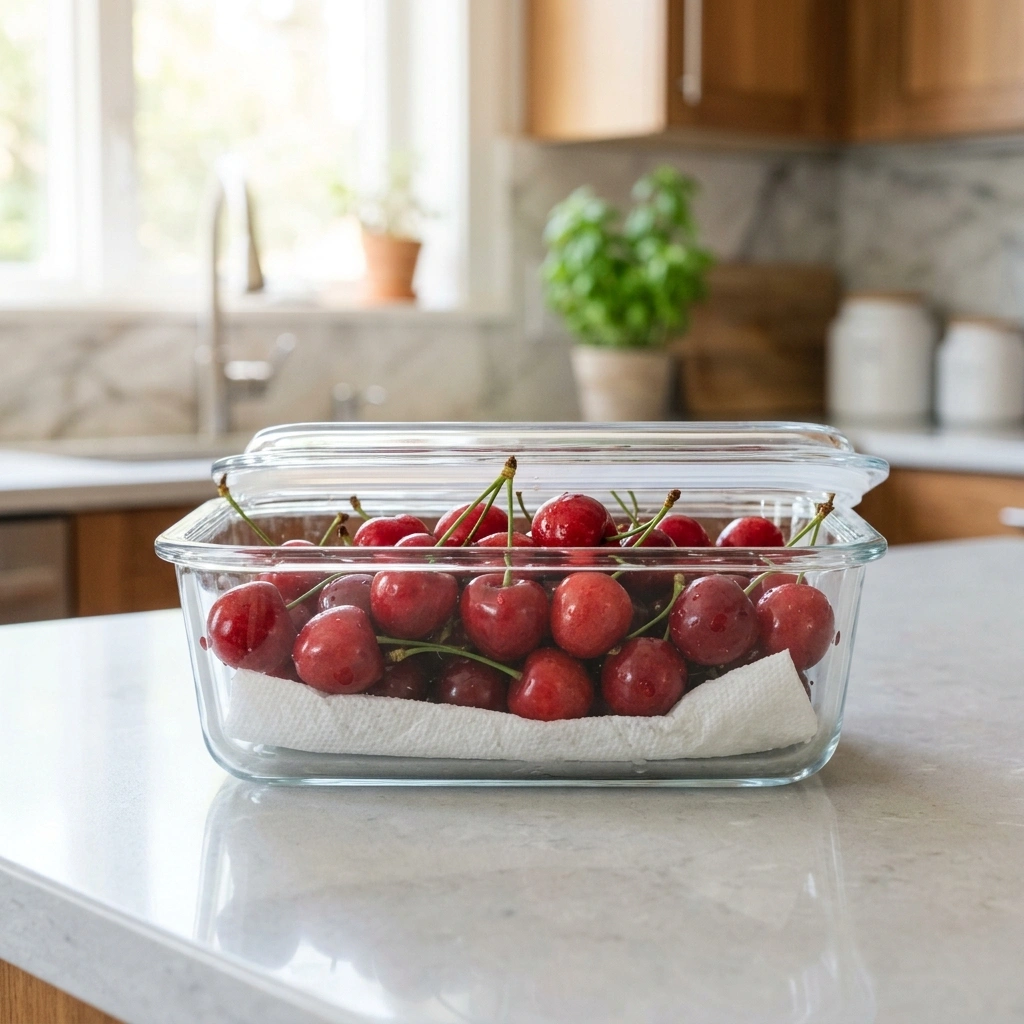
Line with paper towels and refrigerate at 0–2°C — Moisture Control & Cold Storage (7–10 Days) ❄️
Cherries need moisture protection while maintaining proper ventilation to stay crisp. 💡 Storage Tip: Line a container with paper towels, place unwashed cherries in a single layer, and keep the lid loosely covered or ventilated in the crisper drawer (0–2°C).
Pit, seal, and freeze — Long-Term Storage (1 Year) 🧊
For storage beyond a month, freezing is the optimal solution. 💡 Storage Tip: Wash thoroughly, dry completely, and remove stems and pits. Flash freeze in a single layer on a tray before transferring to a freezer Ziploc bag below -18°C.
2. Essential Storage Rules and Cautions
Storing wet cherries traps moisture around the stem and skin, creating an ideal environment for mold and bacteria to proliferate rapidly. Always wash cherries immediately before eating.
Detaching the stem leaves a rupture on the fruit surface, accelerating moisture loss and creating an entry point for spoilage microbes. Keep stems attached to prolong freshness.
📌 Frequently Asked Questions (FAQ)
There is a white powdery film on the cherries. Are they safe to eat? ▼
Yes! The white powdery substance is a natural protective coating called 'bloom' produced by the fruit to prevent moisture loss. It is non-toxic and a clear indicator of freshness.
What is the best way to enjoy frozen cherries? ▼
Fully thawing frozen cherries makes them mushy due to cellular breakdown. It is best to thaw them slightly for 5–10 minutes as frozen snacks or blend them into smoothies, jams, and baked goods.