Have you ever opened a pouch of matcha powder only to find its vivid green color dulled to a brownish hue and its aromatic freshness gone? 🍵
Matcha powder is made by stone-grinding shade-grown tea leaves into ultra-fine particles. This creates an extremely large surface area exposed to oxygen and light. As a result, its key antioxidants—catechins (EGCG)—and vibrant green chlorophyll rapidly undergo photo-oxidation when exposed to UV light, ambient light, and air, destroying nutrients and browning the powder. Furthermore, matcha exhibits high hygroscopicity, quickly absorbing atmospheric moisture which causes clumping and mold growth.
In this guide, we share a scientifically proven 3-step matcha powder storage guide based on standards from MAFF (Japan), USDA, and MFDS to preserve its bright green color, umami flavor, and active nutrients. 🛡️
Food Safety & Scientific Evidence
This content is based on MAFF & USDA & MFDS.
 FreshSelf
Zero waste! Your smart storage assistant
FreshSelf
Zero waste! Your smart storage assistant




1. Scientifically Proven Storage Guide
Store unopened packages in the freezer or refrigerator — Cold Storage (360 Days) 📦
Unopened matcha powder stays freshest when kept frozen or chilled away from light and oxygen. 💡 Storage Tip: Keep unopened original packaging in the freezer (below -18°C) or refrigerator crisper (0–5°C / 32–41°F). Sealed matcha maintains its vibrant color and nutrient profile for up to 1 year.
Keep opened matcha in an opaque airtight container in the fridge — Refrigerated Storage (30–60 Days) ❄️
Once opened, rapid oxygen and light exposure begin degradation. 💡 Storage Tip: Transfer opened matcha into an opaque, airtight light-proof container and refrigerate at 0–5°C (32–41°F). Consume within 1 to 2 months for peak EGCG content and flavor.
Allow container to reach room temperature before opening — Prevent Condensation 🌡️
Opening a cold matcha container immediately creates condensation inside due to temperature differences, exposing the powder to moisture. 💡 Storage Tip: Wait 10 to 15 minutes after removing from the fridge until the container reaches room temperature before opening.
2. Essential Storage Rules and Cautions
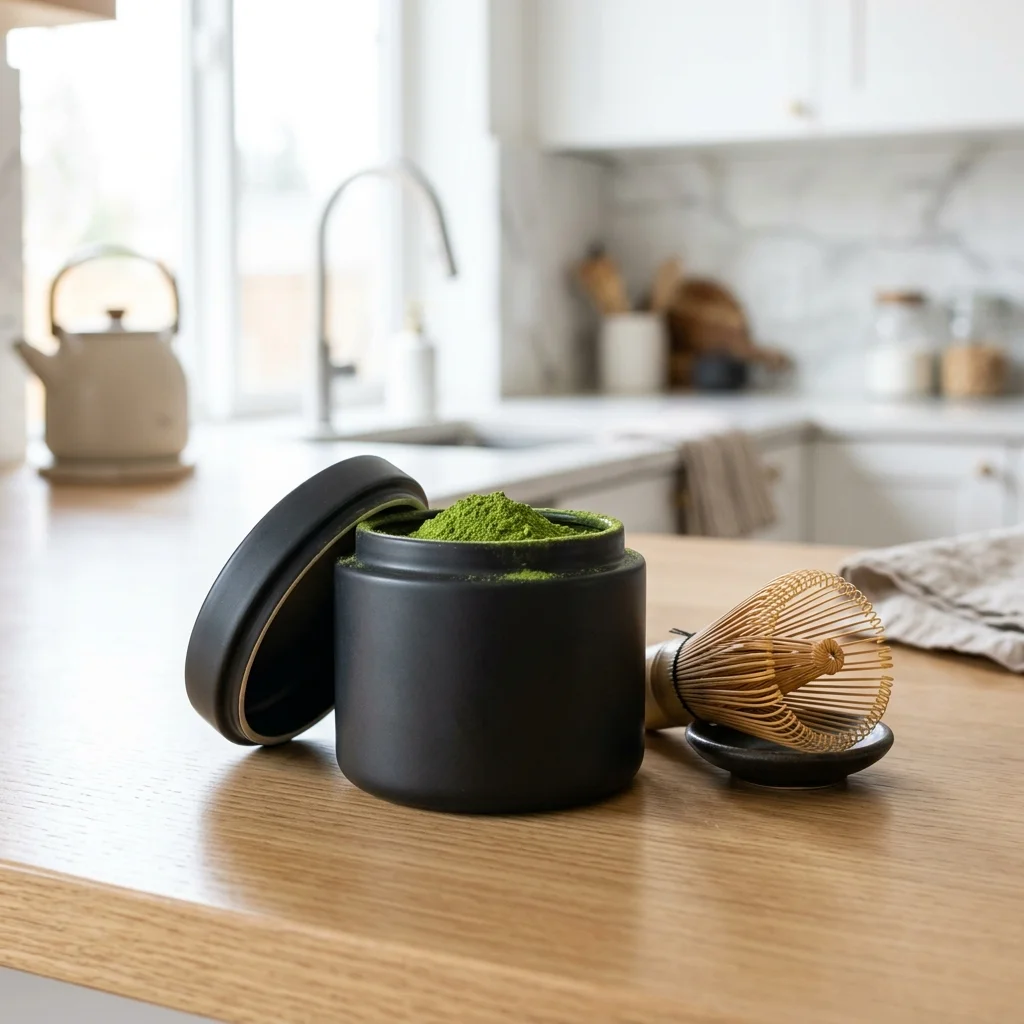
Because ultra-fine matcha particles have a massive surface area, light and oxygen trigger rapid photo-oxidation, degrading catechins (EGCG) and chlorophyll into a dull brown. Always store in a light-proof, opaque airtight container (such as a dark tin or aluminum pouch).
Matcha powder is highly hygroscopic and rapidly absorbs ambient moisture. Dampness leads to particle clumping and creates a breeding ground for microorganisms. Always use completely dry utensils.
📌 Frequently Asked Questions (FAQ)
My matcha powder turned from bright green to brownish. Is it still safe to consume? ▼
Yes, it is safe, but its quality and nutrition have significantly degraded! The color change is a result of photo-oxidation breaking down chlorophyll and catechins (EGCG) from exposure to light and air. While not harmful, it loses its vibrant umami flavor, fresh aroma, and antioxidant benefits.
Can I store opened matcha powder in a room-temperature pantry? ▼
Room temperature storage is not recommended! Ultra-fine matcha particles degrade rapidly when exposed to ambient heat, humidity, light, and oxygen. Storing it at room temperature causes rapid browning and clumping within weeks. Always store opened matcha in a light-proof airtight container in the refrigerator.