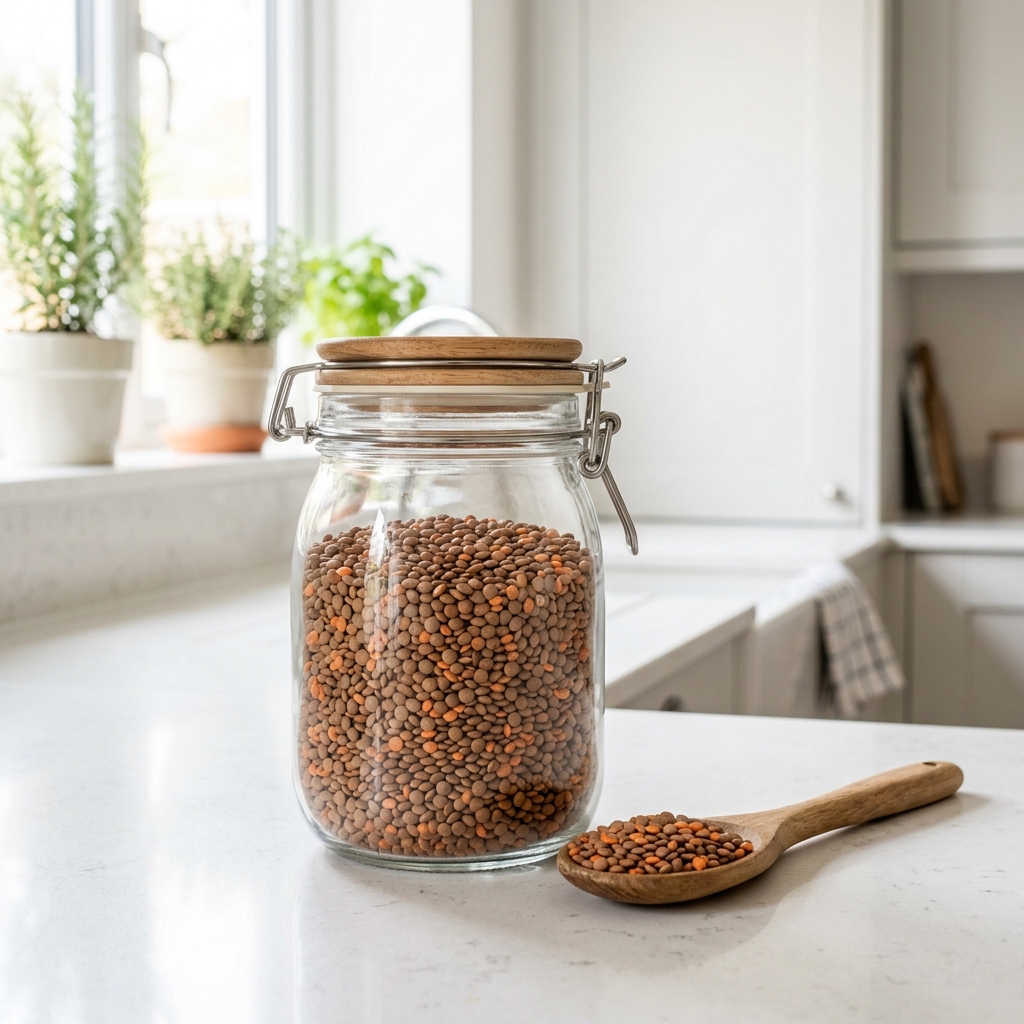
Lentils are a globally renowned superfood packed with plant-based protein, dietary fiber, and iron! 🫘
Lentils are an outstanding nutritional addition to stews, curries, soups, and salads. However, even in their dry form, if storage humidity rises, lentils face a surging risk of infestation by pests like pulse beetles (bruchid weevils) and contamination by potent, heat-stable mycotoxins such as Aflatoxin and Ochratoxin A. Maintaining dry lentil moisture content at 10–12% and water activity (Aw) below 0.65 is crucial to completely block microbial growth and insect reproduction.
In this guide, based on scientifically verified guidelines from the USDA, FDA, and MFDS, we present a 3-step optimal storage strategy to keep your lentils safe, fresh, and free from pests and toxins. 🛡️
Food Safety & Scientific Evidence
This content is based on USDA & FDA & MFDS.
 FreshSelf
Zero waste! Your smart storage assistant
FreshSelf
Zero waste! Your smart storage assistant









1. Scientifically Proven Storage Guide
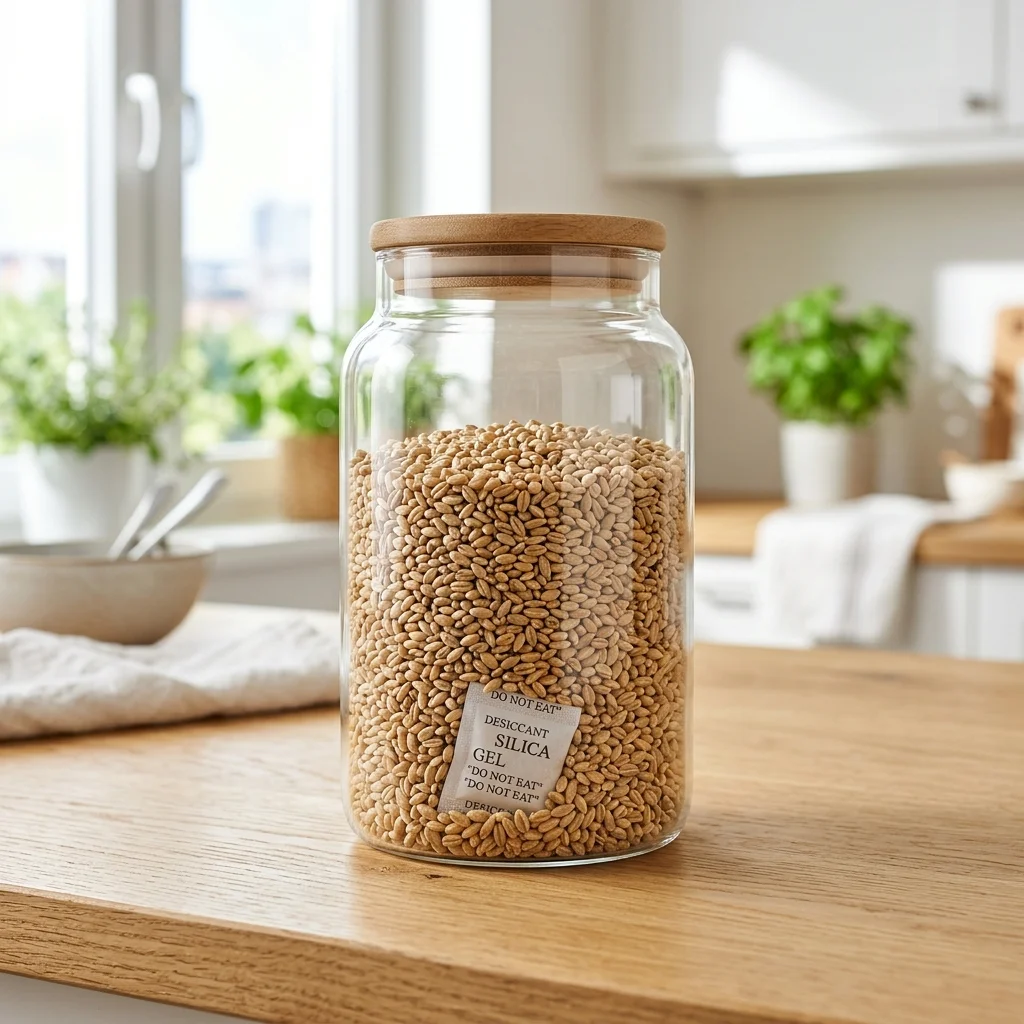
Store in airtight containers (glass/PET/PP) with desiccants — Maintain water activity (Aw) < 0.65 & Pest Control 🫙
Immediately transfer dry lentils into glass jars or food-grade PET/PP airtight containers and add a food-safe desiccant (silica gel). 💡 Storage Tip: Controlling moisture content below 10–12% keeps water activity below 0.65, effectively suppressing microbial growth and preventing pulse beetle infestations.
Keep in a cool, dark place (15–20°C) away from direct sunlight — Dry Pantry Storage (1–2 Years) 🚪
Store airtight lentil containers in a cool kitchen cabinet or dark pantry away from sunlight. 💡 Storage Tip: In a cool, dry environment at 15–20°C (59–68°F), lentils preserve their nutritional value and color without quality degradation for 1 to 2 years.
Portion and store cooked lentils in the fridge (3–5 Days) or freezer (6 Months) — Cooked Cold Storage 🧊
Drain boiled lentils, divide them into single-use portions, and place them in airtight containers or Ziploc bags. 💡 Storage Tip: Consume within 3 to 5 days when refrigerated at 0–4°C, or freeze (-18°C / 0°F or lower) for up to 6 months for quick cooking.
2. Essential Storage Rules and Cautions
Original paper or thin plastic packaging allows ambient humidity to penetrate, elevating water activity. High moisture enables pulse beetles to pierce packaging and lay eggs while encouraging mycotoxin production; always transfer to airtight containers.
Boiled lentils have high water activity, creating an ideal environment for bacterial and mold proliferation. Leaving cooked lentils at room temperature for over 2 hours allows foodborne pathogens to multiply rapidly; cool and refrigerate or freeze immediately.
📌 Frequently Asked Questions (FAQ)
My dry lentils have tiny holes or fine powder in the bag. Are they safe to eat? ▼
No, absolutely not! Tiny holes or powder indicate that pulse beetles or other stored-product pests have infested the lentils, laying eggs and feeding inside. The beans are contaminated with insect larvae, waste, and potential mold toxins, so discard the entire batch immediately.
Dry lentils have white powder or spots on the surface. Can I wash and cook them? ▼
No! White spots or powder strongly suggest mold spores capable of producing Aflatoxin or Ochratoxin A. These mycotoxins are heat-stable and cannot be washed away or destroyed by boiling at 100°C. Contaminated lentils must be discarded.