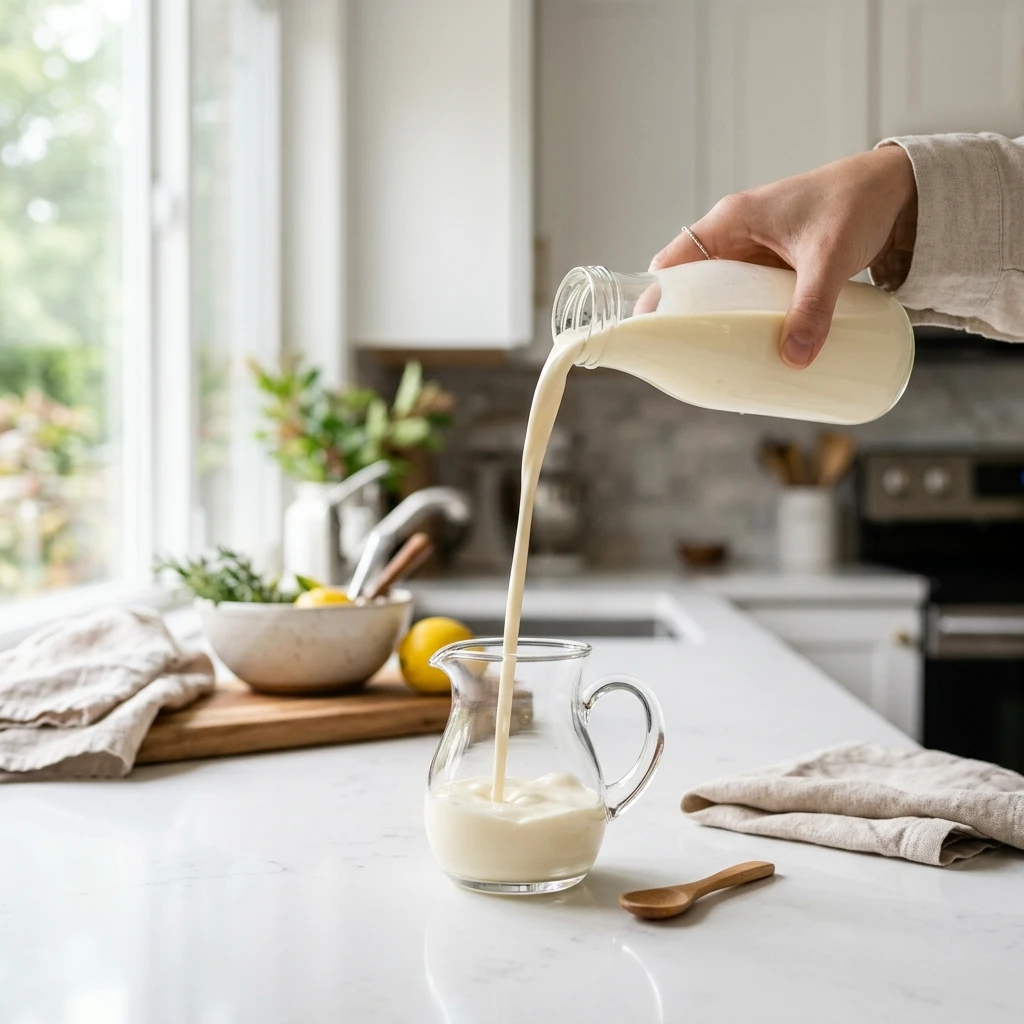
Have you ever bought heavy cream for a pasta or dessert recipe, left the remainder in the fridge, only to find it curdled and smelling sour a few days later? 🥛
Heavy cream is a delicate dairy emulsion containing over 36% milk fat suspended in liquid. It is exceptionally sensitive to temperature changes, bacterial contamination, and oxygen exposure, making it spoil rapidly once opened while easily absorbing fridge odors.
In this guide, introduces a scientifically proven 3-step storage guide based on expert USDA and MFDS guidelines to preserve the rich flavor and fresh quality of your heavy cream. 🛡️
Food Safety & Scientific Evidence
This content is based on USDA & MFDS.
 FreshSelf
Zero waste! Your smart storage assistant
FreshSelf
Zero waste! Your smart storage assistant









1. Scientifically Proven Storage Guide
Wipe spout & seal tightly with a clip right after opening — Oxygen & Odor Barrier 📦
The milk fats in heavy cream strongly absorb surrounding food odors and oxygen from the air. 💡 Storage Tip: Clean any cream residue from the container opening after use, then seal tightly with a bag clip to block ambient fridge smells and oxidation.
Refrigerate at 0–4°C on a deep inner shelf — Cold Storage (7 Days) ❄️
Cold temperatures inhibit bacterial multiplication and maintain emulsion stability. 💡 Storage Tip: Keep the sealed cream on a cold inner shelf or crisper drawer (0–4°C). Once opened, consume within 5 to 7 days for safety.
Whip into dollops or freeze liquid cream in ice trays — Long-Term Storage (90 Days) 🧊
Freezing liquid heavy cream breaks its emulsion, making it impossible to whip after thawing. 💡 Storage Tip: Whip cream into peaks and freeze individual dollops on parchment paper before transferring to a Ziploc bag, or freeze liquid cream in ice trays for cooking sauces and soups.
2. Essential Storage Rules and Cautions
The refrigerator door experiences the most severe temperature fluctuations every time it opens, destroying the delicate milk fat emulsion and accelerating bacterial growth. Always store cream on a cold, deep inner shelf (0–4°C / 32–39°F).
Touching the carton spout with bare hands or inserting used utensils introduces harmful bacteria that spoil the cream within hours. Always use clean, dry utensils and wipe the container spout clean.
📌 Frequently Asked Questions (FAQ)
Why won't thawed heavy cream whip into stiff peaks? ▼
Freezing destroys the emulsion bond between water and milk fat. When thawed, the fat separates from the liquid, making it impossible to trap air into a stable foam. However, thawed cream works perfectly for cooked dishes like pasta sauces, soups, and ganache.
How can I tell if heavy cream has spoiled? ▼
If the cream emits a sour or stale odor, forms thick cottage cheese-like curdles when poured, or exhibits mold spots on the rim, it has spoiled and should be discarded immediately due to harmful bacterial growth.