Have you ever opened a can of ham or SPAM, used half, and left the remainder inside the original tin back in the fridge? 🥫
While canned ham is commercially sterile and shelf-stable at room temperature for years when unopened, opening the tin introduces oxygen. This reacts with the inner metal lining (tin/iron), causing tin oxidation that imparts a metallic flavor to the meat while accelerating lipid rancidity and bacterial growth.
In this guide, shares a scientifically proven 3-step storage guide based on guidelines from the USDA, FDA, and MFDS to keep your opened canned ham hygienic, flavor-rich, and metallic-taste-free. 🛡️
Food Safety & Scientific Evidence
This content is based on USDA & MFDS & FDA.
 FreshSelf
Zero waste! Your smart storage assistant
FreshSelf
Zero waste! Your smart storage assistant









1. Scientifically Proven Storage Guide
Transfer immediately to an airtight container and refrigerate — Refrigerated Storage (3–5 Days) ❄️
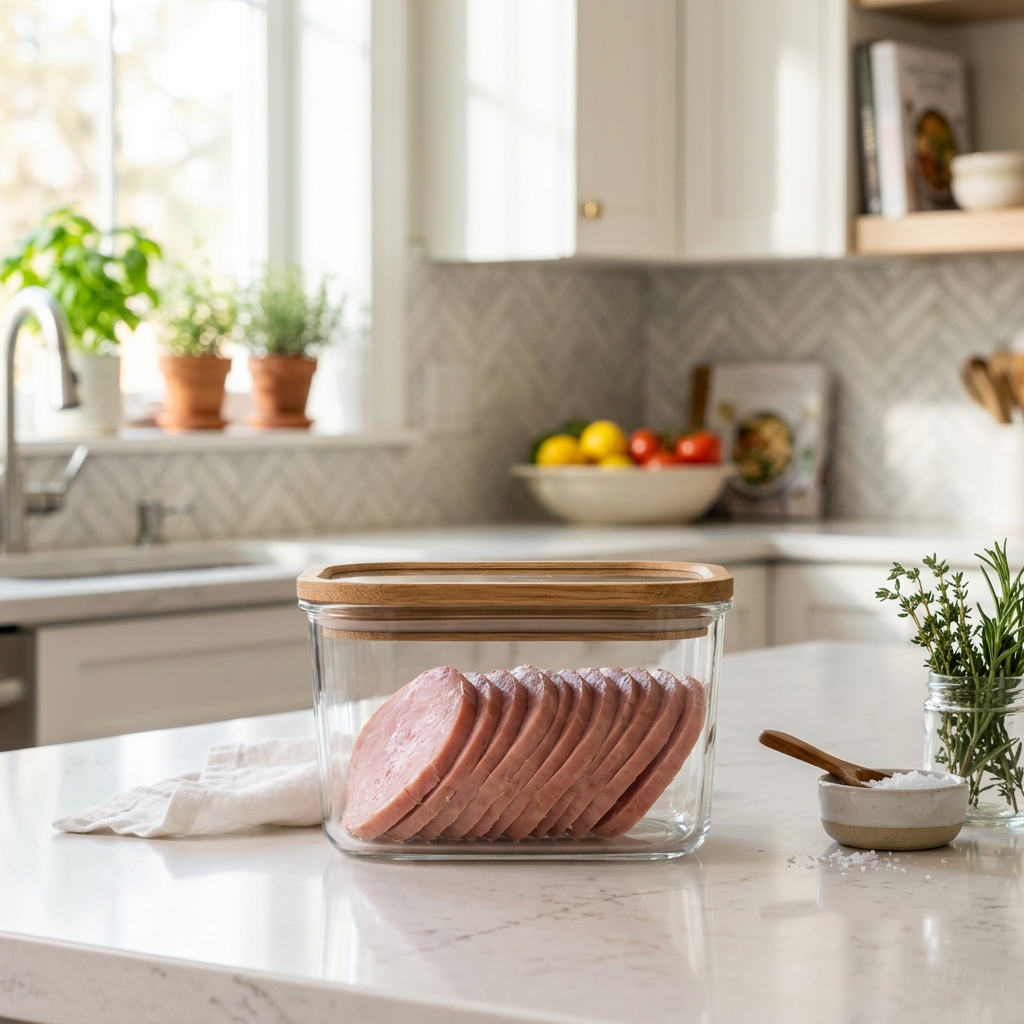
Always remove leftover ham from the original can right after opening. 💡 Storage Tip: Remove the ham completely from the can and place it in a glass or plastic airtight container, or wrap tightly in food-grade plastic wrap before refrigerating (0–4°C / 32–39°F) to prevent surface drying and fridge odor absorption.
Portion into single-use sizes and wrap individually — Portion Wrap 📦
Storing the ham block as a whole exposes the meat to knife blades and air every time you slice off a piece. 💡 Storage Tip: Slice or dice the ham into single-cooking portions and wrap each portion tightly in plastic wrap or parchment paper before sealing in a container.
Double-seal and freeze for long-term storage — Freezer Storage (30–60 Days) 🧊
If you cannot finish the opened ham within 5 days, freezing is the safest method. 💡 Storage Tip: Wrap sliced individual portions tightly in plastic wrap, place them inside a freezer Ziploc bag, and freeze below -18°C (0°F). Consume within 1 to 2 months for best texture, ideal for pan-frying.
2. Essential Storage Rules and Cautions
Once opened, exposure to oxygen causes the interior tin/iron lining of the can to corrode. Leached tin imparts an unpleasant metallic flavor into the meat and poses food safety risks. Always transfer leftover ham to a non-metallic container.
Although canned ham contains salt and preservatives, opening it exposes the meat to airborne bacteria just like fresh pork. Even under refrigeration, it spoils after 3 to 5 days, so consume it promptly.
📌 Frequently Asked Questions (FAQ)
There is a layer of white gelatin/fat on my canned ham. Has it gone bad? ▼
No! The white substance on canned ham is natural pork fat (lard) and gelatin that solidifies when cold. It is completely safe to eat and melts into savory juices when cooked in a pan.
The ham can is swollen or dented. Is it still safe to eat? ▼
No, never eat from a swollen or severely dented can! A bulging can indicates the growth of anaerobic bacteria (such as Clostridium botulinum) producing gas inside, while severe dents can cause micro-cracks that compromise sterility. Discard it immediately for your safety.