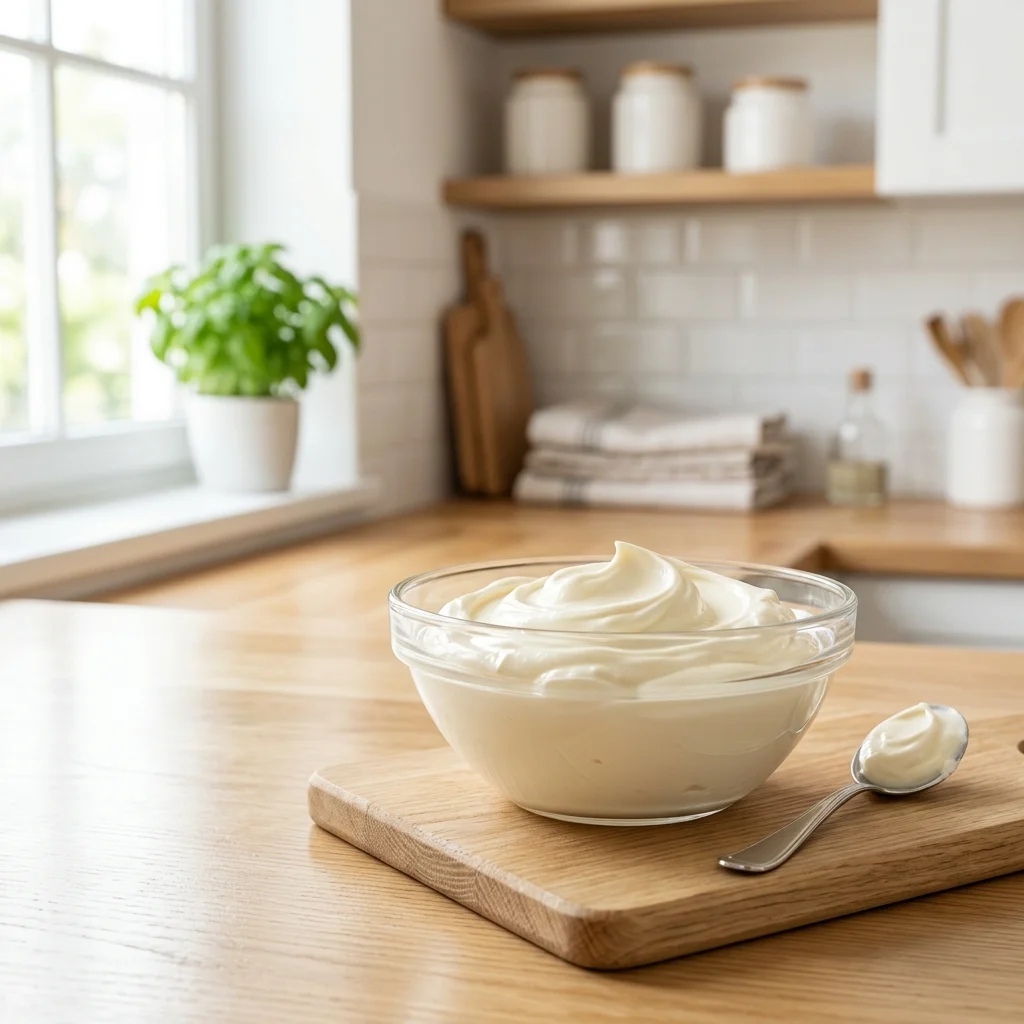
Have you ever refrigerated leftover mascarpone cheese only to find mold growing on it within days, or frozen it for long-term storage only to have it break and curdle into a watery mess upon thawing? 🧀
Mascarpone is a fresh cheese with an exceptionally high butterfat content (70–75%) and high water activity ($a_w$). This biochemical structure makes it far more susceptible to bacterial and fungal spoilage than hard cheeses. Most importantly, it exists as a delicate fat-in-water emulsion that is permanently destroyed when frozen.
In this guide, based on official guidelines from the USDA and the International Dairy Foods Association (IDFA), we share a 3-step scientific storage method to safely preserve the rich flavor and silky texture of mascarpone cheese. 🛡️
Food Safety & Scientific Evidence
This content is based on USDA & MFDS & IDFA.
 FreshSelf
Zero waste! Your smart storage assistant
FreshSelf
Zero waste! Your smart storage assistant









1. Scientifically Proven Storage Guide
Store unopened packages at 1–4°C in the refrigerator — Unopened Cold Storage (Until Expiration Date) 🧀
Unopened mascarpone cheese is hermetically sealed and requires a constant temperature of 1–4°C (34–39°F). 💡 Storage Tip: Place it on an interior refrigerator shelf rather than the door to avoid temperature fluctuations, preserving quality until the package printed expiration date.
Seal surface tightly with plastic wrap after opening — Opened Cold Storage (3–5 Days) 🧴
Exposure to airborne mold spores and oxygen begins immediately upon opening. 💡 Storage Tip: Smooth the surface of the remaining cheese, press plastic wrap directly against the cheese surface to block air, seal the outer lid tightly, and refrigerate at 1–4°C for up to 3 to 5 days.
Store as a finished dish for extended preservation — Finished Dish Storage 🍰
Instead of freezing the raw cheese, prepare and freeze a completed dish like tiramisu. 💡 Storage Tip: Combining mascarpone with sugar, eggs, or syrups in baked goods or desserts stabilizes the emulsion structure, minimizing texture breakdown during freezing and thawing.
2. Essential Storage Rules and Cautions
Freezing mascarpone causes water to form ice crystals, permanently breaking the delicate emulsion between milk fat and water. Upon thawing, the cheese separates into liquid whey and grainy, curdled lumps, irreversibly destroying its smooth, creamy texture.
Due to its high water activity, introduced moisture, saliva, or food crumbs from dirty utensils cause blue mold and bacteria to multiply rapidly within days. Always use a clean, dry, dedicated utensil.
📌 Frequently Asked Questions (FAQ)
I accidentally froze my mascarpone cheese. Can I restore its smooth texture? ▼
Unfortunately, it cannot be fully restored to its original velvety texture. Freezing breaks the fat-water emulsion, leading to whey separation. While vigorously whisking or blending the thawed cheese can re-incorporate some moisture, it will remain slightly grainy. It is best repurposed for cooked dishes like pasta sauces or baked goods.
Why must opened mascarpone cheese be consumed within 3 to 5 days? ▼
Mascarpone is an unripened fresh cheese with high water activity ($a_w$) and no added preservatives. Once opened, airborne mold spores and bacteria thrive rapidly in its high-fat, high-moisture environment, making consumption within 3 to 5 days under 1–4°C refrigeration essential for safety.