Have you ever bought fresh octopus only to find it turning rubbery, slimy, or fishy in the fridge? 🐙
Octopus is a highly perishable seafood rich in water and active proteolytic enzymes, causing rapid texture degradation and decay post-harvest. Leaving uncleaned octopus with slime and sucker debris significantly increases bacterial contamination and foodborne illness risks.
In this guide, introduces a scientifically proven 3-step storage guide based on safety guidelines from agriculture and food safety authorities to keep your octopus tender, springy, and delicious. 🛡️
Food Safety & Scientific Evidence
This content is based on RDA & USDA & MFDS.
 FreshSelf
Zero waste! Your smart storage assistant
FreshSelf
Zero waste! Your smart storage assistant



1. Scientifically Proven Storage Guide
Scrub with flour and salt to remove slime and debris — Hygienic Preparation 🐙
Failing to remove surface mucus and debris in the suckers leads to rapid moisture loss and bacterial decay. 💡 Storage Tip: Remove guts, eyes, and beak. Knead thoroughly with coarse salt or flour, rinse clean under cold water, and dry completely with paper towels.
Blanch briefly before refrigerating — Cold Storage (2–3 Days) ♨️
The best way to preserve octopus texture and umami flavor is to blanch it lightly before storage. 💡 Storage Tip: Blanch in boiling water for 3–5 minutes, cool quickly in ice water, dry well, and seal in an airtight container in the fridge (0–4°C / 32–39°F) for 2–3 days.
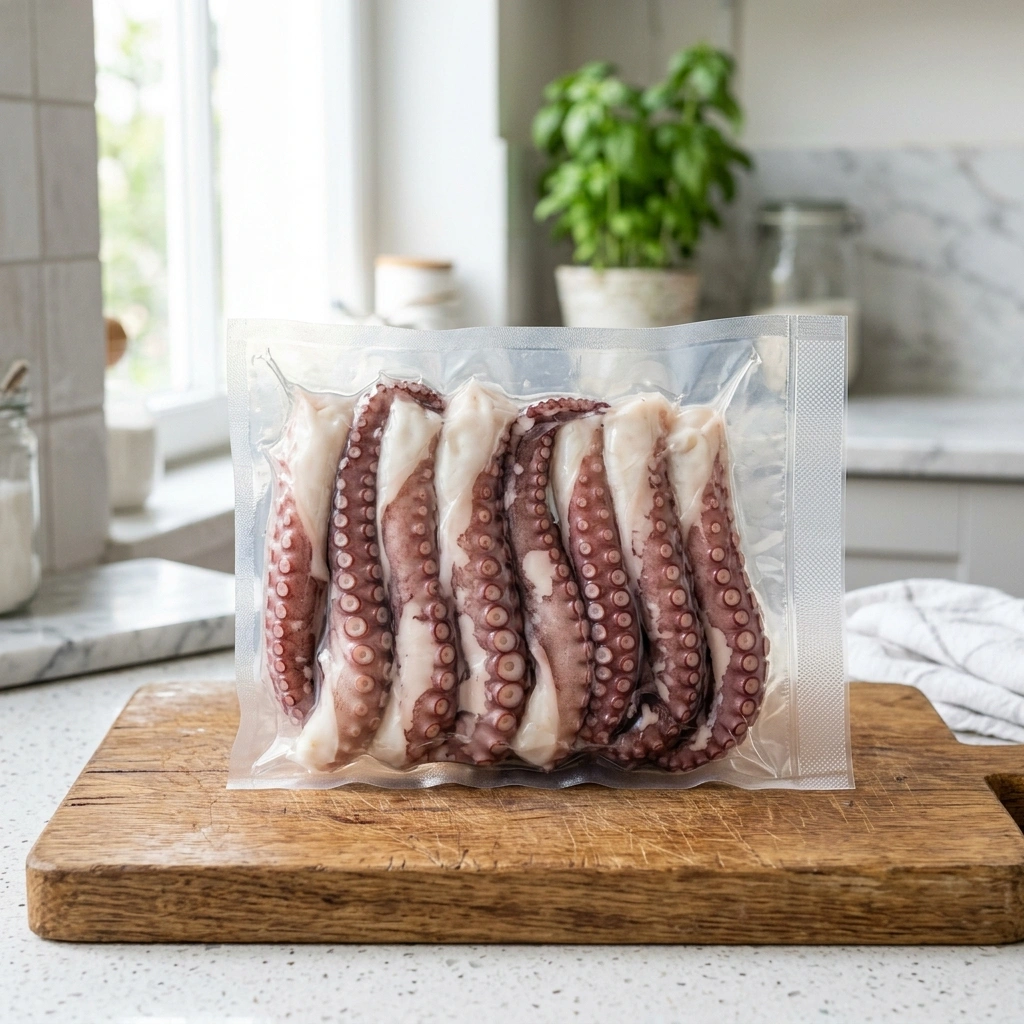
Portion and double-seal for freezing — Freezer Storage (2–3 Months) 🧊
For long-term storage, freezing blanched octopus prevents toughening and quality loss. 💡 Storage Tip: Portion blanched octopus into single-use sizes, place into Ziploc bags, squeeze out all air, and freeze below -18°C (0°F) for up to 2–3 months.
2. Essential Storage Rules and Cautions
Internal organs, ink sacs, and surface mucus harbor bacteria that accelerate spoilage. Always remove the guts, eyes, and beak, and scrub thoroughly with coarse salt or flour before storing.
Even refrigerated, raw octopus degrades rapidly through enzymatic autolysis, becoming mushy or tough while breeding bacteria like Vibrio. Consume raw octopus within 1–2 days or blanch before storing.
📌 Frequently Asked Questions (FAQ)
Does freezing make octopus meat tough and rubbery? ▼
Freezing raw octopus creates ice crystals that destroy cell structures, causing water loss and rubberiness upon thawing. However, blanching it first, drying it well, and freezing rapidly locks in moisture and preserves its springy texture.
What is the best way to thaw frozen octopus? ▼
Thaw frozen octopus slowly in the refrigerator or submerge the sealed bag in cold water. Avoid microwave thawing, as heat causes rapid muscle contraction and extreme rubberiness.