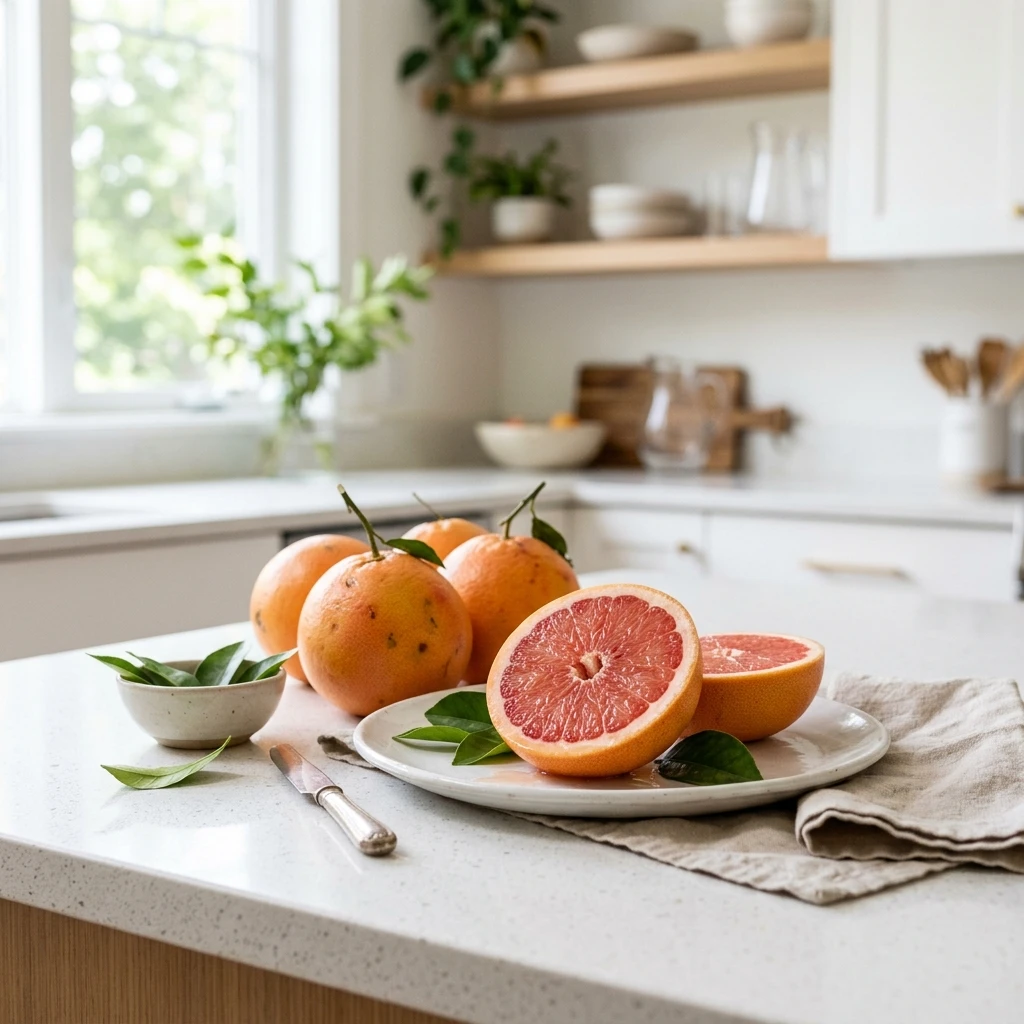
Beloved for its signature bittersweet flavor and invigorating citrus punch, grapefruit is a staple for breakfasts and healthy diets. But have you ever stored grapefruits in the fridge for too long, only to find pitted brown spots on the skin and an overwhelmingly bitter, dry flesh? 🍊
As a subtropical citrus fruit, storing grapefruit long-term in standard home refrigerators (0–4°C / 32–39°F) triggers chilling injury. Temperatures below 10°C (50°F) disrupt cell membrane lipid structures, inducing surface pitting and causing abnormal leakage of naringin, the natural flavonoid responsible for intense bitterness.
In this guide, we introduce a scientifically proven 3-step grapefruit storage guide recommended by food safety authorities to preserve juiciness and optimal flavor. 🛡️
Food Safety & Scientific Evidence
This content is based on USDA & FDA & MFDS.
 FreshSelf
Zero waste! Your smart storage assistant
FreshSelf
Zero waste! Your smart storage assistant








1. Scientifically Proven Storage Guide
Wrap each grapefruit individually in paper or paper towels — Moisture Control 🗞️
Protecting the peel from humidity build-up and friction is the essential first step. 💡 Storage Tip: Wrap dry, unwashed grapefruits individually in newspaper or paper towels to absorb excess moisture and prevent rind damage.
Store in a cool dark space at 10–12°C — Optimal Storage (1–2 Weeks Room Temp / 3–4 Weeks at 10–12°C) 🌡️
This temperature range prevents chilling injury while keeping juiciness intact. 💡 Storage Tip: Keep grapefruits in a well-ventilated, cool dark space (such as a cellar, pantry, or wine fridge) at 10–12°C (50–54°F) for up to 3–4 weeks.
Consume within 10 days if using a standard home fridge (0–4°C) — Prevent Chilling Injury ❄️
If cool storage is unavailable and you must use a regular fridge, time control is critical. 💡 Storage Tip: Wrap in newspaper, place in the crisper drawer, and consume within 10 days before chilling injury sets in.
2. Essential Storage Rules and Cautions
Because grapefruit is a subtropical fruit, long-term exposure to temperatures below 10°C causes chilling injury. This results in sunken surface pitting and leakage of bitter naringin into the pulp.
Grapefruit continuously transpires moisture. Sealing it in plastic traps ambient humidity, softening the rind and encouraging mold growth. Wrap individually in newspaper or paper towels instead.
📌 Frequently Asked Questions (FAQ)
The skin of my grapefruit developed brown, sunken pits. Is it still safe to eat? ▼
Yes, it is completely safe to eat! Sunken spots on the rind are a classic symptom of chilling injury caused by temperatures below 10°C (50°F). While not caused by bacterial decay, the leakage of naringin into the pulp makes the fruit noticeably more bitter and less juicy.
How should I store leftover cut grapefruit? ▼
Once cut, the exposed flesh loses moisture rapidly and oxidizes. Wrap the cut side tightly with plastic cling film, seal inside an airtight container, refrigerate at 0–4°C (32–39°F), and consume within 2–3 days.