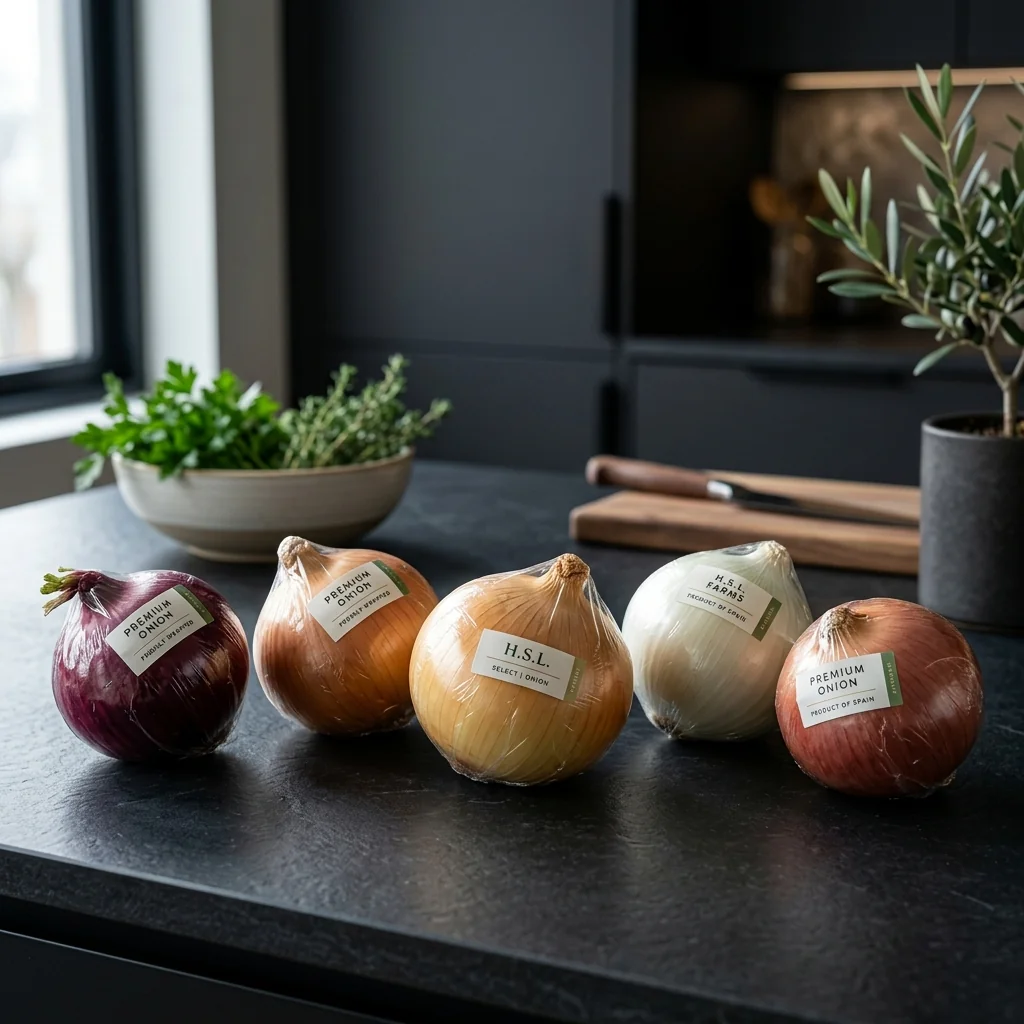
Have you ever bought a mesh bag of onions and stacked them in a balcony corner, only to find them softening, rotting at contact points, and sprouting a few days later? 🧅
Onions are bulb vegetables that continue to respire and absorb/release humidity after harvest. When stored in humid, enclosed environments, Botrytis neck rot and soft rot bacteria proliferate rapidly. Furthermore, storing onions alongside potatoes triggers mutual moisture absorption and ethylene reactions, ruining both vegetables instantly.
In this guide, shares a scientifically proven 3-step storage guide based on research from the USDA and RDA to control moisture and gas, preserving crisp, firm onions for over a month. 🛡️
Food Safety & Scientific Evidence
This content is based on RDA & USDA & FSA.
 FreshSelf
Zero waste! Your smart storage assistant
FreshSelf
Zero waste! Your smart storage assistant




1. Scientifically Proven Storage Guide
Hang unpeeled whole onions in a cool, well-ventilated area — Room Temp Storage (30 Days) 🌬️
Unpeeled onions thrive best in a cool, shaded, and well-ventilated space (10–15°C / 50–59°F). 💡 Storage Tip: Place onions individually into a mesh bag or clean pantyhose, tying a knot between each onion before hanging. This prevents them from touching each other, eliminating pressure bruises and soft rot.
Dry peeled onions thoroughly and wrap individually in plastic wrap — Cold Storage (14–21 Days) 📦
Peeled onions lack protective outer skins, leaving them highly vulnerable to oxygen oxidation and moisture decay. 💡 Storage Tip: Wipe 100% of surface moisture off peeled onions with paper towels, wrap each onion tightly in plastic wrap to block oxygen, and store in the refrigerator crisper drawer (0–4°C / 32–39°F) to keep them firm for over 2 weeks.
Isolate completely from potatoes — Prevent Mutual Spoilage & Sprouting 🛡️
Onions and potatoes are storage antagonists that should never be kept together. 💡 Storage Tip: Potatoes absorb moisture and ethylene gas released by onions, which triggers rapid sprouting and softening. Conversely, potato moisture turns onions soft and moldy. Keep them in separate locations.
2. Essential Storage Rules and Cautions
Enclosing moisture-laden onions in plastic bags or airtight containers traps respiration humidity, causing skin softening and white mold growth within a single day. Always keep unpeeled whole onions in a dry, ventilated area.
An onion with cuts or rot emits dozens of times more decay gases and moisture than healthy ones, accelerating rotting in neighboring onions. Periodically check stored onions, trim away damaged spots, and use them immediately.
📌 Frequently Asked Questions (FAQ)
What is the scientific reason for NEVER storing onions together with potatoes? ▼
Onions release high amounts of moisture and ethylene gas during storage. When potatoes absorb this ethylene and moisture, they quickly sprout (producing toxic solanine) and turn soft. Simultaneously, the moisture exuded by potatoes causes onions to rot and grow mold. They must be physically isolated in separate storage areas.
What is the best method to store peeled onions without them turning soft? ▼
If peeled onions have been washed, thoroughly wipe off every drop of surface water with paper towels. Wrap each onion individually and tightly with plastic wrap to eliminate air gaps, then place them in an airtight container or Ziploc bag in the refrigerator (0–4°C). Blocking oxygen and moisture loss preserves firm, crisp texture for 2–3 weeks.