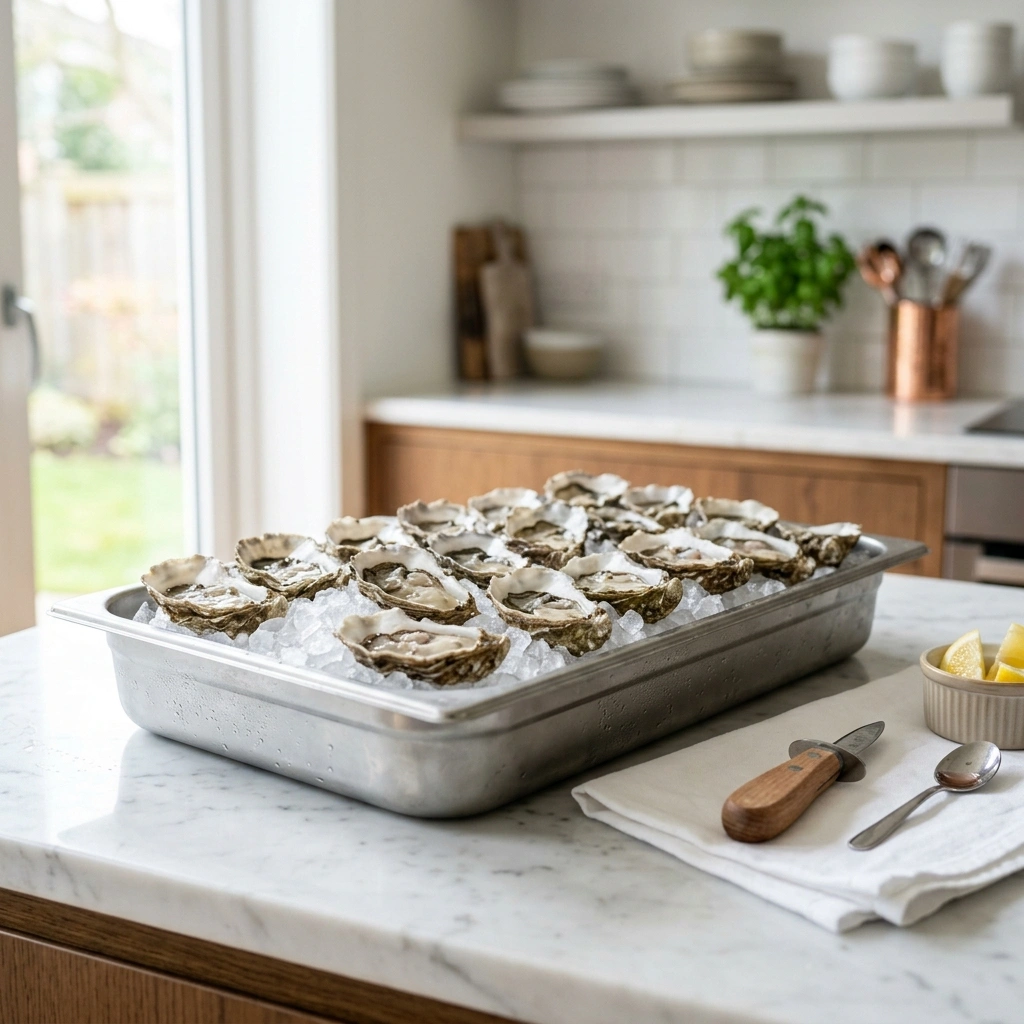
Have you ever bought fresh raw oysters only to find them smelling off or spoiled after just a day in the fridge? 🦪
Oysters are highly perishable shellfish rich in moisture and active enzymes, making them particularly vulnerable to bacterial contamination (e.g., Vibrio species and Norovirus). Soaking them in tap water or sealing live oysters in airtight containers accelerates decay, making proper cold storage essential.
In this guide, introduces a scientifically proven 3-step storage guide based on safety guidelines from the FDA, USDA, and MFDS to keep your oysters safe and fresh. 🛡️
Food Safety & Scientific Evidence
This content is based on USDA & FDA & MFDS.
 FreshSelf
Zero waste! Your smart storage assistant
FreshSelf
Zero waste! Your smart storage assistant



1. Scientifically Proven Storage Guide
Keep live shell oysters covered with a damp towel — Preserve Live Environment 🦪
Keeping oysters in the shell alive is key to freshness. 💡 Storage Tip: Place unwashed oysters cupped-side down in a deep open bowl, cover with a damp paper towel or cloth moistened with saltwater, and store in the refrigerator (1–4°C / 34–39°F). They will stay alive for 2–3 days.
Submerge shucked oysters in mild saltwater — Cold Storage (1–2 Days) ❄️
Shucked oyster meat degrades quickly when exposed to air. 💡 Storage Tip: Place shucked oysters in an airtight container submerged in a light 3% saltwater solution (30g salt per 1L water) and refrigerate (0–4°C / 32–39°F). Consume within 1 to 2 days.
Rinse, portion, and freeze in saltwater — Freezer Storage (2–3 Months) 🧊
If you cannot finish fresh oysters within a couple of days, freezing is necessary. 💡 Storage Tip: Gently rinse shucked oysters in light saltwater, drain, portion into Ziploc bags with a small amount of saltwater, and freeze below -18°C. Store for up to 2–3 months for cooked dishes.
2. Essential Storage Rules and Cautions
Live oysters in the shell are sensitive to osmotic shock. Submerging them in tap water kills them quickly and triggers rapid decomposition. Do not wash live oysters until immediately before consumption.
Unshucked oysters are living organisms. Sealing them tightly suffocates them. Keep them in an open container covered with a damp towel so they can breathe while retaining humidity.
📌 Frequently Asked Questions (FAQ)
My oysters have a strong fishy odor or milky liquid. Are they still safe to eat? ▼
No. A sharp, sour, or overly foul odor indicates bacterial spoilage or viral contamination. If the oysters smell bad or feel excessively slimy, discard them immediately.
Can I eat previously frozen oysters raw after thawing? ▼
No! Thawed frozen oysters should never be eaten raw. Always cook them thoroughly to an internal temperature of at least 85°C (185°F) for at least 1 minute before consuming.