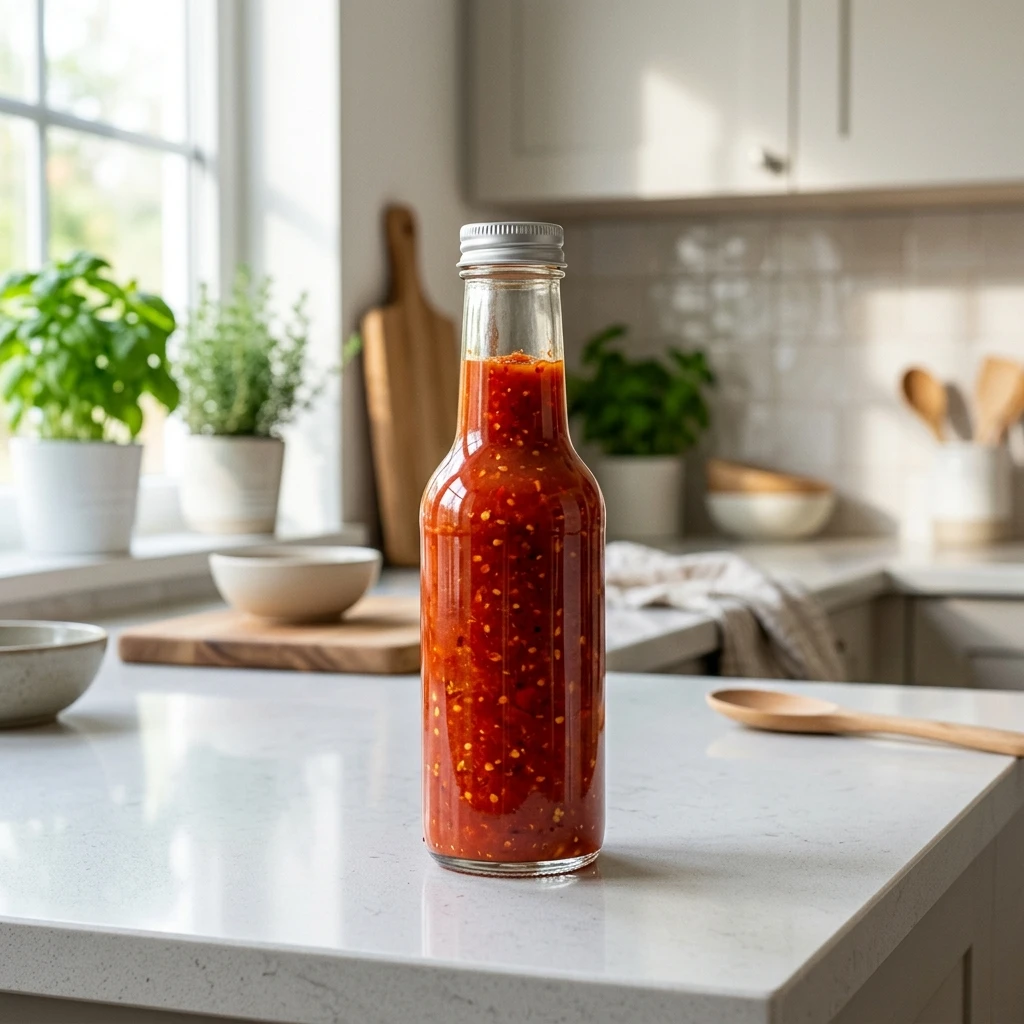
Have you ever opened a bottle of hot sauce or Sriracha for pizza, tacos, or stir-fry, left it out on the counter, only to notice its bright red color turning dark brown and losing its fiery kick over time? 🌶️nnHot sauce and Sriracha are inherently shelf-stable condiments thanks to their high acetic acid concentration (pH le 3.5), which prevents microbial and pathogenic bacterial growth. However, once opened, exposure to oxygen and light (UV rays) oxidizes the red carotenoid pigments and capsaicin molecules, causing a dark browning effect (darkening) and flavor degradation.nnIn this guide, we introduce a scientifically proven 3-step hot sauce and Sriracha storage guide recommended by food safety experts to preserve vivid color and spicy flavor. 🛡️
Food Safety & Scientific Evidence
This content is based on FDA & USDA & MFDS.
 FreshSelf
Zero waste! Your smart storage assistant
FreshSelf
Zero waste! Your smart storage assistant



1. Scientifically Proven Storage Guide
Wipe the nozzle clean and cap tightly after use — Block Oxygen Contact 🧻
Residual sauce on the cap is a primary path for oxygen exposure. 💡 Storage Tip: Immediately after pouring, wipe away leftover sauce from the nozzle with a clean paper towel and seal the cap tightly to block air entry.
Refrigerate at 4°C or below after opening — Cold Storage (6 Months–1 Year Opened) ❄️
Chilling is key to slowing oxidation and carotenoid photo-degradation. 💡 Storage Tip: Keep opened sauce in the refrigerator at or below 4°C (39°F). While opened hot sauce lasts 3 months at room temperature, refrigeration extends shelf life to 6 months–1 year, preserving vivid red color and pungent spice.
Store unopened bottles in a cool, dark pantry — Room Temp Storage (2 Years Unopened) 🌡️
Controlling temperature and light is essential before opening. 💡 Storage Tip: Keep unopened bottles in a cool, dark pantry away from direct sunlight and stove heat. Unopened hot sauce remains safe and flavorful for up to 2 years.
2. Essential Storage Rules and Cautions
Although high acidity (pH le 3.5) prevents bacterial growth, continuous exposure to room light and oxygen oxidizes red carotenoid pigments into dark brown and breaks down capsaicin, weakening its signature spicy kick.
Sauce residue dried on the bottle tip can degrade the airtight seal, allowing oxygen to seep inside and accelerate internal oxidation. Always wipe the nozzle clean after use.
📌 Frequently Asked Questions (FAQ)
My hot sauce or Sriracha turned dark brown. Is it still safe to eat? ▼
Yes, it is completely safe to consume! The darkening effect is a natural oxidation process where red carotenoid pigments react with light and oxygen under high acidity (pH le 3.5). It is not caused by bacterial spoilage, though the spice intensity and fresh flavor may have somewhat diminished.
Why is refrigeration recommended over room temperature for Sriracha after opening? ▼
Due to its vinegar content, Sriracha will not spoil or grow bacteria at room temperature. However, ambient heat and light cause rapid oxidation of capsaicin and photo-degradation of carotenoids, making the sauce brown and lose flavor. Storing it below 4°C dramatically slows these chemical reactions.