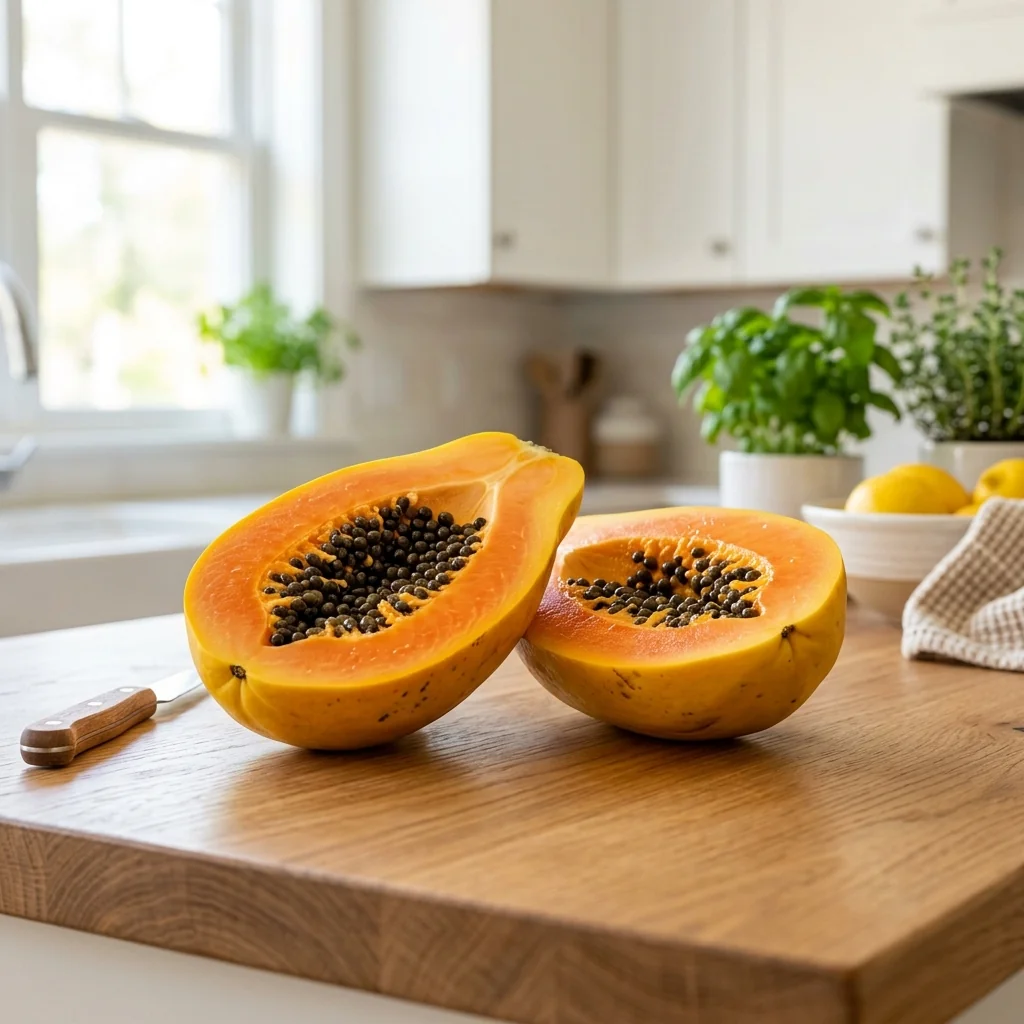
Have you ever brought home a sweet, luscious papaya only to put it straight into the fridge, where it developed dark spots and spoiled before ripening? 🥭
Papayas are climacteric tropical fruits highly susceptible to chilling injury at temperatures below 10°C (50°F). Refrigerating unripe green papayas stops the ripening process and damages cell tissue, causing rapid decay. Transitioning from room temperature to cold storage based on skin color is the key to maximizing sweetness and freshness.
In this guide, shares a scientifically proven 3-step storage guide based on guidelines from the USDA and RDA to prevent chilling injury and maintain peak papaya sweetness. 🛡️
Food Safety & Scientific Evidence
This content is based on USDA & RDA & MFDS.
 FreshSelf
Zero waste! Your smart storage assistant
FreshSelf
Zero waste! Your smart storage assistant





1. Scientifically Proven Storage Guide
Ripen green papayas at room temperature (18–25°C) — Ambient Ripening 🥭
Keep greenish papayas in a cool, well-ventilated area away from direct sunlight at 18–25°C (65–77°F). 💡 Storage Tip: Papayas are fully ripe when skin turns 70–80% yellow/orange and yields slightly to gentle pressure. To speed up ripening, seal in a paper bag with an apple or banana.
Refrigerate ripe papayas at 7–10°C — Cold Storage (3–5 Days) ❄️
Fully ripe papayas soften rapidly and can over-ripen; cool storage slows decay. 💡 Storage Tip: Wrap ripe papayas in paper towels or newspaper, place in a plastic bag, and store in the crisper drawer (7–10°C / 45–50°F). Enjoy within 3–5 days for maximum sweetness.
Deseed, peel, cube, and freeze — Long-Term Freezing (6–12 Months) 🧊
Freezing is the best method for long-term preservation of excess papaya. 💡 Storage Tip: Cut in half, scoop out seeds, peel, and cube into bite-sized pieces. Flash freeze on a tray first, then transfer into freezer Ziploc bags below -18°C (-0.4°F) for 6–12 months of smoothie-ready papaya.
2. Essential Storage Rules and Cautions
Storing green papayas below 10°C (50°F) causes chilling injury, halting ripening permanently and causing skin pitting, discoloration, and softening. Always ripen papayas at room temperature until the skin is 70–80% yellow.
Leaving water on papaya skin creates ideal conditions for mold spores, causing fruit rot. Wipe away dirt with a dry cloth and wash the papaya only right before slicing or eating.
📌 Frequently Asked Questions (FAQ)
How should I store cut leftover papaya? ▼
Cut papaya loses moisture rapidly upon air exposure. Scoop out remaining seeds, wrap the exposed flesh tightly with plastic wrap or store in an airtight container, and refrigerate at 0–4°C. Consume within 1–2 days.
My papaya skin developed black spots. Is it spoiled? ▼
Small black spots on the skin are often signs of anthracnose or mild chilling injury. As long as the inner flesh smells fresh and shows no mold or softness, you can slice away the spot and eat the rest. However, if the fruit feels mushy, slimy, or sour, discard it immediately.