Have you ever bought a sweet melon only to leave it out too long until it turned mushy, or put it whole in the fridge only for it to stay hard and tasteless? 🍈
Melons require completely different storage methods before and after being cut. Whole, uncut melons need room temperature to ripen and reach peak sweetness and aroma. However, once cut, their low acidity makes them a high-risk food prone to rapid bacterial growth such as Salmonella and Listeria.
In this guide, introduces a scientifically proven 3-step melon storage guide based on guidelines from the FDA, USDA, and MFDS to preserve sweetness while ensuring food safety. 🛡️
Food Safety & Scientific Evidence
This content is based on USDA & FDA & MFDS.
 FreshSelf
Zero waste! Your smart storage assistant
FreshSelf
Zero waste! Your smart storage assistant








1. Scientifically Proven Storage Guide
Ripen whole melons at cool room temperature (18–22°C) — Room Temp Ripening (2–5 Days) 🧺
Keep uncut melons in a cool room away from direct sunlight. 💡 Storage Tip: A melon is ripe when the blossom end yields slightly to gentle pressure and gives off a sweet fragrance. Chill in the fridge for 2–3 hours before serving for optimal sweetness.
Scoop out seeds, cube flesh, and refrigerate in airtight containers — Cut Melon Storage (3–5 Days) ❄️
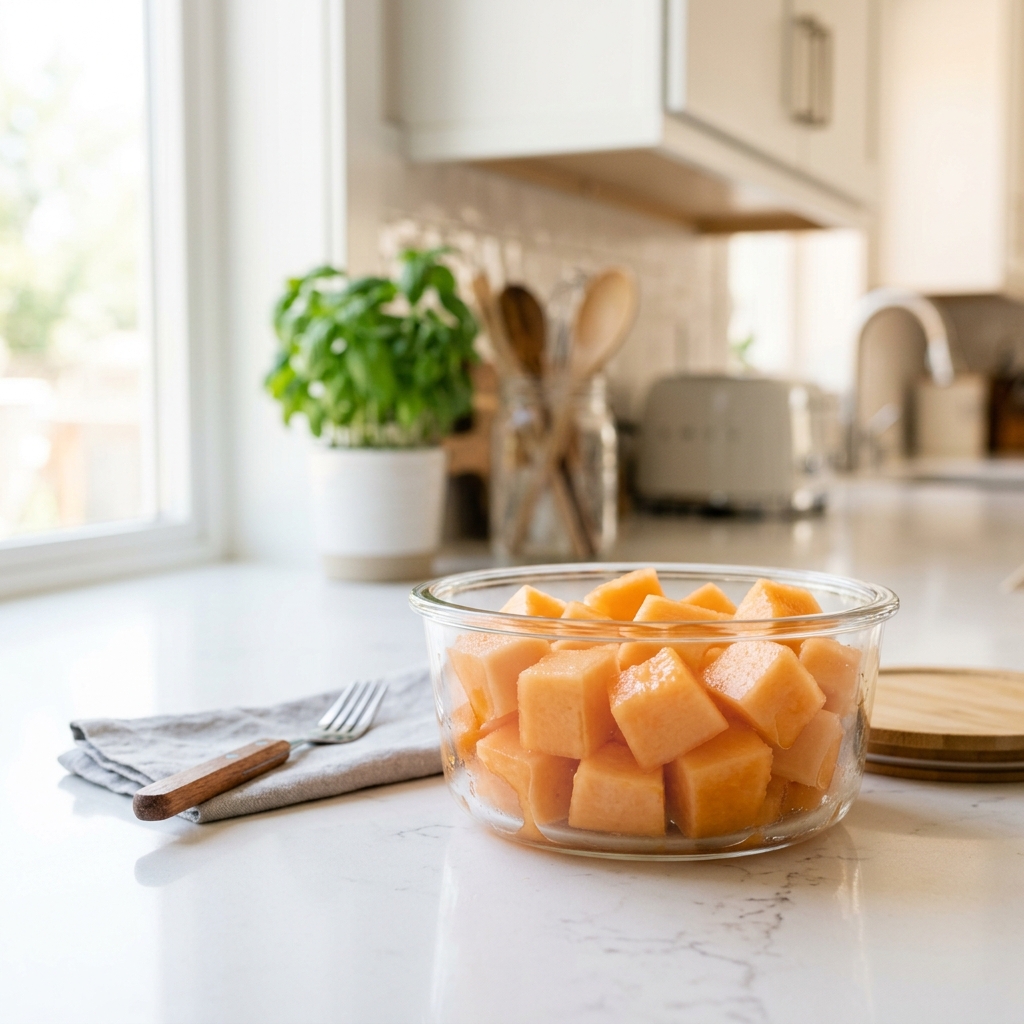
Once cut, blocking air exposure and preventing bacterial contamination is critical. 💡 Storage Tip: Scoop out seeds and soft pulp with a spoon, peel off the rind, cube the flesh, and place in airtight containers in the fridge (0–4°C / 32–39°F). Consume within 3 to 5 days.
Cube and freeze in airtight Ziploc bags — Freezer Storage (300 Days) 🧊
If you have too much cut melon to consume within 5 days, freezing is the best option. 💡 Storage Tip: Flash-freeze cubed melon on a tray so pieces do not stick together, then transfer to airtight freezer Ziploc bags (-18°C / 0°F). Great for smoothies or frozen desserts for up to 10–12 months.
2. Essential Storage Rules and Cautions
Storing unripe whole melons below 5°C (41°F) causes chilling injury, halting the ripening process, producing surface pitting, and preventing sugar development. Always ripen whole melons at room temperature before chilling or cutting.
Sliced melon flesh has low acidity and high moisture, creating an ideal environment for bacteria like Salmonella and Listeria monocytogenes. Never leave cut melon at room temperature for more than 2 hours; transfer it immediately to an airtight container in the fridge.
📌 Frequently Asked Questions (FAQ)
Should I wash the outer rind of a melon before cutting it? ▼
Yes, absolutely! The textured netting on melon rinds can harbor dirt, Salmonella, or other bacteria. When you slide a knife through the rind, surface bacteria are pushed directly into the sweet flesh. Always scrub the outer rind thoroughly under running water and dry it before slicing.
My cut melon is pooling liquid and becoming mushy. Is it still safe to eat? ▼
If cut melon pools excess liquid, turns mushy, or develops a sour off-odor, bacterial breakdown has likely occurred. Because melons have low acidity, harmful bacteria and toxins spread easily once contaminated. Discard any cut melon showing signs of decay.