Cinnamon is a beloved, warming spice widely used in desserts, beverages, curries, and savory dishes! 🌿🪵
Cinnamon owes its iconic warm flavor, aroma, and antibacterial properties to ‘cinnamaldehyde,’ a volatile essential oil. However, exposure to air and heat causes cinnamaldehyde to evaporate rapidly, leading to loss of flavor. Furthermore, ground cinnamon powder has a large surface area that quickly absorbs atmospheric moisture, creating a high risk of mold growth and heat-stable mycotoxin production.
In this guide, based on scientifically verified guidelines from the USDA, FDA, and MFDS, we present a 3-step optimal storage strategy to protect cinnamaldehyde essential oils and eliminate mycotoxin risks. 🛡️
Food Safety & Scientific Evidence
This content is based on USDA & FDA & MFDS.
 FreshSelf
Zero waste! Your smart storage assistant
FreshSelf
Zero waste! Your smart storage assistant







1. Scientifically Proven Storage Guide
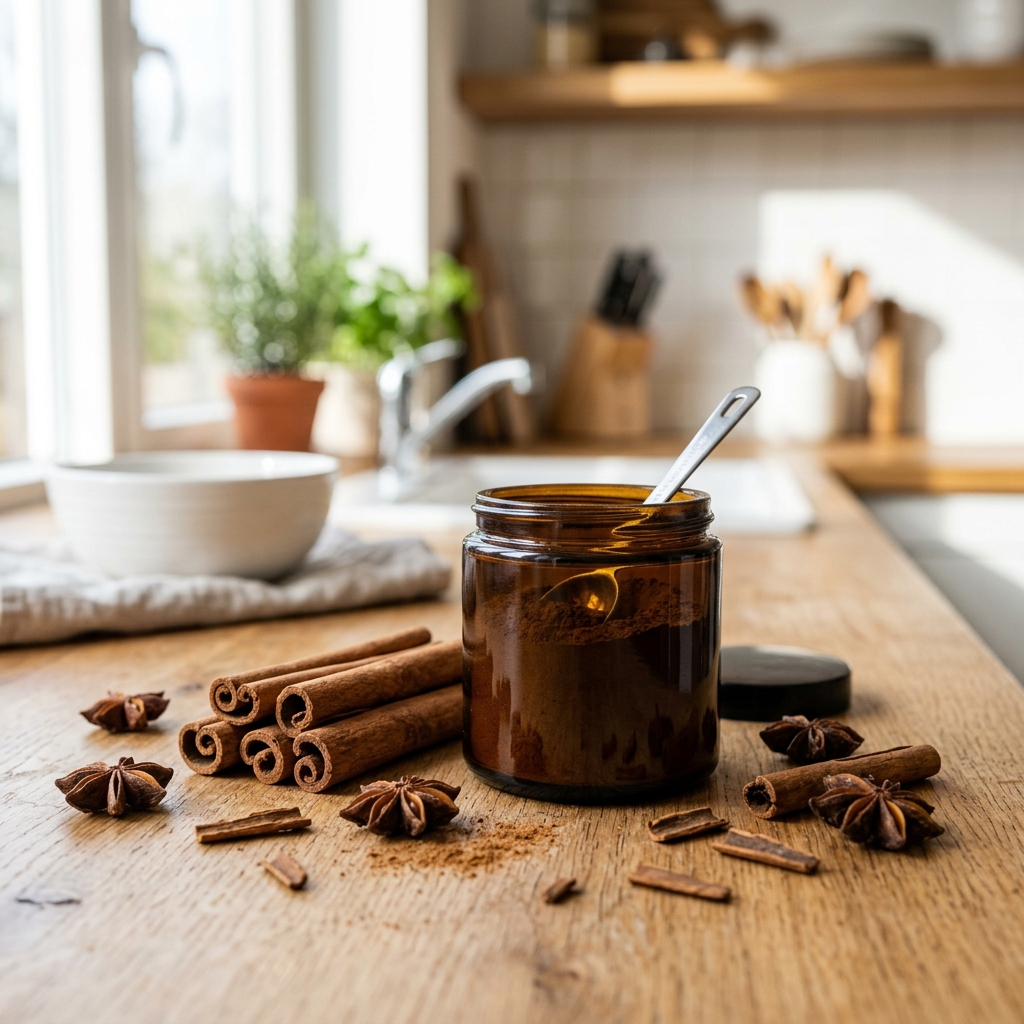
Store in lightproof, airtight containers (glass/metal/PP) — Prevent Volatility & Moisture 🫙
Immediately transfer cinnamon sticks or powder into opaque glass jars, metal tins, or lightproof airtight pouches. 💡 Storage Tip: Complete sealing prevents cinnamaldehyde evaporation and blocks moisture absorption from the surrounding air.
Keep in a cool, dark place (15–20°C) — Dry Pantry Storage (Sticks 2–3 Years / Powder 1–2 Years) 🚪
Store airtight containers in a cool, dark kitchen cabinet or pantry away from sunlight. 💡 Storage Tip: Maintaining a stable, dry environment at 15–20°C (59–68°F) preserves aromatic warmth for 2–3 years for sticks and 1–2 years for powder.
Freeze large quantities of ground cinnamon — Long-Term Freezing (2+ Years) 🧊
For bulk ground cinnamon, keep a 1-to-2-month supply in a pantry container and freeze the rest in portions in Ziploc freezer bags (-18°C / 0°F or lower). 💡 Storage Tip: Sub-zero temperatures virtually stop essential oil evaporation and eliminate mold/mycotoxin risks.
2. Essential Storage Rules and Cautions
Ground cinnamon has a large surface area that rapidly absorbs ambient humidity. Increased moisture allows Aspergillus molds to proliferate and generate toxic, heat-stable mycotoxins (such as aflatoxins); moisture control is mandatory.
Cinnamaldehyde, cinnamon's primary active compound, is a volatile essential oil highly sensitive to heat and UV light. Exposure to stovetop heat or sunlight rapidly degrades flavor, aroma, and health benefits.
📌 Frequently Asked Questions (FAQ)
My ground cinnamon became clumpy or damp. Is it safe to use? ▼
Clumpy cinnamon powder indicates moisture absorption from the air. If the clumps break apart easily and it smells normal, it can still be used. However, if it smells musty or has darkened in color, discard it immediately due to potential mycotoxin contamination.
Which lasts longer: cinnamon sticks or ground cinnamon? ▼
Cinnamon sticks last significantly longer! Sticks have a much smaller surface area, slowing down essential oil evaporation and reducing moisture absorption risks. Sticks retain flavor for 2–3+ years when sealed airtight; grinding them fresh yields the best flavor.