Have you ever bought juicy, crisp pears only to find them dry and mealy inside after storing them in the fridge? 🍐
Pears consist of over 85% water, making them highly susceptible to moisture loss and texture changes when exposed to ambient room air or dry environments. Furthermore, because pears are exceptionally sensitive to ethylene gas emitted by fruits like apples and bananas, improper storage leads to rapid softening and decay.
In this guide, introduces a scientifically proven 3-step pear storage guide recommended by agriculture and food safety experts to keep your pears crisp, sweet, and juicy for 1 to 2 months. 🛡️
Food Safety & Scientific Evidence
This content is based on RDA & USDA & MFDS.
 FreshSelf
Zero waste! Your smart storage assistant
FreshSelf
Zero waste! Your smart storage assistant




1. Scientifically Proven Storage Guide
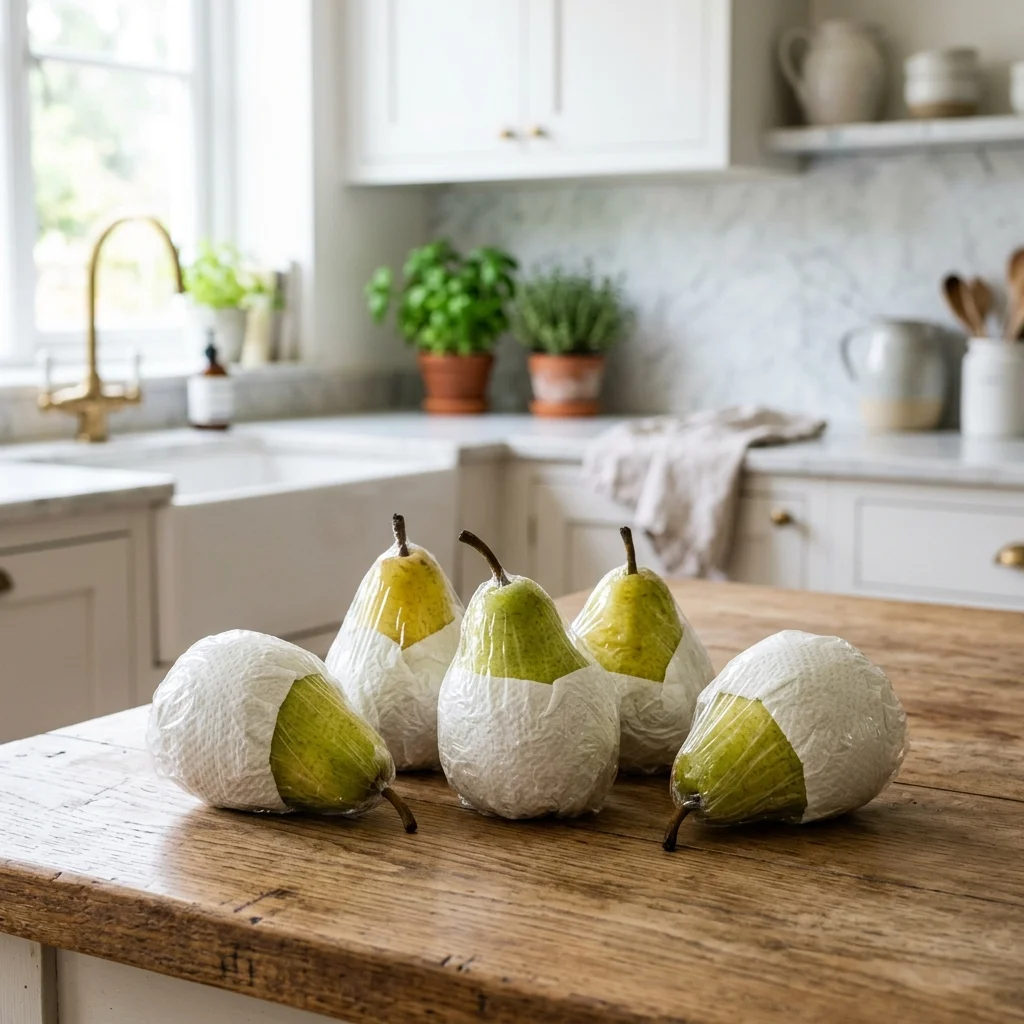
Wrap individually in newspaper or paper towels, then wrap with plastic wrap — Moisture Barrier 📦
Individual wrapping without moisture exposure is key. 💡 Storage Tip: Wrap dry, unwashed pears first in newspaper or paper towels to absorb excess moisture, then tightly seal each pear individually with food-grade plastic wrap. The paper layer manages humidity while the plastic wrap prevents internal moisture evaporation, maintaining crispness for a long time.
Store at low temperature (0–2°C) in the crisper drawer — Cold Storage (30–60 Days) ❄️
Low temperatures above freezing slow down pear respiration and maximize shelf life. 💡 Storage Tip: Place individually wrapped pears in the vegetable crisper drawer or kimchi refrigerator (fruit mode). The optimal storage temperature is 0–2°C (32–36°F), keeping them sweet and juicy for 1 to 2 months.
Store with the stem pointing upward — Preserve Physical Quality 🔝
The physical orientation of the pear affects its longevity. 💡 Storage Tip: Store pears with the stem side facing up and the bottom (calyx) facing down. The stem area is structurally firmer and better able to support weight without bruising the delicate flesh.
2. Essential Storage Rules and Cautions
Pears are highly sensitive to ethylene gas. Storing them in the same compartment as high-ethylene emitters like apples, bananas, or tomatoes accelerates tissue breakdown, causing them to turn mushy and rot rapidly.
The dry surface of the pear skin acts as a protective barrier against microorganisms. Washing them prior to storage traps residual moisture, creating an ideal environment for mold and bacteria to grow. Lightly wipe off dust with a dry cloth and wash right before eating.
📌 Frequently Asked Questions (FAQ)
Why do pears become dry and mealy ('pithy'), and are they safe to eat? ▼
Mealy or spongy texture in pears occurs when moisture evaporates during long storage or from exposure to improper cold temperatures, causing cells to collapse. While safe to consume, their raw flavor and crunch are diminished. They are best used in cooked dishes, meat marinades, or blended into juices.
How should leftover cut pear be stored? ▼
Cut pears oxidize and brown quickly upon air contact and are susceptible to bacterial growth. Lightly brush the cut surface with mild sugar water or lemon juice, place in an airtight container, and refrigerate. Consume within 2 to 3 days.