Peanuts are one of the most widely consumed legumes and nuts worldwide, packed with rich flavor and essential nutrients! However, have you ever stored them at room temperature only to find them stale or rancid? 🥜
Peanuts are high in unsaturated fatty acids, making them prone to rapid oxidation caused by the lipoxygenase enzyme when exposed to oxygen. Furthermore, in environments with humidity above 65% and water activity (Aw) above 0.70, Aspergillus flavus mold rapidly thrives, producing Aflatoxin B1—a potent Class 1 carcinogen.
In this guide, we introduce a scientifically proven 3-step peanut storage guide based on guidelines from leading agricultural and food safety authorities to preserve crispness and prevent deadly mold toxins. 🛡️
Food Safety & Scientific Evidence
This content is based on RDA & USDA & MFDS.
 FreshSelf
Zero waste! Your smart storage assistant
FreshSelf
Zero waste! Your smart storage assistant






1. Scientifically Proven Storage Guide
Airtight packaging to seal out oxygen and moisture — Moisture & Air Blocking 📦
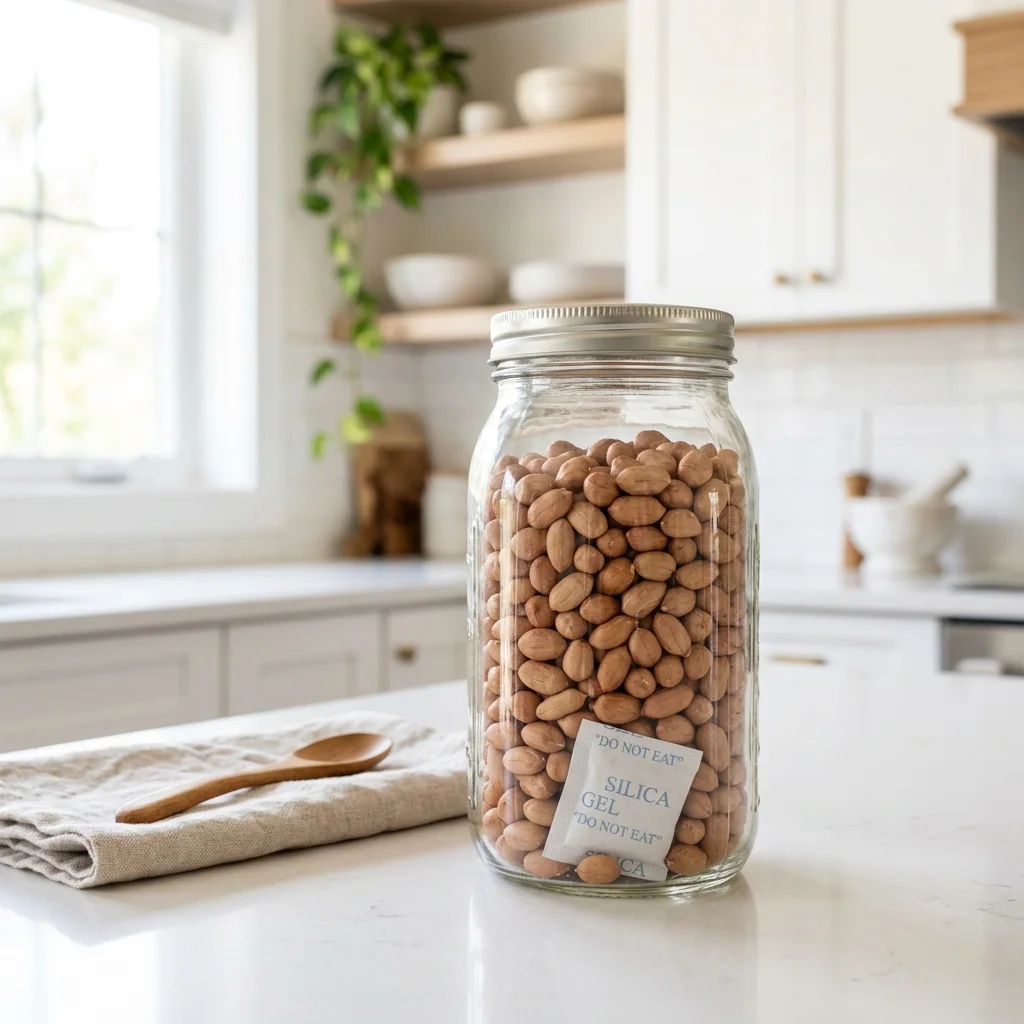
Exposing shelled or in-shell peanuts to ambient air triggers lipid oxidation upon contact with oxygen. 💡 Storage Tip: Place peanuts in Ziploc bags or airtight containers with food-grade desiccant packets (silica gel) or oxygen absorbers. Minimizing air exposure and reducing water activity is your first line of defense.
Refrigerate at low temperatures (0–4°C) — Cold Storage (3–6 Months) ❄️
Higher room temperatures activate lipolytic enzymes, causing loss of crunch and unpleasant off-odors. 💡 Storage Tip: Store sealed peanuts in the refrigerator crisper drawer at 0–4°C (32–39°F). Low temperatures suppress lipoxygenase activity and fungal growth, keeping peanuts fresh for 3 to 6 months.
Freeze long-term at -18°C or below — Freezer Storage (1+ Year) 🧊
If you buy peanuts in bulk or need to store them for more than 6 months, freezing is essential. 💡 Storage Tip: Portion peanuts into individual Ziploc bags, seal tightly, and place in the freezer (-18°C / 0°F or colder). Sub-zero freezing in an airtight environment halts lipid oxidation, preserving flavor and nutrients for over a year.
2. Essential Storage Rules and Cautions
Aflatoxin B1 produced in peanuts is a potent Class 1 carcinogen that causes liver cancer and is extremely heat-stable, remaining intact even at temperatures between 260–300°C (500–572°F). If peanuts show visible mold, smell rancid, or taste bitter, washing or roasting will not destroy the toxins—discard them immediately.
Relative humidity above 65% triggers mold spore germination, while light and heat accelerate lipid oxidation of unsaturated fatty acids. Always store peanuts in airtight containers in a cool, dark environment to keep water activity (Aw) below 0.70.
📌 Frequently Asked Questions (FAQ)
Is it safe to microwaving or re-roasting stale peanuts? ▼
If peanuts are merely stale due to moisture absorption, light roasting can restore crunch. However, if mold growth has generated aflatoxins, heat will NOT destroy the toxins. If peanuts smell sour, off, or show discoloration, discard them immediately rather than roasting.
Are in-shell peanuts better for storage than shelled peanuts? ▼
Yes. In-shell peanuts have a natural barrier against light, oxygen, and humidity, significantly extending their shelf life. Shelled peanuts have a larger surface area exposed to oxygen, accelerating oxidation, so they should be placed in airtight containers and refrigerated or frozen immediately.