Have you ever bought fresh mackerel only to find it smelling heavily fishy or turning mushy within a couple of days in the fridge? 🐟
Mackerel is packed with healthy omega-3 fatty acids, but because of its high autolytic enzyme activity and rich fat content, it oxidizes and turns rancid quickly upon exposure to air. Furthermore, if left at room temperature, histidine rapidly converts into toxic histamine, causing food poisoning. Proper temperature control is critical.
In this guide, shares a scientifically proven 3-step mackerel storage guide based on guidelines from NIFS and USDA to eliminate fishy odors and preserve peak freshness. 🛡️
Food Safety & Scientific Evidence
This content is based on NIFS & RDA & USDA & MFDS.
 FreshSelf
Zero waste! Your smart storage assistant
FreshSelf
Zero waste! Your smart storage assistant









1. Scientifically Proven Storage Guide
Gut and clean blood clot — Stop Autolysis & Fishy Odor 🔪
Remove the gills and guts, and rinse away the blood and black belly membrane along the spine under running water. 💡 Storage Tip: Viscera spoil fastest. Patting the inside and outside completely dry with paper towels is the crucial first step to stopping bacteria and fishy odor.
Tightly wrap and refrigerate — Short-Term Storage (1–2 Days) ❄️
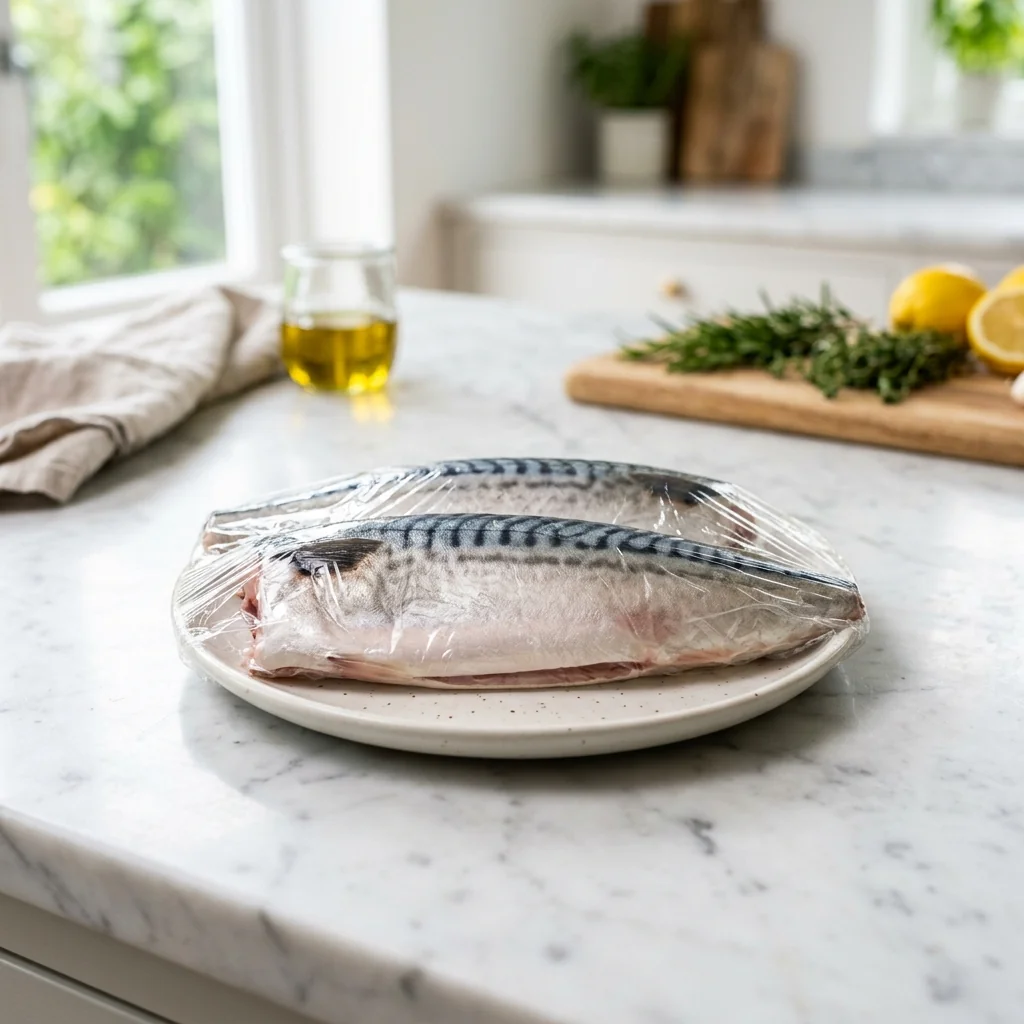
To prevent fatty acids from reacting with oxygen and turning rancid, air exposure must be minimized. 💡 Storage Tip: Lightly brush the surface with cooking sake, vinegar, or salt, then wrap each piece tightly with plastic wrap without gaps. Store at 0–2°C in the fridge crisper or meat drawer for 1–2 days.
Double seal and freeze in portions — Long-Term Storage (1–3 Months) 🧊
Even in the freezer, exposure to air causes freezer burn and fat oxidation. 💡 Storage Tip: Place wrap-sealed mackerel in a freezer Ziploc bag or airtight container, remove excess air, and double-seal. Rapidly freezing below -18°C maintains flavor and nutrients for up to 3 months.
2. Essential Storage Rules and Cautions
Mackerel viscera decay rapidly right after death due to autolytic enzymes, letting bacteria invade the flesh. Blood accelerates lipid oxidation and releases Trimethylamine (TMA), the main cause of fishy odor. Scrape away blood clots and viscera under cold running water.
Residual surface moisture fosters bacterial growth and forms ice crystals during freezing, damaging cell tissue and leaking juices upon thawing. Always pat completely dry with paper towels after washing.
📌 Frequently Asked Questions (FAQ)
How can I effectively reduce the fishy smell when cooking mackerel? ▼
Soaking mackerel in rice water or milk for 10–15 minutes before cooking lets milk proteins (casein) and rice starch absorb Trimethylamine (TMA), the odor-causing compound. Brushing with lemon juice or vinegar right before cooking also works well.
What is the best way to thaw frozen mackerel without getting a fishy odor? ▼
Thawing slowly in the refrigerator (0–4°C) is ideal. For a quick method, submerge in mild saltwater (2 tbsp salt per 1L water) to prevent juice loss (drip) and preserve texture. Avoid microwave thawing as it cooks the edges and intensifies fishy smells.