Have you ever stored leftover salami after making a charcuterie platter or sandwich, only to find the cut surface turned dark, hard, and dry? 🥓
Salami is a scientifically fermented and dried sausage that inhibits pathogen growth by lowering acidity through lactic acid fermentation (pH < 5.3) and reducing water activity through curing (a_w < 0.90). However, the moment the casing is peeled or the sausage is sliced, myoglobin denaturation (browning) and lipid autoxidation from oxygen exposure accelerate rapidly.
Based on official guidelines from the USDA and European Food Safety Authority (EFSA), this 3-step scientific storage guide demonstrates how to protect the beneficial mold ecosystem on salami and keep it fresh without rancidity for 3 to 4 weeks. 🛡️
Food Safety & Scientific Evidence
This content is based on USDA & MFDS & EFSA.
 FreshSelf
Zero waste! Your smart storage assistant
FreshSelf
Zero waste! Your smart storage assistant







1. Scientifically Proven Storage Guide
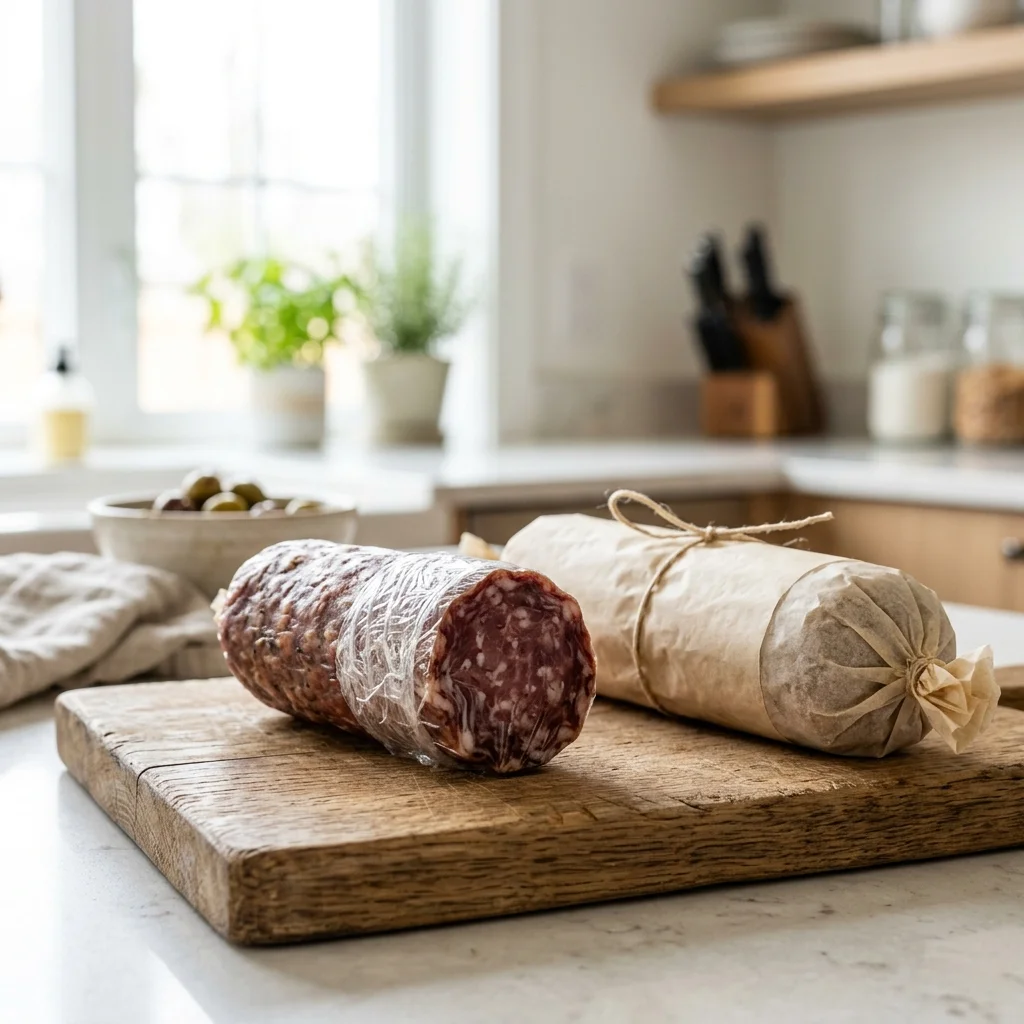
Wrap cut surfaces tightly with plastic wrap and refrigerate — Sealed Cut Refrigeration (21–30 Days) 🥓
The key to storing sliced salami is covering only the exposed cut face. 💡 Storage Tip: Press plastic wrap tightly against the cut end without air bubbles and refrigerate (2–7°C / 36–45°F) to block oxidation and drying.
Wrap whole salami loosely in parchment paper for breathable cold storage — Whole Salami Cooling ❄️
Uncut whole salami requires surface airflow to maintain its curing balance. 💡 Storage Tip: Wrap whole salami loosely in parchment or butcher paper instead of plastic and store in a cool pantry or fridge crisper (10–15°C / 50–59°F) to preserve the surface flora.
Layer sliced salami with wax paper before storing in airtight containers — Sliced Storage 🥪
Thinly sliced salami has a larger surface area, accelerating oxidation. 💡 Storage Tip: Place a sheet of parchment or wax paper between slices, squeeze out air inside a container or zip-top bag, and refrigerate to keep slices fresh for 1–2 weeks.
2. Essential Storage Rules and Cautions
Exposing the sliced end of salami to air triggers lipid autoxidation and darkens myoglobin. Conversely, sealing a whole uncut salami tightly in plastic containers destroys its beneficial aerobic mold layer and traps moisture, encouraging spoilage.
The white coating on the salami casing consists of beneficial mold (Penicillium nalgiovense) that blocks harmful bacteria and oxygen. Unless you are peeling the casing off to consume it, do not scrub or wash this layer away during storage.
📌 Frequently Asked Questions (FAQ)
Is the white powder or mold on the salami casing safe to eat? ▼
Yes, it is completely safe and beneficial! The white coating is Penicillium nalgiovense, a good mold inoculated onto cured meats to block harmful pathogens, slow lipid oxidation, and develop signature salami flavors. Simply peel off the outer casing before consuming.
Why does the cut end of leftover salami turn dark and hard? ▼
Exposure to atmospheric oxygen oxidizes myoglobin pigments and evaporates moisture from the exposed meat tissue. Wrapping plastic wrap tightly against the exposed cut surface immediately after slicing seals out oxygen and retains moisture.