Have you ever bought fresh, coral-pink salmon only to find its color fading, smell turning fishy, or texture going soft the next day? 🍣
Salmon is high in moisture and rich in healthy omega-3 unsaturated fatty acids, making it exceptionally vulnerable to rapid lipid oxidation (rancidity) and bacterial spoilage upon exposure to oxygen. In particular, the liquid exudate (drip) leaking from salmon skin and flesh serves as the primary source of fishy odors (trimethylamine) and microbial growth.
In this guide, shares a scientifically proven 3-step storage guide based on hygiene guidelines from the FDA and USDA to eliminate fishy odors, prevent oxidation and freezer burn, and keep your salmon fresh. 🛡️
Food Safety & Scientific Evidence
This content is based on FDA & USDA & MFDS.
 FreshSelf
Zero waste! Your smart storage assistant
FreshSelf
Zero waste! Your smart storage assistant







1. Scientifically Proven Storage Guide
Wipe off surface oil and liquid (drip) completely — Prevent Bacterial Growth & Odors 🍣
Surface moisture and fish oil leaking from raw salmon are the primary triggers for trimethylamine (TMA) fishy odors and bacterial multiplication. 💡 Storage Tip: Firmly press paper towels onto both sides of the salmon to absorb all liquid drip before storing.
Brush lightly with lemon juice or cooking wine (sake) — Natural Antimicrobial & Anti-Oxidant 🍋
Applying an acidic or alcoholic barrier over dry salmon skin protects against decay. 💡 Storage Tip: Citric acid in lemon juice or alcohol in sake/mirin lowers surface pH to suppress bacteria and slow lipid oxidation. Brushing a thin layer of olive oil provides an extra barrier against oxygen.
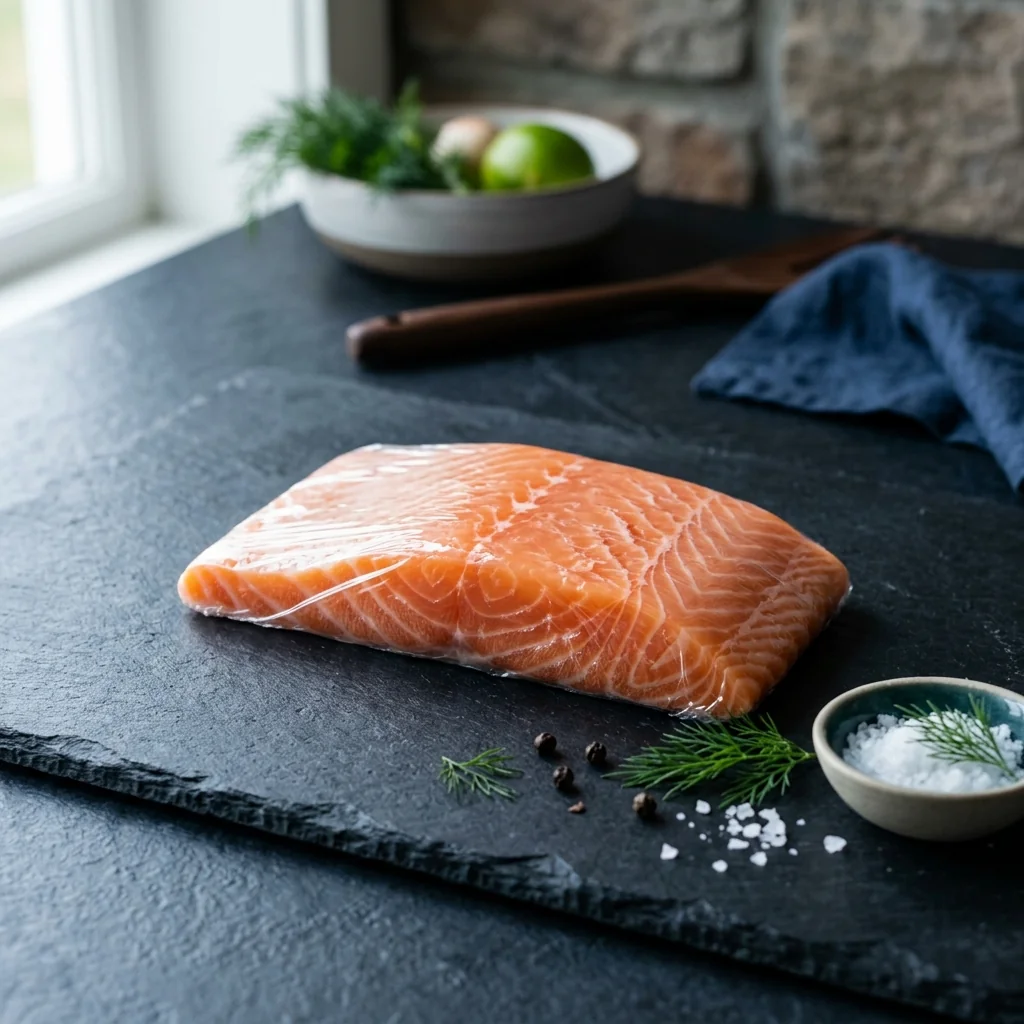
Wrap tightly with plastic wrap and seal in a Ziploc bag — Cold Storage (1–2 Days), Frozen (60–90 Days) 📦
Exposing salmon to oxygen causes rapid oxidation of omega-3 fatty acids. 💡 Storage Tip: Wrap the treated salmon tightly in plastic wrap without air pockets, then place inside a Ziploc freezer bag for double sealing. It stays fresh for 1–2 days in the coldest fridge compartment (0–2°C) and 60–90 days in the freezer (-18°C or below).
2. Essential Storage Rules and Cautions
If raw salmon loses its vibrant coral-pink or orange hue and turns dull grayish-brown, or if a finger press leaves a permanent indentation without springing back, the protein structure has broken down. Discard it immediately if it smells sour or feels slimy.
For long-term freezing (60–90 days), the fat beneath the skin can rancidify first. Trimming pin bones and skin, portioning into single servings, brushing lightly with oil, and vacuum-wrapping tightly preserves optimal texture upon thawing.
📌 Frequently Asked Questions (FAQ)
My salmon color turned slightly dull and lost its bright pink hue. Is it still safe to eat? ▼
Loss of vibrant pink/orange color fading to a dull gray indicates lipid oxidation and microbial growth. If accompanied by a sticky/slimy texture or a sour, unpleasant smell, the salmon has spoiled and poses a food poisoning risk. Discard it immediately.
How can I prevent freezer burn and texture loss when freezing raw salmon? ▼
Thoroughly pat the salmon dry with paper towels, then brush a thin layer of cooking oil or olive oil over the surface to create a protective barrier. Wrap tightly with plastic wrap to eliminate all air bubbles before placing in a Ziploc freezer bag. This prevents moisture evaporation, ice crystal formation, freezer burn, and lipid rancidity.