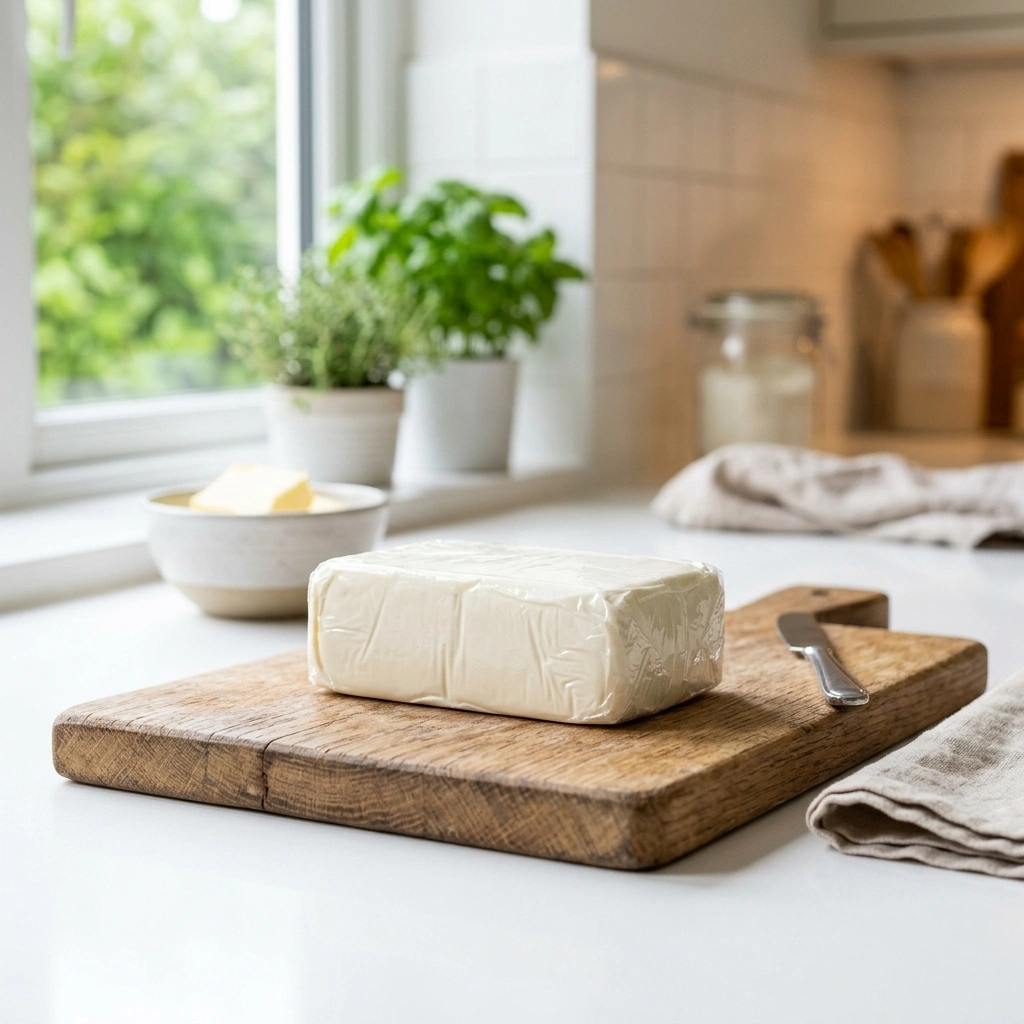
Have you ever spread cream cheese on a bagel, stored the rest in the fridge, only to find mold growing on the surface days later? 🧀
Cream cheese is an unaged fresh cheese with high moisture content (over 50%) and milk fat, making it far more vulnerable to bacterial and mold growth than aged hard cheeses. It is also sensitive to temperature fluctuations and easily absorbs surrounding food odors.
In this guide, introduces a scientifically proven 3-step storage guide based on safety guidelines from the USDA and MFDS to keep your cream cheese creamy, fresh, and delicious. 🛡️
Food Safety & Scientific Evidence
This content is based on USDA & MFDS.
 FreshSelf
Zero waste! Your smart storage assistant
FreshSelf
Zero waste! Your smart storage assistant









1. Scientifically Proven Storage Guide
Wrap tightly with plastic wrap after opening — Block Air & Prevent Mold 📦
Exposing cream cheese to air dries out its surface and accelerates mold growth. 💡 Storage Tip: After opening, press food-grade plastic wrap directly onto the cut surface without leaving air bubbles.
Double-seal and refrigerate at 1–4°C — Cold Storage (7–10 Days After Opening) ❄️
Door shelves experience frequent temperature shifts that accelerate spoilage. 💡 Storage Tip: Place the wrapped cream cheese inside an airtight container or Ziploc bag on an inner shelf (1–4°C).
Portion and freeze for baking/cooking only — Long-Term Storage (2 Months) 🧊
If long-term storage is necessary, freezing is recommended solely for cooked dishes. 💡 Storage Tip: Portion into single-use amounts (e.g., 50–100g), wrap tightly in plastic, and store in a freezer Ziploc bag below -18°C.
2. Essential Storage Rules and Cautions
Freezing cream cheese causes ice crystals to form inside, separating milk fat from water. Once thawed, the texture becomes grainy, crumbly, and impossible to spread smoothly as a condiment.
Using a knife or spoon contaminated with moisture, saliva, or food residue introduces microbes into the cheese, triggering rapid mold growth. Always scoop with a dry, sanitized utensil.
📌 Frequently Asked Questions (FAQ)
Can I just cut off the moldy part of cream cheese and eat the rest? ▼
No! Unlike hard cheeses, cream cheese is a high-moisture soft cheese. Even a tiny speck of surface mold indicates invisible fungal hyphae and spores have penetrated deep inside. Discard the entire container.
How can I fix the grainy texture of thawed cream cheese? ▼
Warm the thawed cream cheese slightly in the microwave (5–10 seconds), add 1–2 teaspoons of warm milk or heavy cream, and whisk vigorously with a mixer or blender to re-emulsify the fat and water for baking or sauces.