Native to the Andes of South America, quinoa is a protein-rich superfood globally recognized as a healthy grain substitute! However, have you ever stored quinoa in bulk only to find it smelling rancid or becoming stale over time? 🌾
Unlike most grains, quinoa has a relatively high unsaturated fatty acid content (approx. 6%). When exposed to atmospheric oxygen, lipid hydroperoxides form, rapidly driving lipid auto-oxidation. This process causes foul rancid odors and destroys valuable nutrients. Furthermore, if the natural saponin protective layer is washed away prematurely and water activity (Aw) rises above 0.65, it creates an ideal environment for mold and grain pests.
In this guide, we introduce a scientifically proven 3-step quinoa storage guide based on guidelines from international food and safety authorities to prevent rancidity and preserve flavor and nutrition for over 2 years. 🛡️
Food Safety & Scientific Evidence
This content is based on USDA & FAO & MFDS.
 FreshSelf
Zero waste! Your smart storage assistant
FreshSelf
Zero waste! Your smart storage assistant









1. Scientifically Proven Storage Guide
Store in airtight, light-blocking containers to control water activity (Aw< 0.65) — Airtight Storage (1–2 Years) 📦
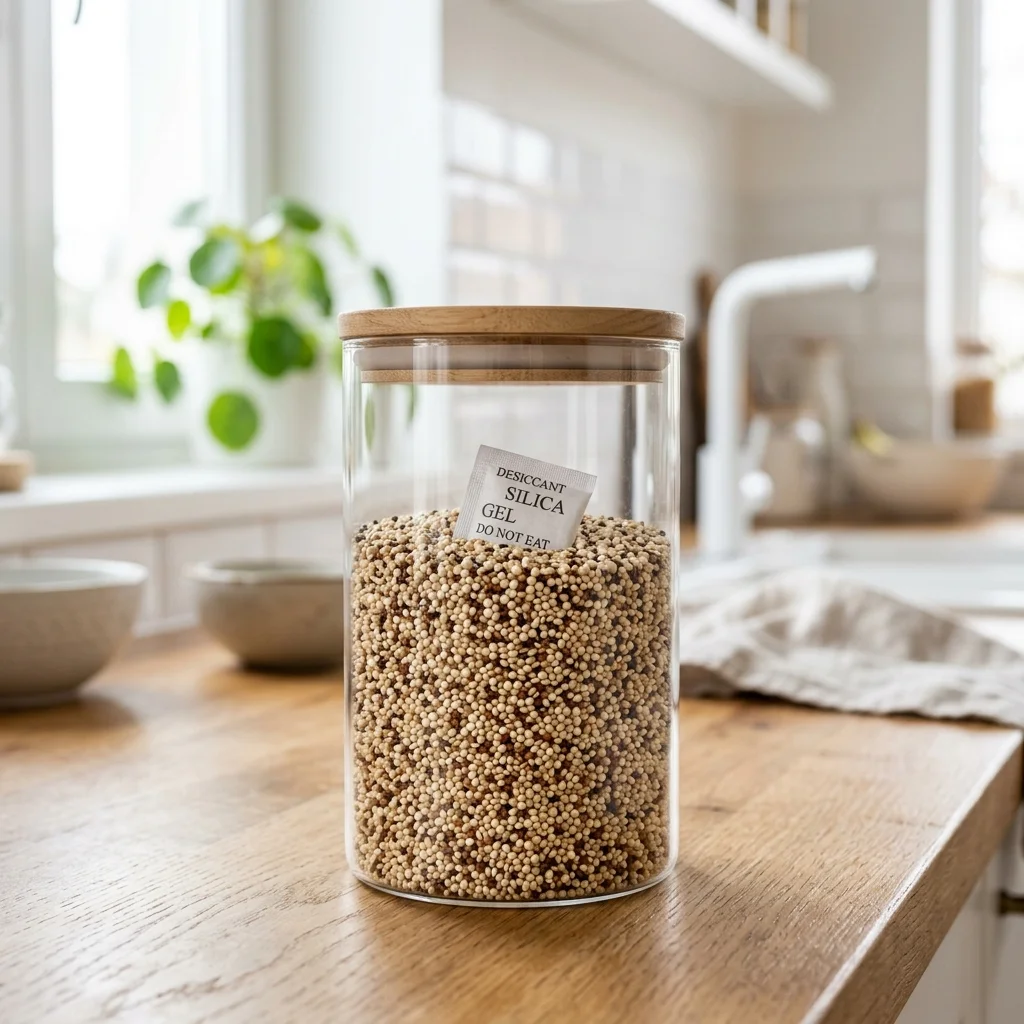
For raw, dry quinoa, minimizing contact with air and light is crucial. 💡 Storage Tip: Place quinoa in an opaque glass jar or airtight container with food-grade desiccant packets (silica gel). Maintaining water activity (Aw) below 0.65 slows auto-oxidation, preserving nutrients for 1 to 2 years in a cool, dark pantry (below 15–20°C / 59–68°F).
Refrigerate or freeze to completely suppress lipid rancidity — Cold/Freezer Storage (2+ Years) ❄️
If you live in a humid climate or want to store large quantities of quinoa safely, low-temperature storage is most effective. 💡 Storage Tip: Double-seal in airtight containers or freezer Ziploc bags and refrigerate (0–4°C / 32–39°F) or freeze (-18°C / 0°F or colder). Extremely low temperatures suppress lipid oxidation and enzymatic activity, preserving freshness for over 2 years.
Store cooked quinoa in airtight containers in the fridge or freezer — Cooked Quinoa Storage (Fridge 5–7 Days / Freezer 8–12 Months) 🧊
Cooked quinoa has high moisture content and high water activity, requiring immediate refrigeration. 💡 Storage Tip: Cool cooked quinoa completely, then store in airtight containers in the fridge (0–4°C for 5–7 days) or portion into Ziploc bags for freezer storage (-18°C for 8–12 months).
2. Essential Storage Rules and Cautions
Washing away the protective saponin layer on quinoa before storage leaves behind moisture, elevating water activity (Aw) and accelerating mold growth and lipid auto-oxidation. Wash quinoa only right before cooking.
Light and oxygen accelerate the auto-oxidation of unsaturated fatty acids, hastening lipid hydroperoxide formation. Always store quinoa in opaque, airtight, light-blocking containers.
📌 Frequently Asked Questions (FAQ)
Should I wash the saponin off quinoa before storing it? ▼
No, raw quinoa should never be washed prior to storage! The saponin coating on quinoa acts as a natural protective barrier against pests and microbes. Rinse quinoa under cold running water using a fine-mesh strainer right before cooking to remove saponin bitterness.
Is quinoa with a rancid smell or discoloration safe to eat? ▼
No. A rancid odor or discoloration indicates that unsaturated fatty acids have oxidized to form lipid hydroperoxides and rancid byproducts. Oxidized fats produce harmful free radicals in the body, so discard any rancid quinoa immediately.