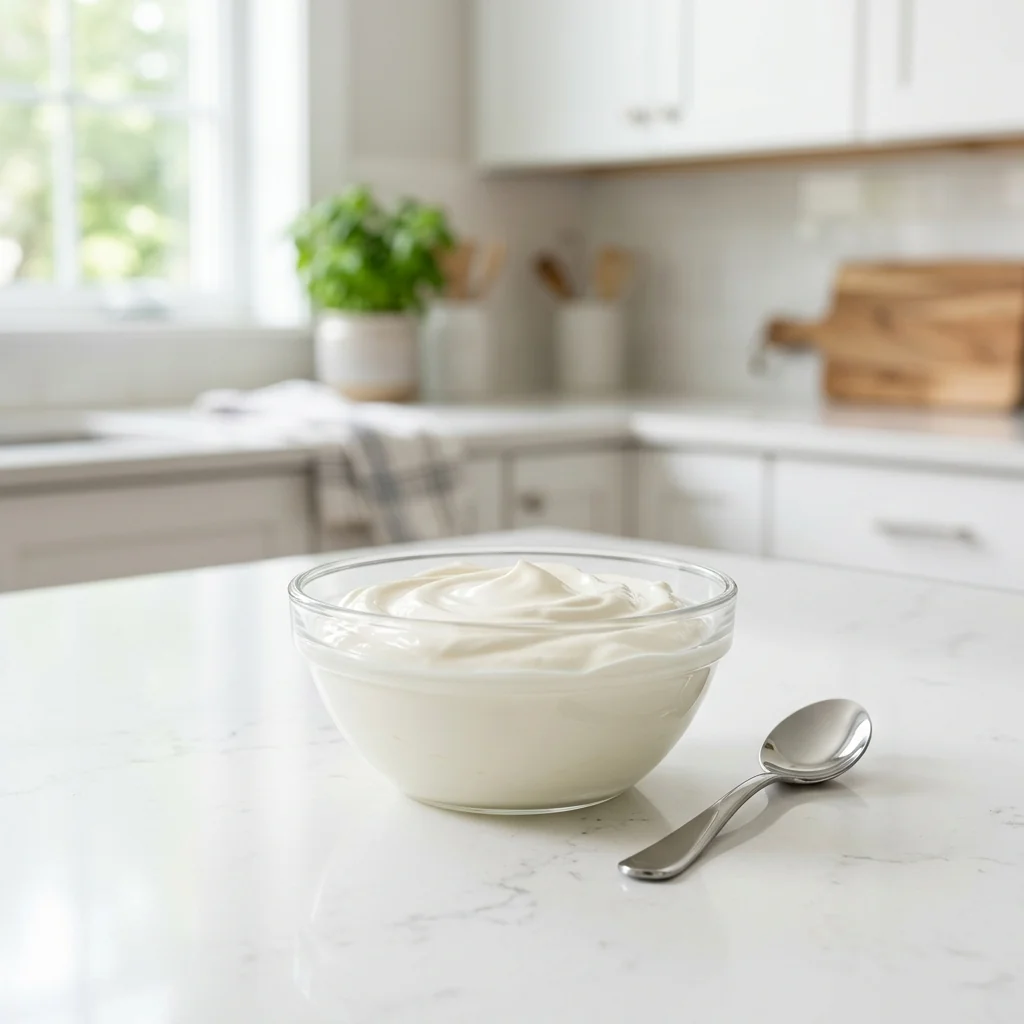
Have you ever enjoyed smooth, tangy sour cream on tacos, salads, or baked potatoes, only to find liquid pooling on top or mold growing a few days after opening? 🥛
Sour cream is a fermented dairy product rich in proteins, fats, and moisture, making it highly susceptible to airborne mold spores and bacterial growth. Using contaminated utensils or freezing it can destroy its creamy emulsion and spoil its texture and flavor. Proper hygienic handling is essential.
In this guide, shares a scientifically proven 3-step sour cream storage guide based on guidelines from the USDA and FDA to prevent whey separation and maintain mold-free freshness. 🛡️
Food Safety & Scientific Evidence
This content is based on USDA & FDA & MFDS & RDA.
 FreshSelf
Zero waste! Your smart storage assistant
FreshSelf
Zero waste! Your smart storage assistant









1. Scientifically Proven Storage Guide
Smooth the top surface with a clean spoon — Block Whey Separation & Contamination 🥄
After scooping sour cream, leaving deep crater-like depressions allows liquid whey to collect in the pockets, creating a breeding ground for microbes. 💡 Storage Tip: Use a clean spoon to smooth down the top surface flat before closing. Smoothing the surface minimizes whey pooling and keeps it fresh longer.
Seal tightly and refrigerate at 0–4°C in the back of the fridge — Cold Storage (7–14 Days) ❄️
Sour cream is sensitive to temperature fluctuations and should be stored deep inside the fridge rather than on the door shelves. 💡 Storage Tip: Seal the lid tightly (or place plastic wrap under the lid) and store at 0–4°C in the main compartment. It stays safe for 7–14 days (1–2 weeks) after opening.
Stir separating liquid back into the cream — Whey Management 🥣
A clear or yellowish liquid pooling on top of sour cream is a natural process called 'syneresis' (whey separation), where water separates from the protein network. 💡 Storage Tip: Do not discard it! Simply stir it back in thoroughly with a clean spoon to restore its smooth texture. However, if you spot mold or smell a foul, bitter odor, discard it immediately.
2. Essential Storage Rules and Cautions
Freezing sour cream breaks the emulsion between butterfat and water, causing severe curdling and whey separation upon thawing. This completely ruins its signature smooth texture. Always keep sour cream strictly refrigerated.
Using a spoon that has touched food or saliva introduces enzymes, bacteria, and mold spores that cause rapid spoilage. Always use a clean, dry spoon reserved specifically for scooping.
📌 Frequently Asked Questions (FAQ)
There is pink, yellow, or fuzzy mold on my sour cream. Can I scoop it off? ▼
No, discard it immediately. Yellowish discoloration, pink spots, or fuzzy mold indicate severe spoilage. Because sour cream has high moisture content, invisible mold toxins spread throughout the entire container.
What is the difference between unopened shelf life and opened storage life for sour cream? ▼
Unopened sour cream stored continuously at 0–4°C stays fresh until the expiration date printed on the container (usually 2–3 weeks). Once opened, exposure to air and ambient microbes reduces its safe storage window to 7–14 days (1–2 weeks).