Tortillas are a staple food used globally for tacos, quesadillas, wraps, and thin-crust pizzas! 🌮
Have you ever opened a large pack of tortillas only to find mold spots appearing a few days later, or put them in the freezer only to have them freeze into a solid block that tears apart when separated?
Both flour and corn tortillas have a moisture content of around 25–35%. Once opened, exposure to ambient humidity promotes rapid mold growth, while stacking them together causes them to stick strongly due to starch gelatinization and condensation. In this guide, introduces a scientifically proven 3-step storage guide based on expert guidelines to keep tortillas separated, flexible, and fresh for up to 6 months. 🛡️
Food Safety & Scientific Evidence
This content is based on USDA & FDA & MFDS.
 FreshSelf
Zero waste! Your smart storage assistant
FreshSelf
Zero waste! Your smart storage assistant


1. Scientifically Proven Storage Guide
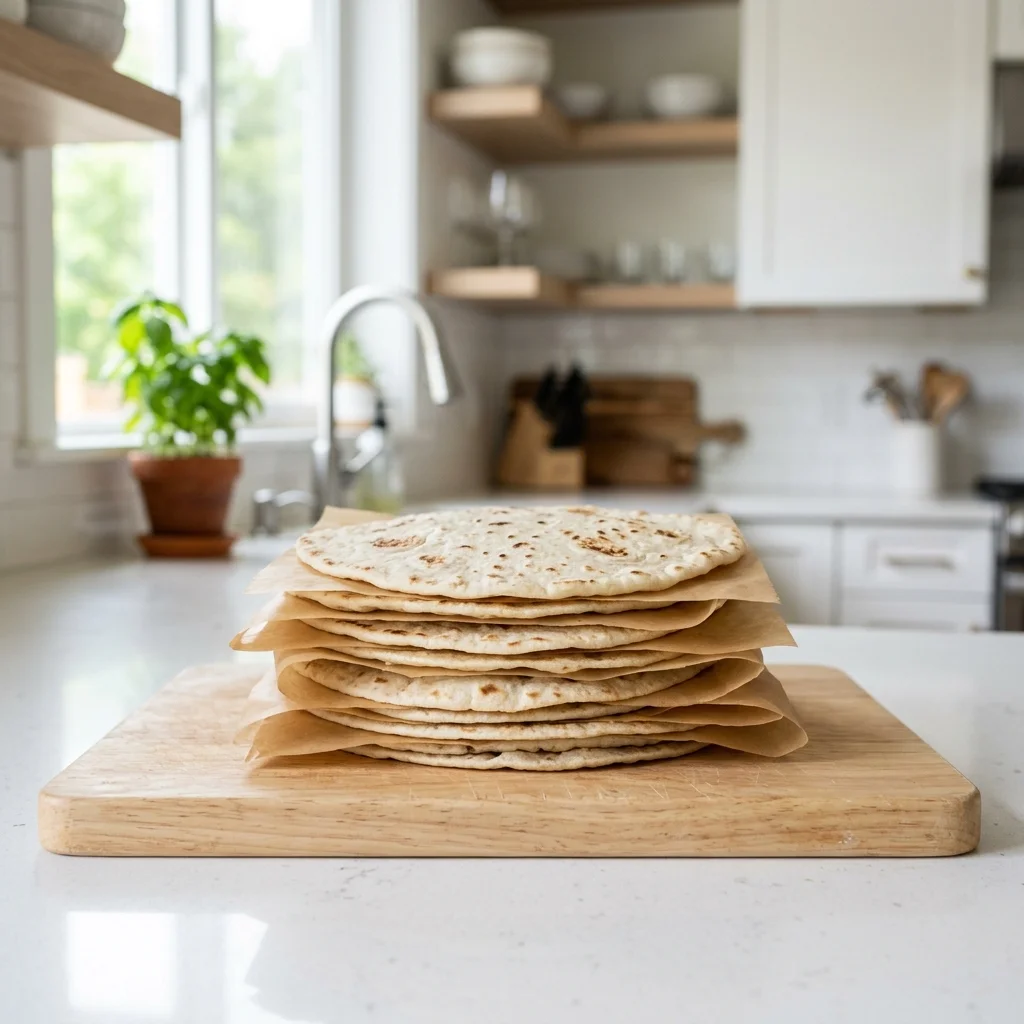
Interleave parchment paper between each tortilla — Non-Stick Separation Layer 📄
The key secret to preventing tortillas from sticking together. 💡 Storage Tip: Place one tortilla down, cover it with a piece of parchment (baking) paper cut to size, then place the next tortilla on top. Repeat for the whole stack. The paper blocks moisture transfer, allowing individual tortillas to peel apart easily after freezing.
Seal in freezer Ziploc bags with air removed — Freezer Storage (3–6 Months) 🧊
This sealing step prevents moisture evaporation and freezer burn. 💡 Storage Tip: Place the parchment-interleaved tortilla stack into a heavy-duty freezer Ziploc bag, press out as much air as possible, and seal tightly. Store at -18°C or lower for 3 to 6 months while retaining freshness and flexibility.
Seal tightly and refrigerate for short-term consumption — Cold Storage (1–2 Weeks) ❄️
For tortillas to be consumed within a week or two. 💡 Storage Tip: Place opened tortillas in a sealed bag with air removed and refrigerate (0–4°C). Because refrigeration can cause starch retrogradation (firming), warm them slightly before eating to restore softness and pliability.
2. Essential Storage Rules and Cautions
Once unsealed, ambient moisture and trapped humidity cause mold spores (such as Penicillium) to multiply rapidly. Opened tortillas left at room temperature develop mold within 3 to 7 days and should be refrigerated or frozen immediately.
Freezing moist tortillas stacked directly on top of each other causes ice crystals to fuse them into a rock-hard block. Trying to pry them apart tears the dough, making barrier sheets essential.
📌 Frequently Asked Questions (FAQ)
How should I reheat frozen tortillas so they stay soft and don't crack? ▼
Frozen tortillas do not need to be thawed beforehand. Heat them on a dry skillet over medium-low heat for 10–20 seconds per side, or microwave them under a lightly damp paper towel for 10–15 seconds. The steam restores moisture and flexibility instantly, perfect for rolling wraps or tacos.
I see tiny blue or black spots on my tortilla. Can I cut off that section and eat the rest? ▼
No, absolutely not! Mold on high-moisture flatbreads spreads microscopic hyphae roots deep inside before spots become visible. Because harmful mycotoxins may be present throughout the stack, discard the entire opened package if mold is spotted.