Have you ever bought a box of bright, sweet strawberries only to find the bottom ones mushy, bruised, and covered in fuzzy white mold a day or two later? 🍓
Strawberries are soft-hulled berries with extremely thin, delicate skins that make them highly sensitive to water absorption and mechanical pressure. Washing them beforehand, removing the calyx (green stem), or storing them in airtight containers creates the exact environment gray mold fungus (Botrytis) needs to thrive.
In this guide, shares a scientifically proven 3-step storage guide based on research from the USDA and RDA to completely prevent bruising, control moisture, and keep your strawberries fresh and sweet for over a week. 🛡️
Food Safety & Scientific Evidence
This content is based on RDA & MFDS & USDA.
 FreshSelf
Zero waste! Your smart storage assistant
FreshSelf
Zero waste! Your smart storage assistant





1. Scientifically Proven Storage Guide
Keep unwashed and leave green stems attached — Block Moisture Absorption 🍓
Washing strawberries or hulling their green stems creates microscopic wounds on the surface. 💡 Storage Tip: Water rushes into these wounds via osmotic pressure, causing cell walls to rupture and leak juice, which triggers gray mold growth. Keep them completely dry until right before eating.
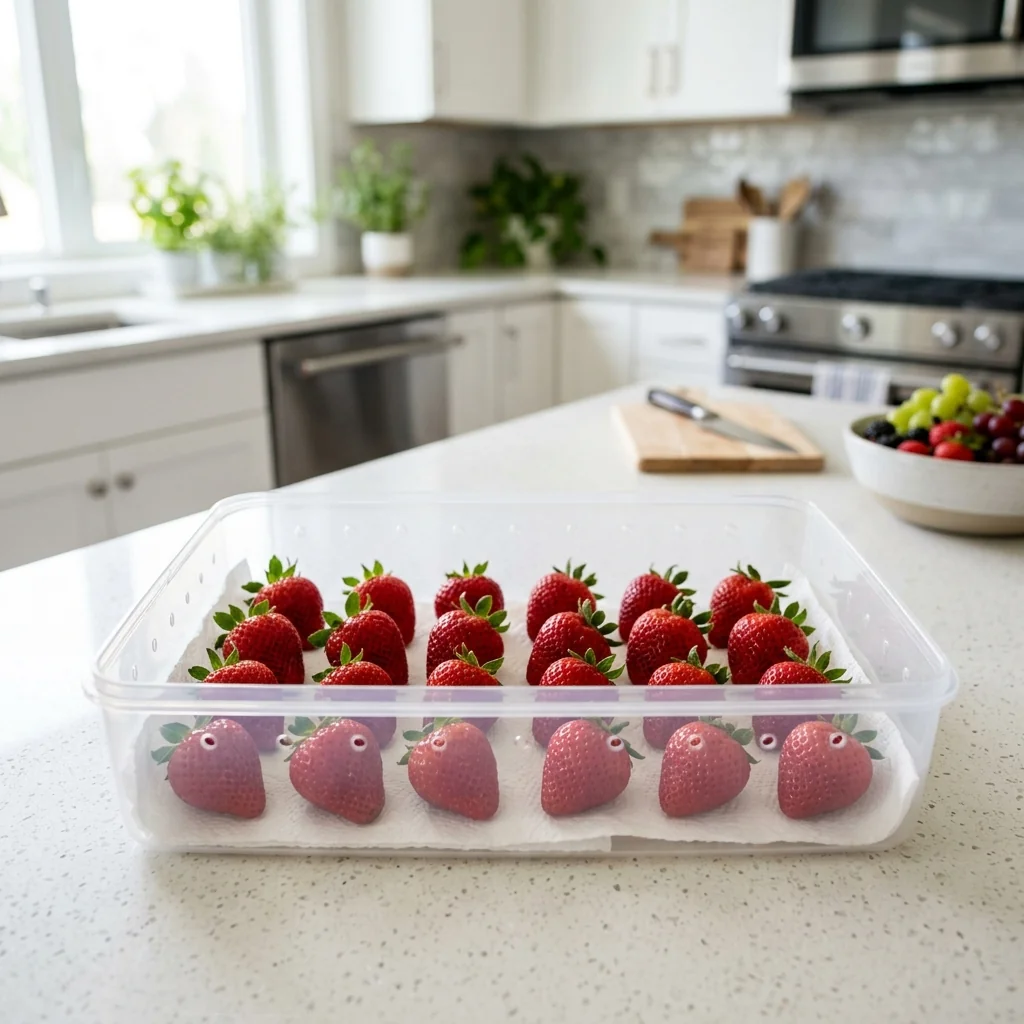
Line container bottom with paper towels and space out berries — Cushioning & Moisture Control 📰
Stacking strawberries in multiple layers crushes the bottom fruit under its own weight. 💡 Storage Tip: Line a wide, shallow container with 2–3 layers of paper towels and arrange strawberries in a single layer with space between them. Paper towels absorb condensation to prevent softening.
Refrigerate with ventilation without airtight sealing — Cold Storage (5–7 Days) ❄️
Sealing strawberries under a tight lid traps moisture condensation generated by fruit respiration, causing rapid decay. 💡 Storage Tip: Use a ventilated plastic clamshell container or keep the lid of your container slightly ajar in the crisper drawer (0–2°C).
2. Essential Storage Rules and Cautions
A single bruised berry leaking juice releases fungal spores that spread through contact, spoiling the entire container within hours. Inspect your strawberries immediately upon purchase and eat bruised ones right away.
The refrigerator door shelf undergoes severe temperature swings and physical shocks every time it opens. Delicate berries should be kept on a deep inner shelf of the main compartment (0–2°C / 32–36°F) where temperature and movement remain stable.
📌 Frequently Asked Questions (FAQ)
If white fuzzy mold grows on a strawberry, can I cut it off and eat the rest? ▼
No, absolutely not. The mold on strawberries is typically 'Gray Mold (Botrytis cinerea)', which spreads microscopic fungal hyphae deep into the soft berry tissue invisibly. Even if you trim off the visible mold, mycotoxins have already permeated the fruit. Discard any moldy strawberries immediately.
Can I freeze strawberries for long-term storage? ▼
Yes, strawberries freeze exceptionally well for smoothies or jams. Hull the stems, rinse quickly under cold water, and dry them thoroughly with paper towels. Flash-freeze the berries arranged in a single layer on a tray before transferring them into a freezer Ziploc bag (-18°C or below). They will stay good for up to 6 months.