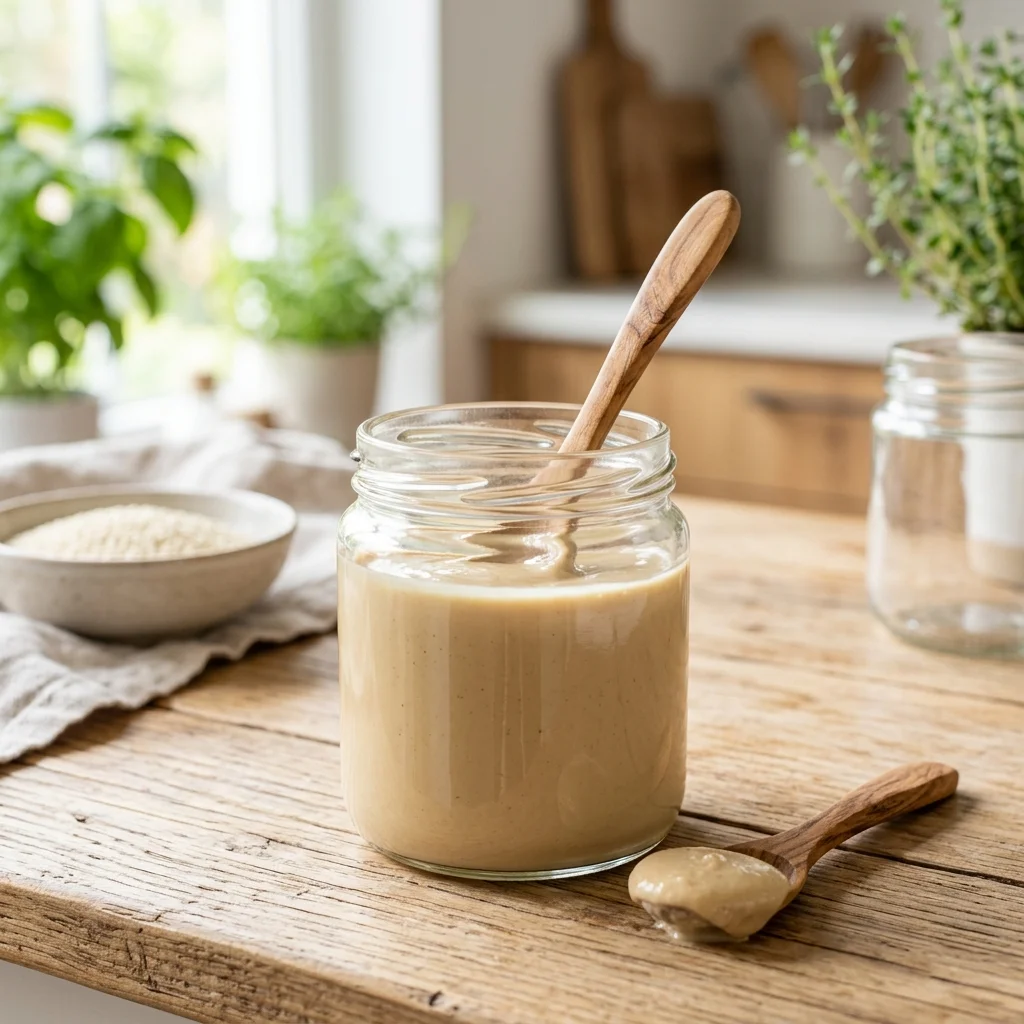
Have you ever opened a jar of tahini to make hummus or dressing, only to find liquid oil floating on top and a rock-hard layer at the bottom? 🫙
Tahini, made from finely ground roasted sesame seeds, is a suspension of solid particles suspended in sesame oil. Over time, gravity induces natural lipid-solid phase separation: clear sesame oil floats to the top while solid particles settle densely at the bottom. Fortunately, sesame seeds contain powerful natural antioxidants—sesamol and sesamolin—giving tahini exceptional resistance to lipid oxidation.
Based on official guidelines from the European Food Safety Authority (EFSA) and the USDA, this 3-step scientific storage guide explains how to prevent solid hardening and keep tahini smooth and fresh for over a year. 🛡️
Food Safety & Scientific Evidence
This content is based on EFSA & USDA & MFDS.
 FreshSelf
Zero waste! Your smart storage assistant
FreshSelf
Zero waste! Your smart storage assistant








1. Scientifically Proven Storage Guide
Periodically flip unopened jars upside down at room temperature — Sealed Pantry Flipping (180–365 Days) 🫙
Sesamol in sesame seeds resists rancidity even at room temperature before opening. 💡 Storage Tip: Flip the jar upside down every 1–2 weeks to reverse gravitational force and naturally prevent hard sediment compaction.
Stir thoroughly after opening and refrigerate — Cold Storage (365+ Days) ❄️
Refrigeration increases oil viscosity and dramatically slows down phase separation rate. 💡 Storage Tip: Thoroughly recombine oil and solids with a fork, seal tightly, and store in the fridge (0–4°C / 32–39°F) to keep it smooth.
Use only clean, dry utensils to scoop — Moisture Sealing 🥄
Water droplets break the oil emulsion, causing the paste to seize into gritty lumps. 💡 Storage Tip: Always scoop with a completely dry spoon, wipe the container rim clean, and seal the lid tightly after each use.
2. Essential Storage Rules and Cautions
Leaving a jar of tahini in one position for months allows gravity to pack solid particles into a clay-like mass at the bottom, making re-emulsification difficult. Turn the jar upside down periodically.
While low moisture in pure tahini prevents bacterial growth, introducing water from wet spoons seizes the paste, ruining its texture and inviting bacterial or fungal spoilage.
📌 Frequently Asked Questions (FAQ)
My tahini has oil separated on top and a hard layer on the bottom. Has it gone bad? ▼
Not at all! This is a natural physical phase separation caused by gravity in a suspension. Sesame's natural sesamol protects the oil from oxidation. Simply stir thoroughly with a sturdy spoon or butter knife to re-combine the oil and solids.
How can I fix tahini that has hardened solidly at the bottom of the jar? ▼
Place the sealed jar in a bowl of warm water for 5–10 minutes to reduce oil viscosity and make stirring easy. Alternatively, scoop the needed portion into a bowl and whisk in a splash of warm water or lemon juice to restore a creamy consistency.