Chia seeds are a highly nutritious superfood loved as toppings for yogurt, smoothies, and salads! 🌿🌱
Chia seeds are a rich powerhouse of plant-based omega-3 fatty acids, specifically alpha-linolenic acid (ALA), which accounts for over 60% of their total fatty acid content. However, due to the polyunsaturated structure of omega-3s, exposure to oxygen, light, and heat triggers rapid lipid peroxidation, leading to rancidity. Rancid fats not only taste unpleasant but also generate harmful free radicals in the body. Proper lightproof and low-temperature storage is essential.
In this guide, based on scientifically verified guidelines from the USDA, FDA, and MFDS, we present a 3-step optimal storage strategy to preserve the omega-3 nutrients in chia seeds without rancidity. 🛡️
Food Safety & Scientific Evidence
This content is based on USDA & FDA & MFDS.
 FreshSelf
Zero waste! Your smart storage assistant
FreshSelf
Zero waste! Your smart storage assistant



1. Scientifically Proven Storage Guide
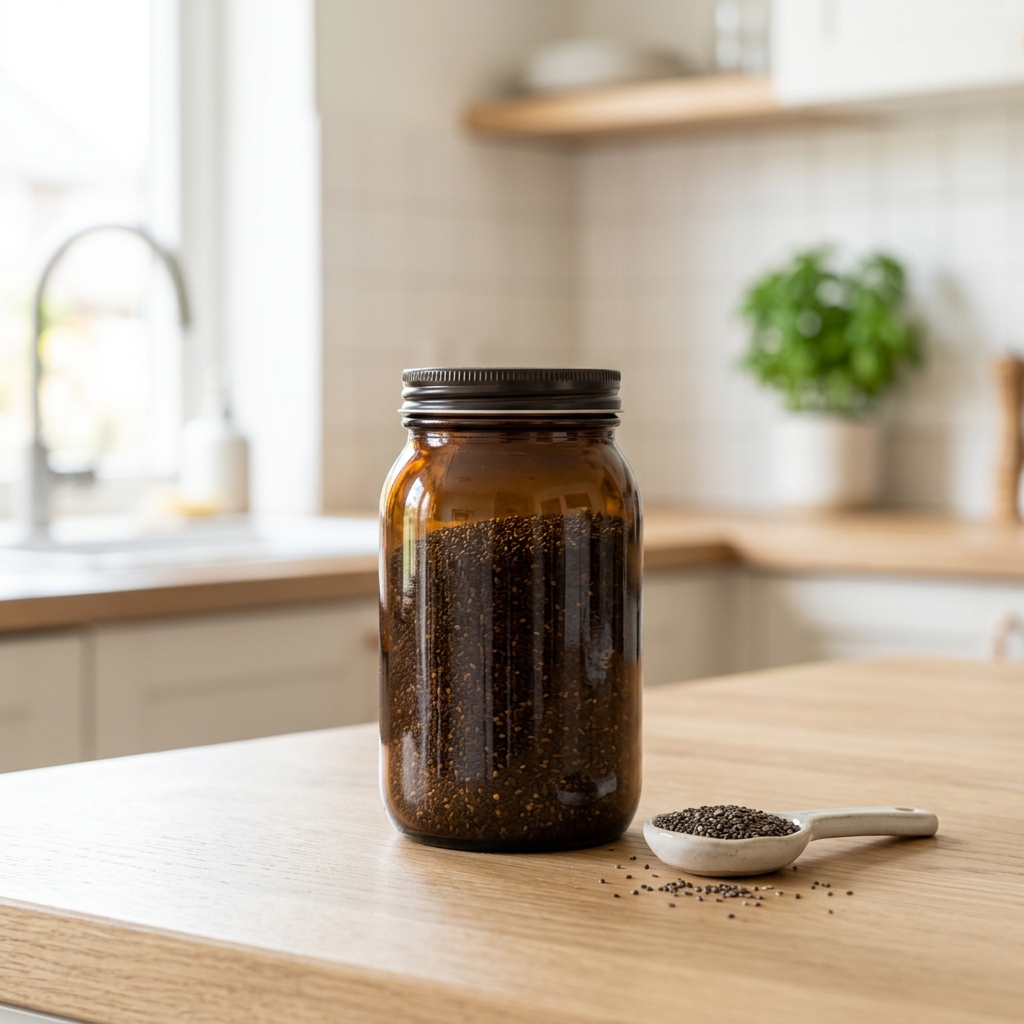
Store in opaque, lightproof airtight containers (amber glass or opaque jars) — Block UV & Oxygen 🫙
Transfer opened chia seeds into amber glass jars, opaque airtight containers, or light-blocking pouch bags. 💡 Storage Tip: Sealing the container tightly blocks both oxygen exposure and UV penetration, forming the primary defense against increased Peroxide Value (PV).
Refrigerate in a cool place at 0–4°C — Cold Refrigeration (1–2 Years) ❄️
Keep sealed lightproof containers deep inside the refrigerator at 0–4°C (32–39°F). 💡 Storage Tip: For every 10°C drop in temperature, chemical oxidation rates decrease by more than half. Refrigeration preserves chia seed antioxidants and omega-3s for 1 to 2 years.
Portion and freeze large quantities — Long-Term Freezing (2–4 Years) 🧊
If buying in bulk, keep a 1-to-2-month supply in the fridge and freeze the rest in portions at -18°C (0°F) or below. 💡 Storage Tip: Sub-zero temperatures virtually halt radical oxidation, allowing safe long-term preservation for 2 to 4 years without loss of nutrition or rancidity.
2. Essential Storage Rules and Cautions
When alpha-linolenic acid (ALA) in chia seeds is exposed to UV light, it forms free radicals that accelerate chain-reaction lipid peroxidation. Leaving seeds in clear glass or plastic bags at room temperature leads to rancidity and off-odors within months.
Chia seeds are rich in soluble fiber that absorbs water to form a gel; introducing moisture encourages mold growth. Furthermore, ground chia seed meal has a vastly increased surface area exposed to oxygen, oxidizing much faster than whole seeds, requiring immediate refrigeration or freezing.
📌 Frequently Asked Questions (FAQ)
My chia seeds smell stale or paint-like. Are they still safe to eat? ▼
No, absolutely not! If chia seeds smell stale, musty, or paint-like, the omega-3 fatty acids have broken down, resulting in lipid peroxides—a clear sign of rancidity. Rancid fats cause inflammation in the body and should be discarded immediately.
How long can soaked chia seed gel (Chia Gel) be safely refrigerated? ▼
Chia gel made by soaking seeds in water has a high moisture content, making it vulnerable to bacterial growth. Keep it sealed in an airtight container at or below 4°C and consume it within 5 to 7 days.