Have you ever bought fresh asparagus and stored it in the fridge for a few days, only to find the spears bent and the tips soggy or limp? 🥦
Asparagus has a very high respiration rate and continues growing even after harvest. Storing it flat causes stems to bend towards gravity (negative geotropism), consuming natural sugars rapidly and making the spears tough and woody.
In this guide, introduces a scientifically proven 3-step storage guide recommended by postharvest experts to keep your asparagus as crisp and fresh as flowers in a vase. 🛡️
Food Safety & Scientific Evidence
This content is based on RDA & USDA & UC Davis Postharvest Center.
 FreshSelf
Zero waste! Your smart storage assistant
FreshSelf
Zero waste! Your smart storage assistant






1. Scientifically Proven Storage Guide
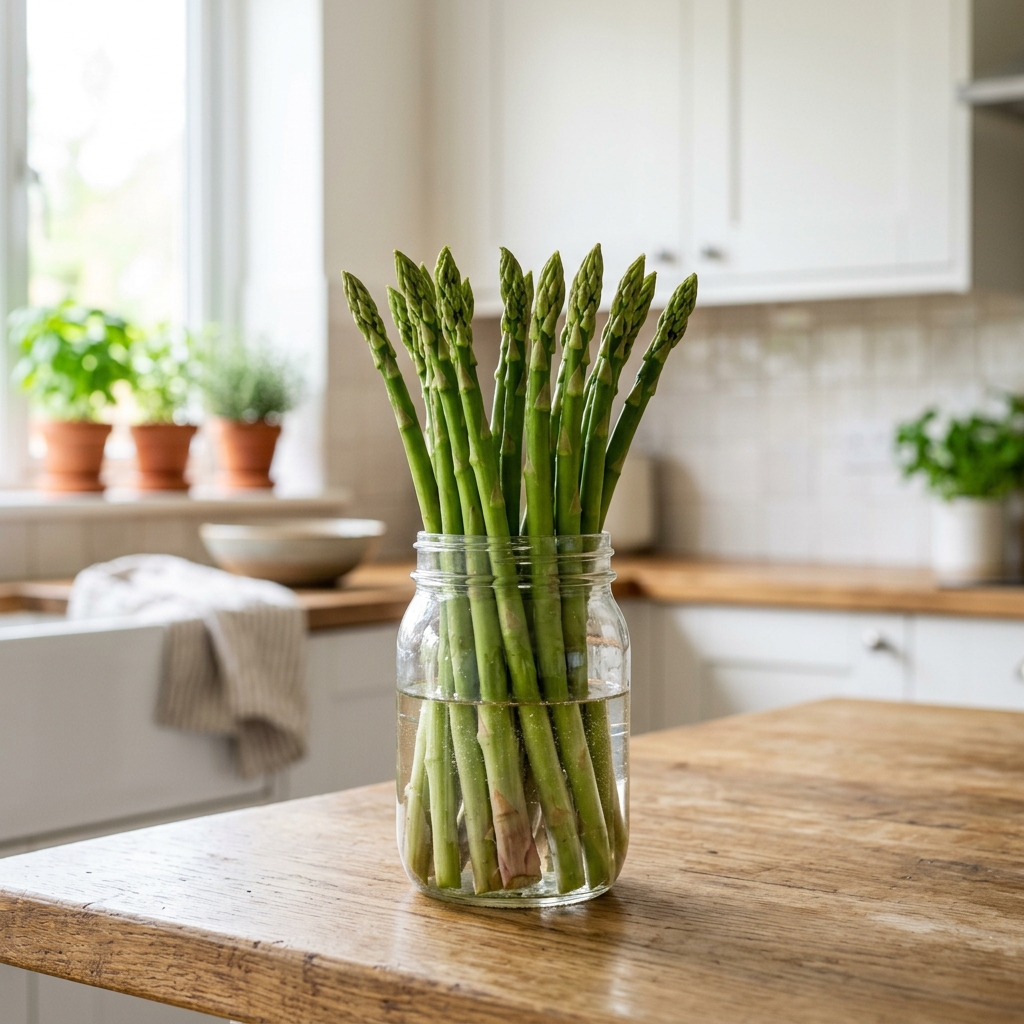
Trim the ends and stand upright in water — Jar Method 🥛
Asparagus needs continuous moisture at its base to stay crisp. 💡 Storage Tip: Trim 1 cm off the bottoms and place spears upright in a jar filled with 1–2 cm of water, just like fresh-cut flowers.
Cover tips loosely with a plastic bag and refrigerate (0–4°C) — Cold Storage (10–14 Days) ❄️
The tips need protection from air circulation without trapping excessive dampness. 💡 Storage Tip: Cover the top tips loosely with a plastic bag and keep upright in the fridge crisper (0–4°C / 32–39°F) for 10–14 days of optimal crispness.
Blanch before freezing for long-term storage — Freezer Storage (300 Days) 🧊
Freezing raw asparagus damages cell structure and leads to mushy, fibrous spears upon thawing. 💡 Storage Tip: Blanch in boiling salted water for 30–60 seconds, shock in ice water, dry thoroughly, and freeze in airtight Ziploc bags for up to 10–12 months.
2. Essential Storage Rules and Cautions
Lying asparagus flat triggers a geotropic response, causing the tips to bend upward. This rapidly depletes sugar reserves, causing the stalks to become tough, fibrous, and lose flavor.
Washing before storage traps excess moisture in the delicate tips, encouraging mold growth and spoilage. Keep them dry and trim 1 cm off the woody bottoms right before storing.
📌 Frequently Asked Questions (FAQ)
The bottom ends of my asparagus are tough and woody. Should I cut them all off? ▼
The bottom 2–3 cm of asparagus is naturally fibrous. Gently bend each spear near the bottom; it will snap naturally where the tender stem meets the woody end. Save the tough ends to make flavorful vegetable stocks instead of throwing them away.
The tips of my asparagus are starting to go soft. Is it still safe to eat? ▼
Asparagus tips are delicate and spoil first. If only the very tip is slightly soft, trim the top off and check if the rest of the stem remains firm and crisp. If the whole spear feels slimy or smells off, discard it.