When storing leftover tofu, did you pour the original liquid from the plastic pack into your storage container? 🧊
The water inside packaged tofu contains dissolved soy proteins and organic compounds, making it an ideal culture medium for bacteria once opened. Leaving tofu in this stagnant liquid or exposing it to open air accelerates protein degradation, resulting in a sour odor and slimy surface texture.
In this guide, shares a scientifically proven 3-step storage guide based on hygiene standards from the Mayo Clinic and MFDS to keep your leftover tofu firm, moist, and safe for over a week. 🛡️
Food Safety & Scientific Evidence
This content is based on MFDS & USDA & Mayo Clinic.
 FreshSelf
Zero waste! Your smart storage assistant
FreshSelf
Zero waste! Your smart storage assistant









1. Scientifically Proven Storage Guide
Discard original pack water and rinse thoroughly under running water — Block Microbes 🚿
The liquid inside packaged tofu is rich in leached proteins, making it highly susceptible to bacterial bloom. 💡 Storage Tip: Completely drain the pack water and gently rinse the tofu under cold running tap water to remove surface residues and bacteria.
Submerge completely in clean water with a pinch of salt — Firm Structure & Preserve 🧂
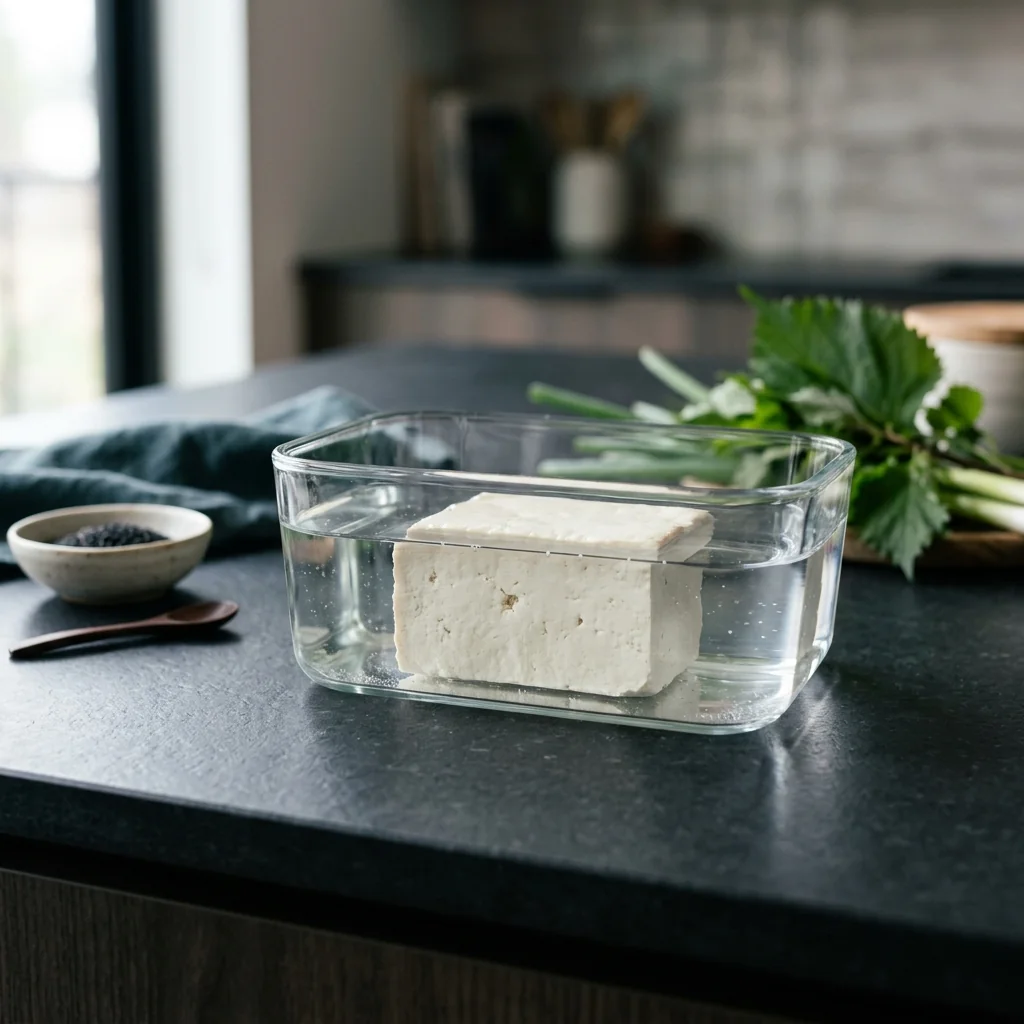
When exposed to oxygen, tofu undergoes rapid aerobic bacterial breakdown on its surface. 💡 Storage Tip: Place the tofu in an airtight container, cover it completely with clean cold water, and mix in half a teaspoon of salt. Mild osmotic pressure firms up the soy protein matrix and acts as a natural preservative.
Change to fresh cold water daily — Cold Storage (7 Days), Frozen (30 Days) 💧
Even with salt added, organic compounds slowly leach into the water over time. 💡 Storage Tip: Replace the container water with fresh cold tap water daily to keep tofu firm and fresh in the fridge (0–4°C / 32–39°F) for up to 7 days. For long-term storage, cut into cubes and freeze in Ziploc bags (-18°C or below) for up to 30 days.
2. Essential Storage Rules and Cautions
Opened packaging water harbors microbial byproducts and dissolved proteins that ruin tofu within hours. Always discard the original water completely and replace the container water with fresh, clean cold water daily to suppress bacterial growth.
Freezing tofu causes internal water to expand into ice crystals, which leave behind microscopic holes upon thawing, creating a chewy, honeycomb-like sponge texture. While it loses its silky smoothness, frozen tofu excels at absorbing sauces in stews and stir-fries.
📌 Frequently Asked Questions (FAQ)
Why shouldn't I store leftover tofu dry in an airtight container without water? ▼
Tofu consists of approximately 85% water and high-grade soy protein. Storing it dry without water allows surface moisture to evaporate while airborne bacteria quickly feed on the exposed proteins. This creates a slippery, slimy coating and a sour odor within 24 hours. Submerging tofu completely in light salt water is essential to exclude oxygen.
How does freezing tofu alter its texture and nutritional profile? ▼
Freezing forces the water inside tofu to crystallize and expand, pushing apart the soy protein network. As it thaws and liquid drains out, a porous, sponge-like honeycomb structure remains. This process concentrates protein content by up to 5 times per unit weight, making frozen tofu denser in nutrients and superior at soaking up broths and marinades.