Have you ever left fresh shrimp in the refrigerator only to find its head and legs turning black (melanosis) accompanied by a strong fishy odor? 🦐
Shrimp high in protein and moisture content undergoes rapid enzymatic breakdown and bacterial deterioration immediately after harvest. When exposed to atmospheric oxygen, tyrosinase enzymes trigger melanosis (black spot formation) starting from the head, while microorganisms multiply quickly.
In this guide, introduces a scientifically proven 3-step shrimp storage guide recommended by seafood safety experts to preserve maximum freshness and texture. 🛡️
Food Safety & Scientific Evidence
This content is based on RDA & USDA & MFDS.
 FreshSelf
Zero waste! Your smart storage assistant
FreshSelf
Zero waste! Your smart storage assistant









1. Scientifically Proven Storage Guide
Rinse in mild saltwater and pat completely dry — Flavor & Freshness Preservation 📦
Swirl shrimp gently in mild saltwater (1 tbsp salt per 1L water) instead of fresh water, then pat completely dry with paper towels. 💡 Storage Tip: Maintaining salinity prevents drip loss of umami compounds and slows oxidation.
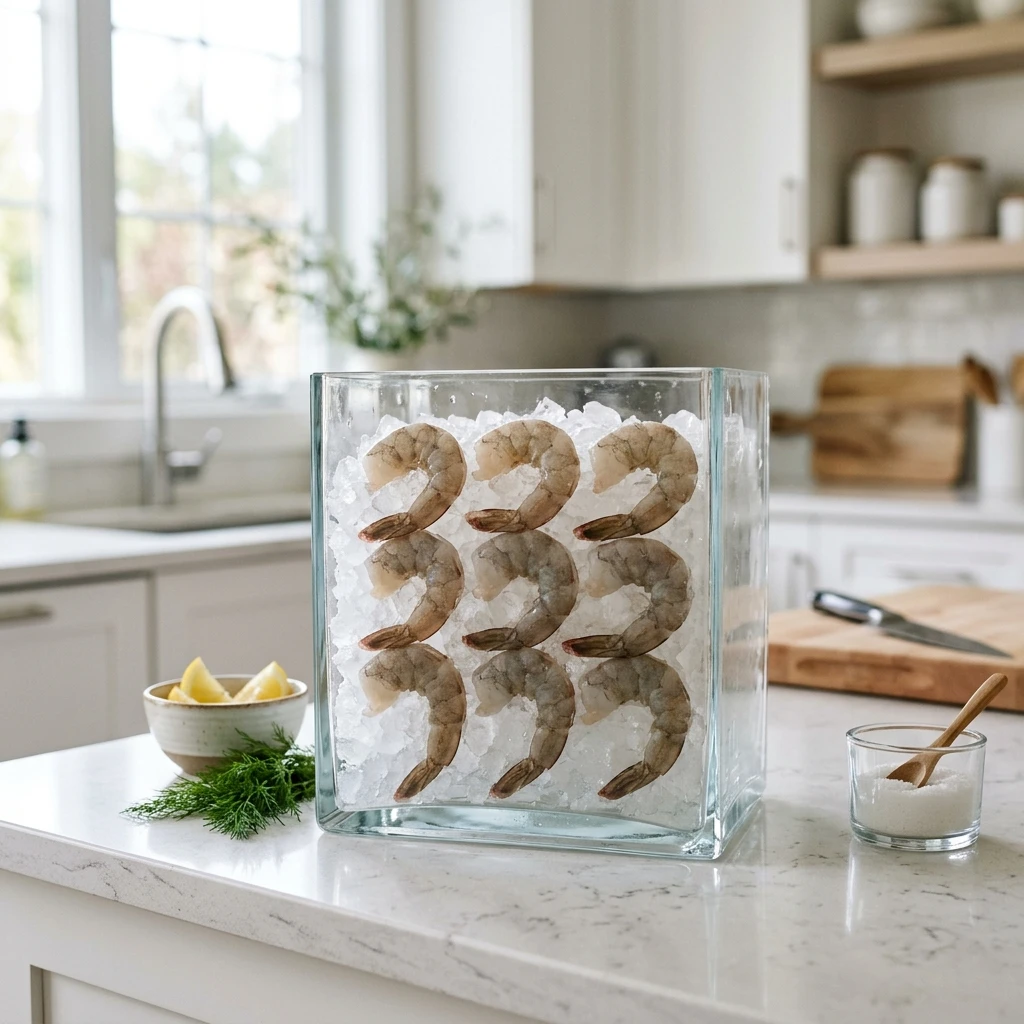
Refrigerate on an ice bed if consuming within 1–2 days — Short-Term Cold Storage (1–2 Days) ❄️
Shrimp spoils rapidly even at standard refrigerator temperature (4°C), making extreme cold management essential. 💡 Storage Tip: Place shrimp over a layer of ice separated by plastic wrap, or submerge in ice water inside the coldest drawer (0–2°C).
Freeze with ice glazing for long-term preservation — Frozen Storage (2–3 Months) ❄️
Freezing shrimp exposed to dry freezer air causes freezer burn and melanosis. 💡 Storage Tip: Place shrimp in freezer bags filled slightly with saltwater to form a protective ice glaze, or steam, cool, and seal before freezing below -18°C for 2 to 3 months.
2. Essential Storage Rules and Cautions
Soaking shrimp in tap water causes osmotic loss of its natural savory flavor and moisture, rendering the meat mushy. Always rinse gently in mild saltwater ( ~ 3% salinity) to retain firmness and flavor.
Peeled raw shrimp meat oxidizes rapidly upon oxygen contact and loses moisture, leading to quick spoilage. Store shrimp with shells intact, or if peeled, submerge in airtight containers to minimize exposure to air.
📌 Frequently Asked Questions (FAQ)
Is shrimp with black spots on its head and legs (melanosis) safe to eat? ▼
Melanosis is a harmless natural reaction where tyrosinase enzymes produce melanin pigment upon oxygen contact; it is not toxic. However, extensive blackening indicates reduced freshness, so discard the shrimp if it emits a foul odor or feels slimy.
What is the best way to thaw frozen shrimp? ▼
Submerge frozen shrimp in cold saltwater ( ~ 3% salinity) for 10 to 15 minutes, or thaw slowly in the refrigerator overnight. Avoid warm water or microwave thawing, which cooks the flesh partially and leaves it tough and rubbery.