Have you ever bought a sweet, juicy pineapple only to find it molding at the bottom or sour at the top and sweet only at the base? 🍍
Pineapples are classic non-climacteric fruits, meaning their sugar content does not increase after harvest. Because natural sugars concentrate heavily at the base (bottom), leaving a pineapple upright causes an uneven sugar distribution and encourages bottom rot. Additionally, prolonged exposure to cold temperatures below 7°C causes chilling injury, turning the flesh brown.
In this guide, introduces a scientifically proven 3-step pineapple storage guide recommended by agriculture and food safety experts to evenly distribute sweetness and maximize freshness. 🛡️
Food Safety & Scientific Evidence
This content is based on RDA & USDA & MFDS.
 FreshSelf
Zero waste! Your smart storage assistant
FreshSelf
Zero waste! Your smart storage assistant


1. Scientifically Proven Storage Guide
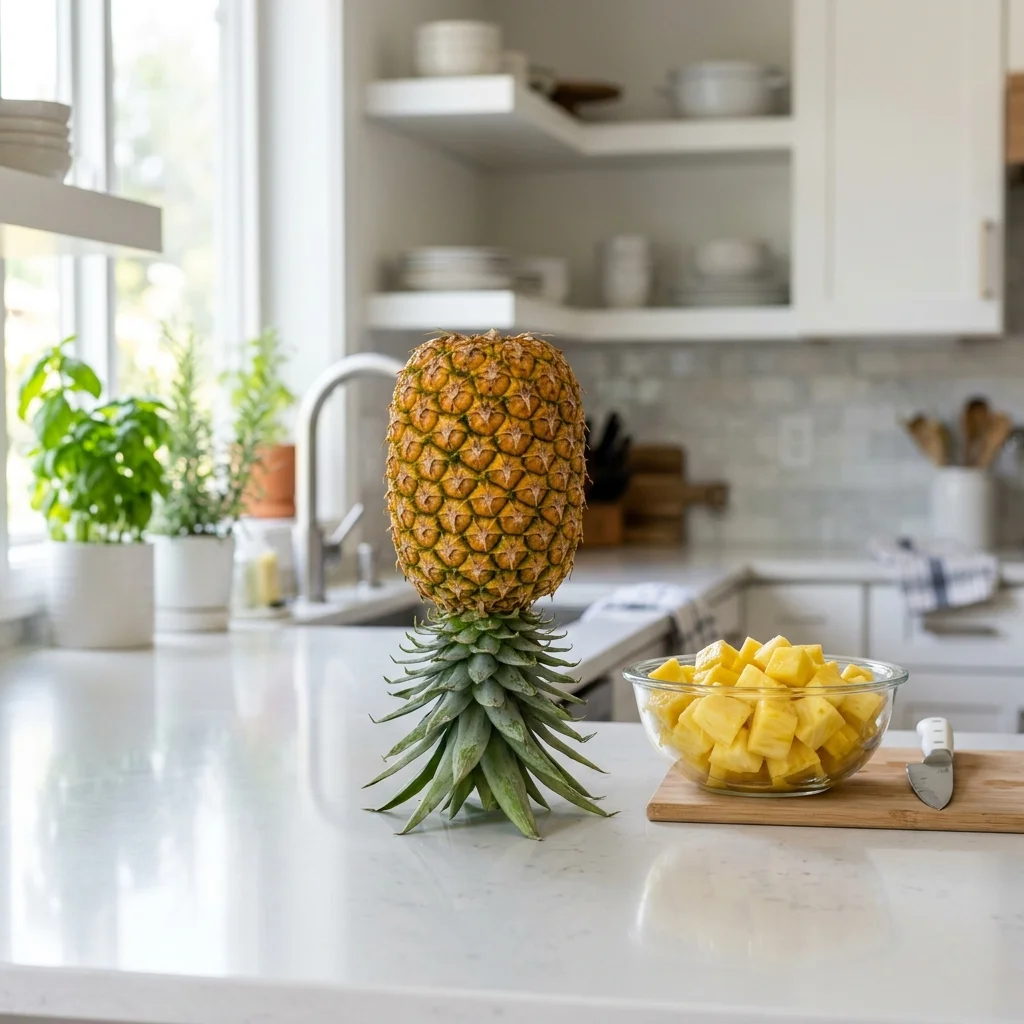
Cut off the crown (top leaves) and store upside down — Sweetness Redistribution Hack 🔄
Natural sugars sink and concentrate at the base of the fruit. 💡 Storage Tip: Slice off the leafy crown, wrap the pineapple in paper towels or newspaper, and stand it upside down on its top end for 1–2 days at room temperature or in the fridge. This allows gravity to redistribute sugars evenly throughout the flesh.
Store cut fruit in airtight containers in the fridge — Cold Storage (5–7 Days) 📦
Once peeled and sliced, pineapple flesh oxidizes and loses moisture rapidly upon contact with air. 💡 Storage Tip: Cut into bite-sized pieces, place them in an airtight container lined with paper towels, and store in the crisper drawer (7–10°C / 45–50°F).
Dice into bite-sized chunks and freeze — Long-Term Storage (1–3 Months) 🧊
Freezing is the best method to preserve fresh pineapple flavor for long periods. 💡 Storage Tip: Remove skin and tough core, cut into chunks, pre-freeze on a tray in a single layer so they don't stick together, then transfer to a Ziploc bag in the freezer (-18°C or below).
2. Essential Storage Rules and Cautions
Pineapples are non-climacteric fruits whose sweetness is locked at harvest. Leaving them at room temperature does not make them sweeter; instead, acidity drops and fermentation (spoilage) begins. Consume promptly after purchase.
As tropical fruits, pineapples stored below 7°C (45°F) for extended periods suffer chilling injury, causing flesh browning and hardening of the core. Use the refrigerator crisper drawer for optimal cold storage.
📌 Frequently Asked Questions (FAQ)
Why does my tongue sting or burn when I eat fresh pineapple? ▼
This sensation is caused by 'Bromelain,' a potent proteolytic (protein-digesting) enzyme naturally present in pineapple that temporarily breaks down proteins in your oral mucosa. Grilling or heating pineapple denatures bromelain, making it sweeter and gentler on the tongue.
How do I select a ripe and sweet pineapple at the store? ▼
Look for dark green, fresh leaves on the crown, a body with a warm golden-yellow color radiating from the base, a sweet tropical aroma from the bottom stem, and a firm feel that yields slightly to gentle pressure.