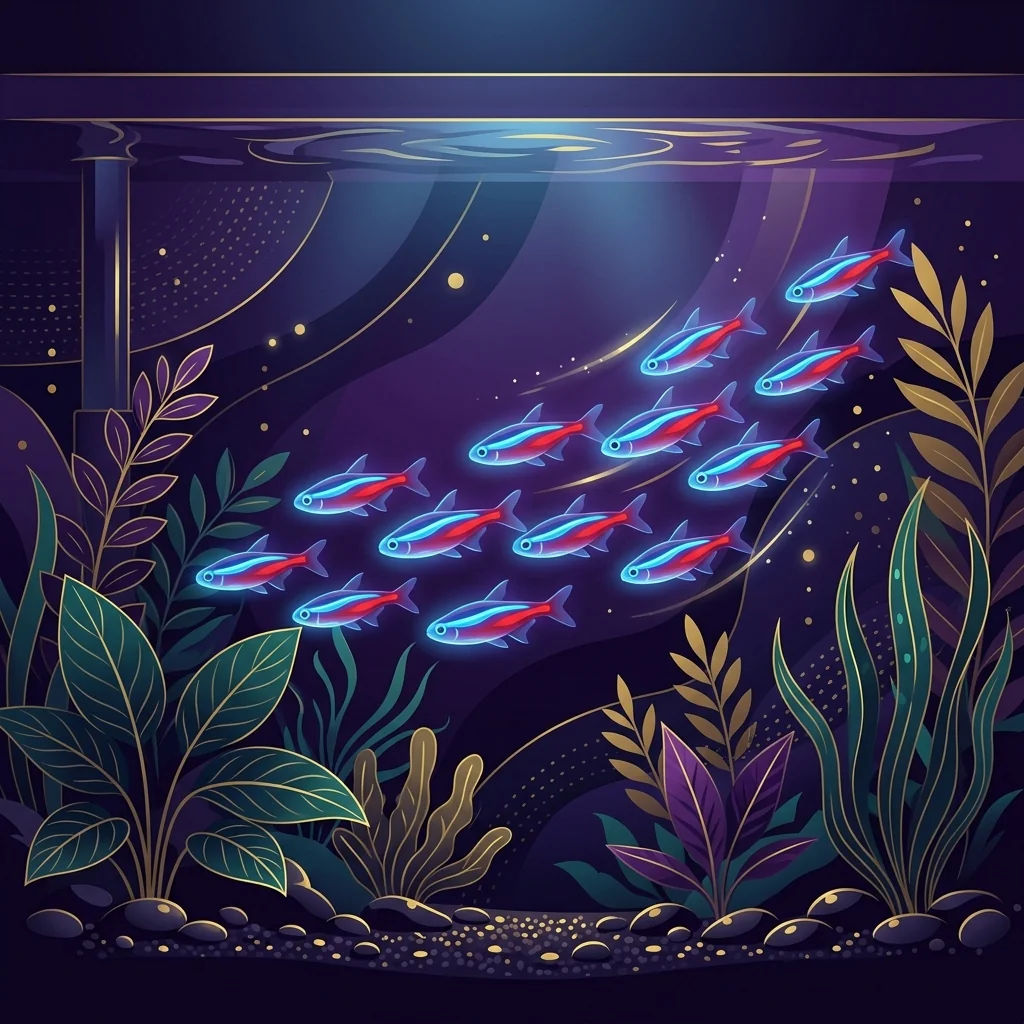
Renowned for its striking blue neon stripe and vibrant red tail, the Neon Tetra (Paracheirodon innesi) is an iconic freshwater characin in the aquarium hobby. Possessing a strong natural schooling behavior, they must be kept in groups of at least 6 to 10 individuals to prevent severe stress. Neon Tetras are sensitive to sudden water parameter changes (pH shock, ammonia spikes) and are vulnerable to ‘Neon Tetra Disease’—an incurable microsporidian parasitic infection. In this guide, presents a 3-step daily care routine to read your Neon Tetra’s color and behavioral signals and maintain a pristine aquarium environment.
Veterinary & Behavioral Evidence
This content is based on Ornamental Fish International (OFI) & Tropical Fish Veterinary Care Protocols.
 FreshSelf
Keep pet food and supplements perfectly fresh!
FreshSelf
Keep pet food and supplements perfectly fresh!








1. Neon Tetra Body Language: Color Fading and Isolation from the School
Neon Tetra Body Language: Color Fading and Isolation from the School
Neon Tetras communicate health and water quality through the vividness of their stripes and their group cohesion. Apart from natural night sleeping, 'Color Fading' during daytime hours is an early warning sign of rapid water degradation or Neon Tetra Disease. Conversely, 'Isolation from the School'—staying immobile alone in tank corners or near the surface—indicates physical weakness, severe stress, or disease progression.
2. Neon Tetra (Paracheirodon innesi)‘s Body Language & Behavioral Signals
Neon Blue & Red Stripes Turning Pale White (Color Fading)
A natural camouflage mechanism during sleep, but if seen during daytime, it signals pH shock, ammonia toxicity, or Neon Tetra Disease.
If vibrant color does not return 30 minutes after turning on lights, test water parameters and immediately isolate symptomatic fish.
Separating from the School & Standing Still Alone (Isolation from the School)
A sign of severely weakened immunity or advanced illness causing loss of natural schooling instincts against predators.
Check the isolated fish for spinal curvature or skin cysts, and proceed with isolation or mild salt bath care if needed.
3. Customized 3-Step Home Care Routine for Neon Tetra (Paracheirodon innesi)
Morning: Water Temp (22°C–25°C) & pH (6.0–7.0) Check with Micro-Pellet Feeding
Verify slightly acidic to neutral water parameters and feed small micro-granules or crushed flakes that can be consumed within 1–2 minutes.
Afternoon: Plant Hideout Maintenance & Filter Current Check
Provide live plants and dark substrate to reduce stress, adjusting filter flow so small tetras are not overwhelmed by strong currents.
Evening: Substrate Waste Siphoning & Weekly Partial Water Change Routine
Siphon out uneaten food to reduce ammonia build-up, and perform a 10–20% partial water change weekly using dechlorinated water.
📌 Frequently Asked Questions (FAQ)
Why does my Neon Tetra look pale and faded after I turn the lights on in the morning? ▼
This is completely normal. Neon Tetras naturally suppress their skin pigments at night when sleeping to camouflage from predators. Within 20–30 minutes of swimming under tank light, their vivid blue and red neon stripes will fully return.
Can I keep just 1 or 2 Neon Tetras in a tank? ▼
It is strongly discouraged. Neon Tetras are dedicated schooling fish that rely on large groups for safety. Keeping only 1 or 2 causes extreme anxiety and chronic stress, weakening their immune system and shortening their lifespan. Keep them in groups of 6 to 10 or more.